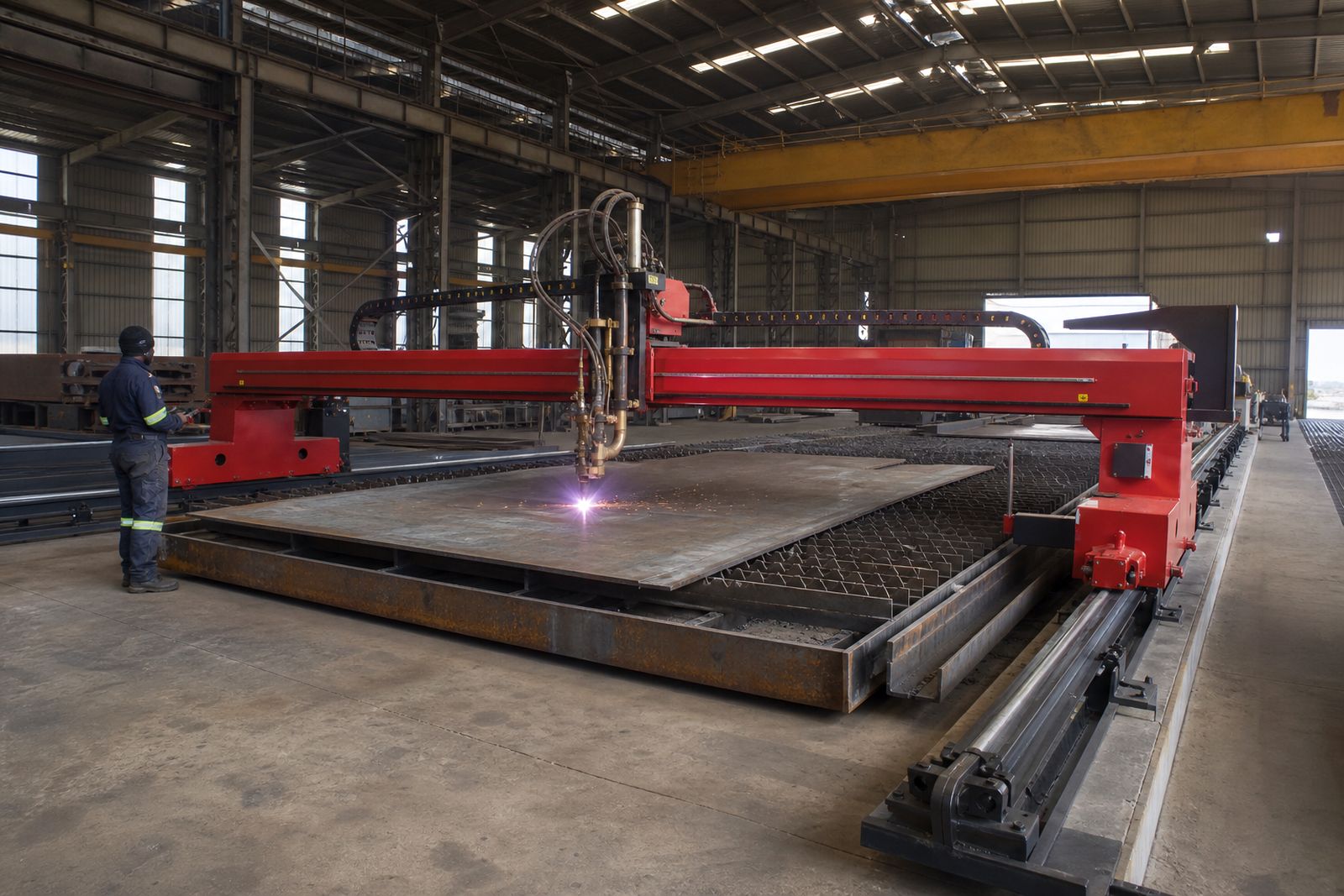
Heavy gantry plasma systems, 1.5 to 7 m wide
CNC Plasma System engineers heavy industrial gantry plasma systems in Vanderbijlpark for steel service centres, mines and structural fabricators. Our scope runs from 1.5 metre gantries up to 7 metre machines, with installation, rail work, foundations and operator training on site.
Built for wide plate and hard production work
We build heavy industrial gantry plasma systems for yards and workshops where plate size, material handling and daily throughput matter, and where the machine has to stay straight over a long travel. Widths start at 1.5 metres and extend to 7 metres, covering narrow dedicated lines through to broad cutting beds for service centre work.
Each system is engineered around the job and matched to the bed. That matters in structural fabrication, mine maintenance and plate processing because the rail length, bridge mass, drive layout and torch arrangement all affect cut consistency over distance. A gantry that tracks well on a short floor can drift badly on a longer installation if the rails and drive system are matched poorly.
- Gantry widths from 1.5 m to 7 m
- Single-drive and dual-drive arrangements
- Multi-torch layouts for repetitive profiles
- Bevel heads for weld preparation work
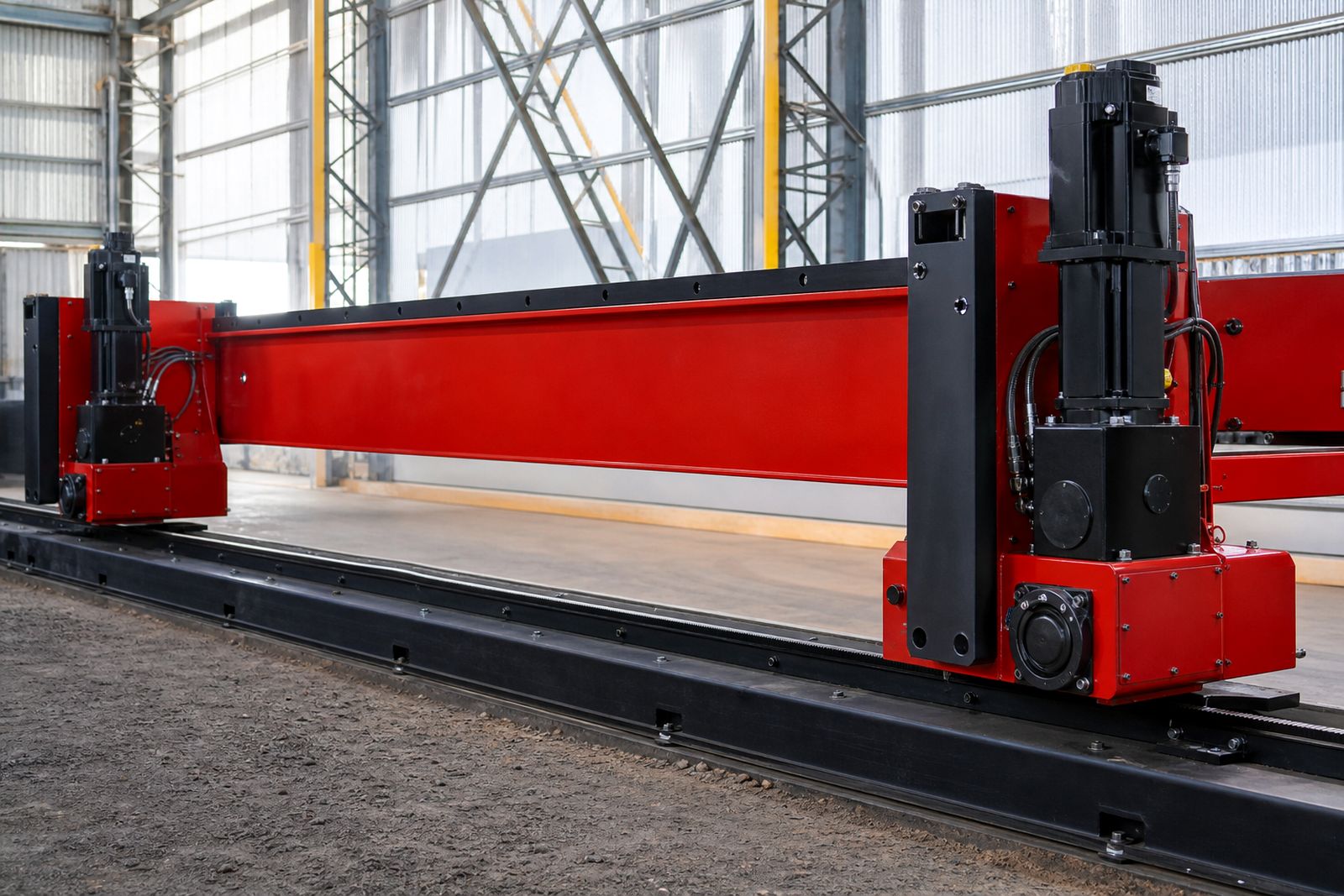
- Gear racks, rails and end trucks matched to machine size
We supply heavy industrial gantry systems only, with the machine, the rails and the floor preparation treated as one system.
Where to start
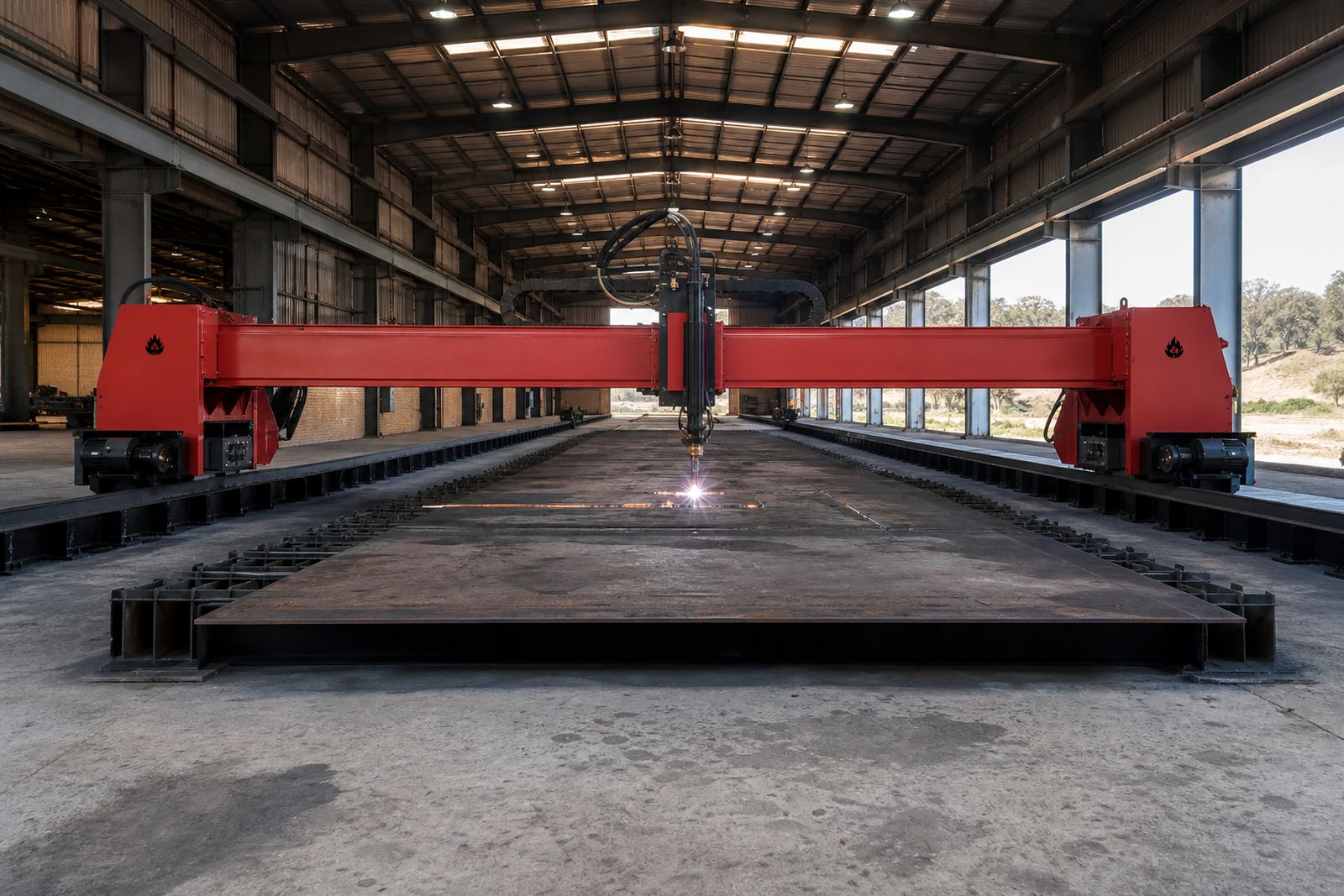
Gantry widths from 1.5 to 7 metres
Gantry width, rail span and drive choice compared across our heavy industrial plasma range.
Read more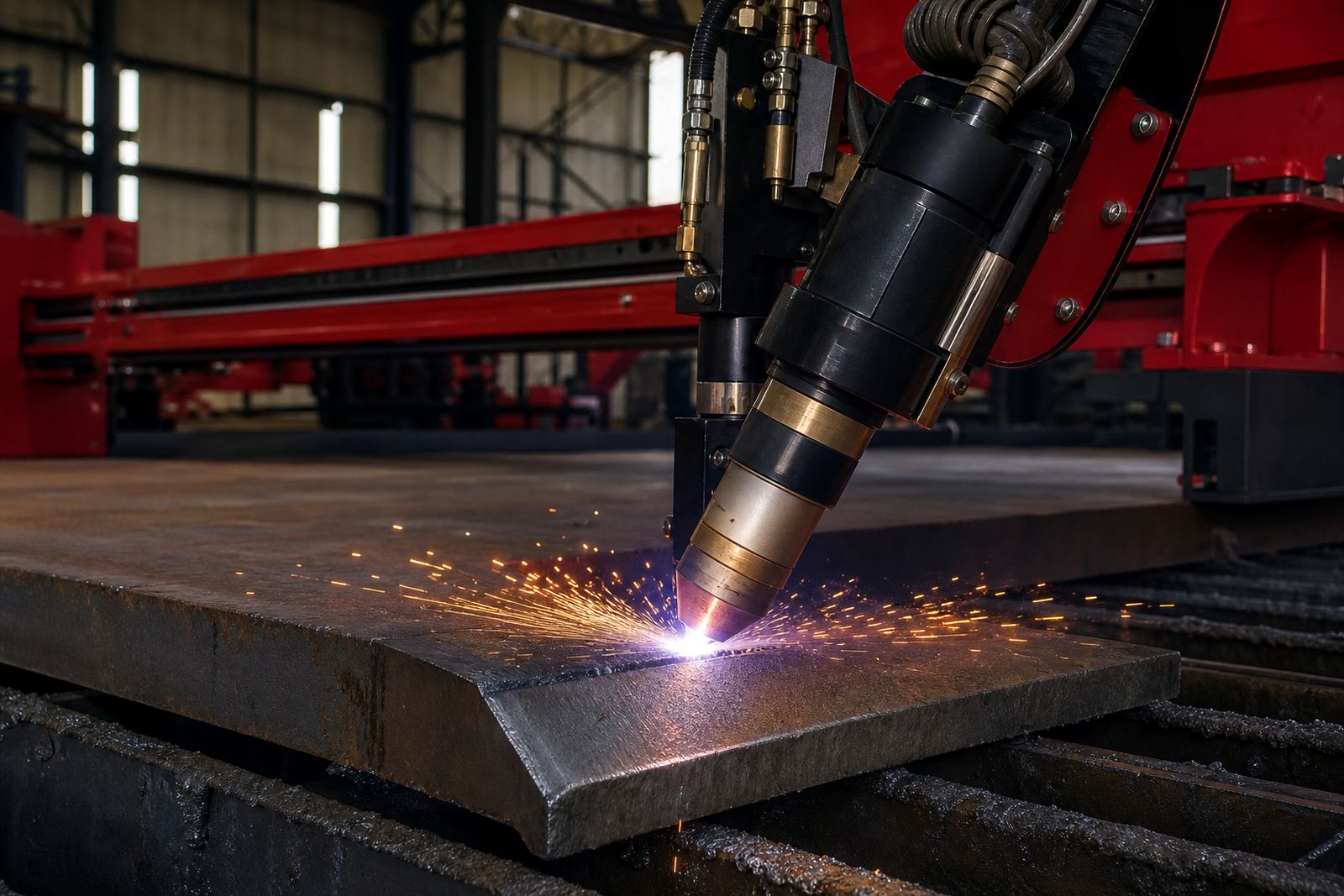
Multi-torch and bevel heads
Add bevel prep and multi-strip output to a heavy gantry without changing the full machine layout.
Read more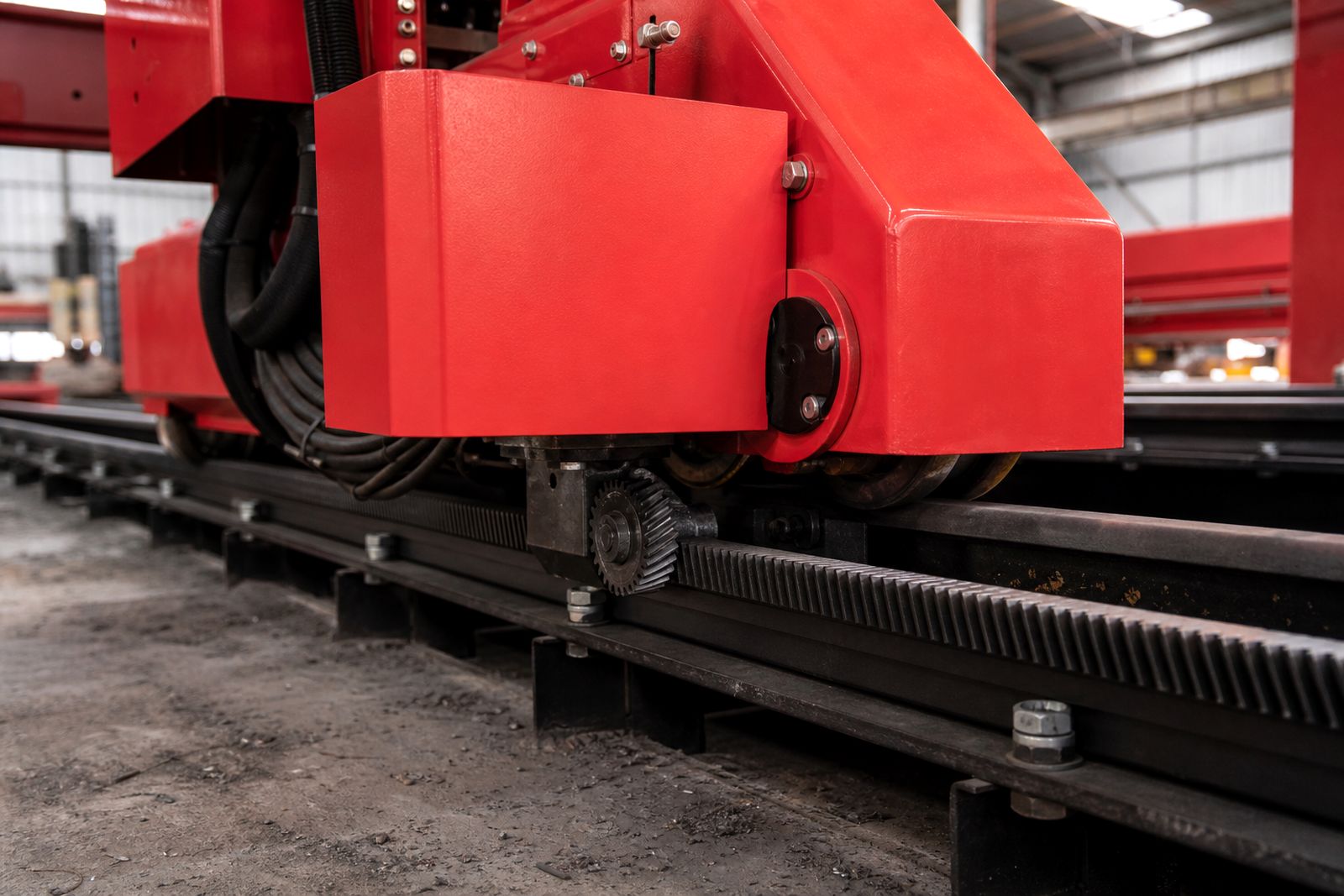
Gear racks, rails and end trucks
The running gear under the gantry decides how well a wide plasma table tracks over years of steel work.
Read more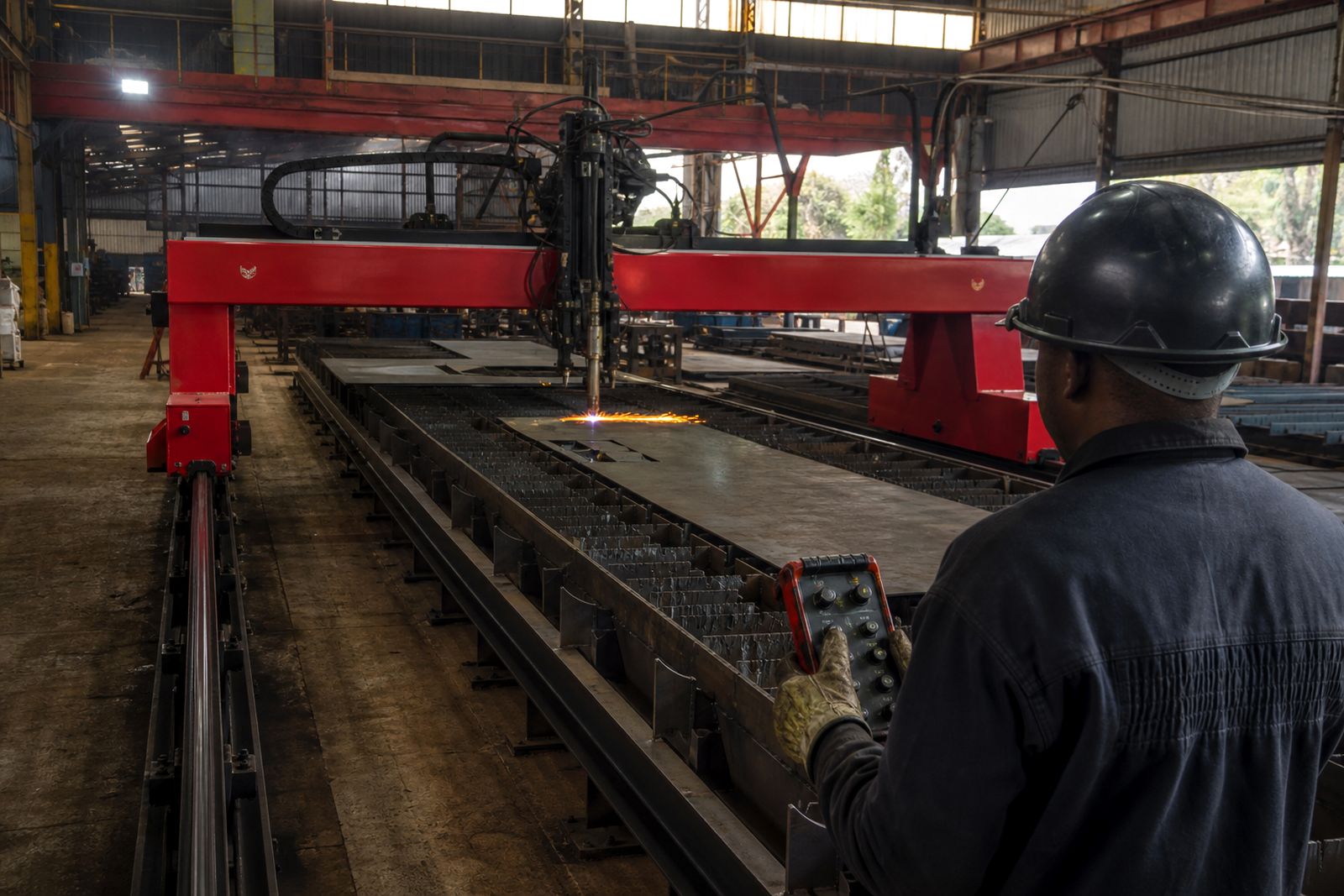
Wireless pendants for long gantries
A practical control option for long rails where the operator often works far from the main stand.
Read more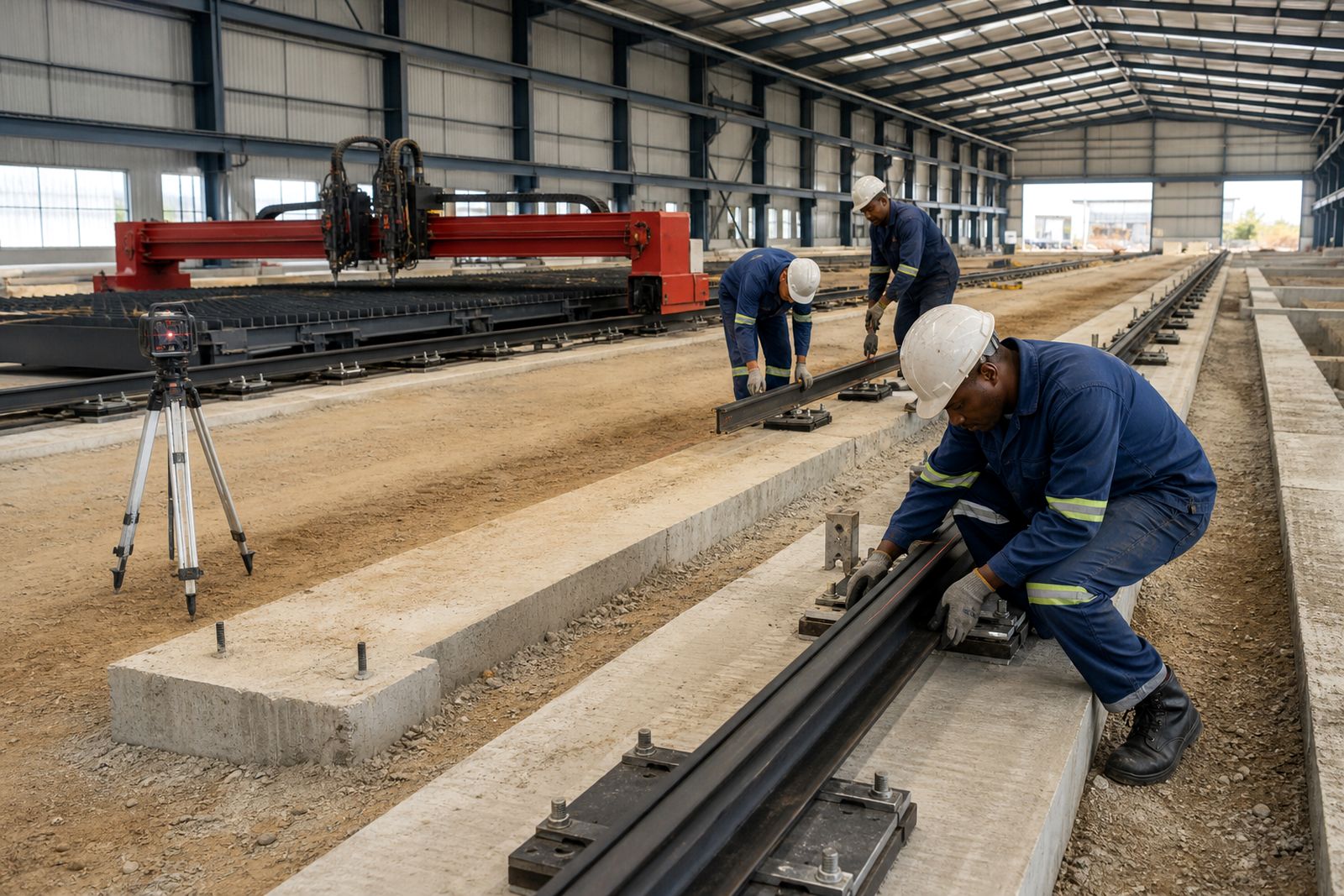
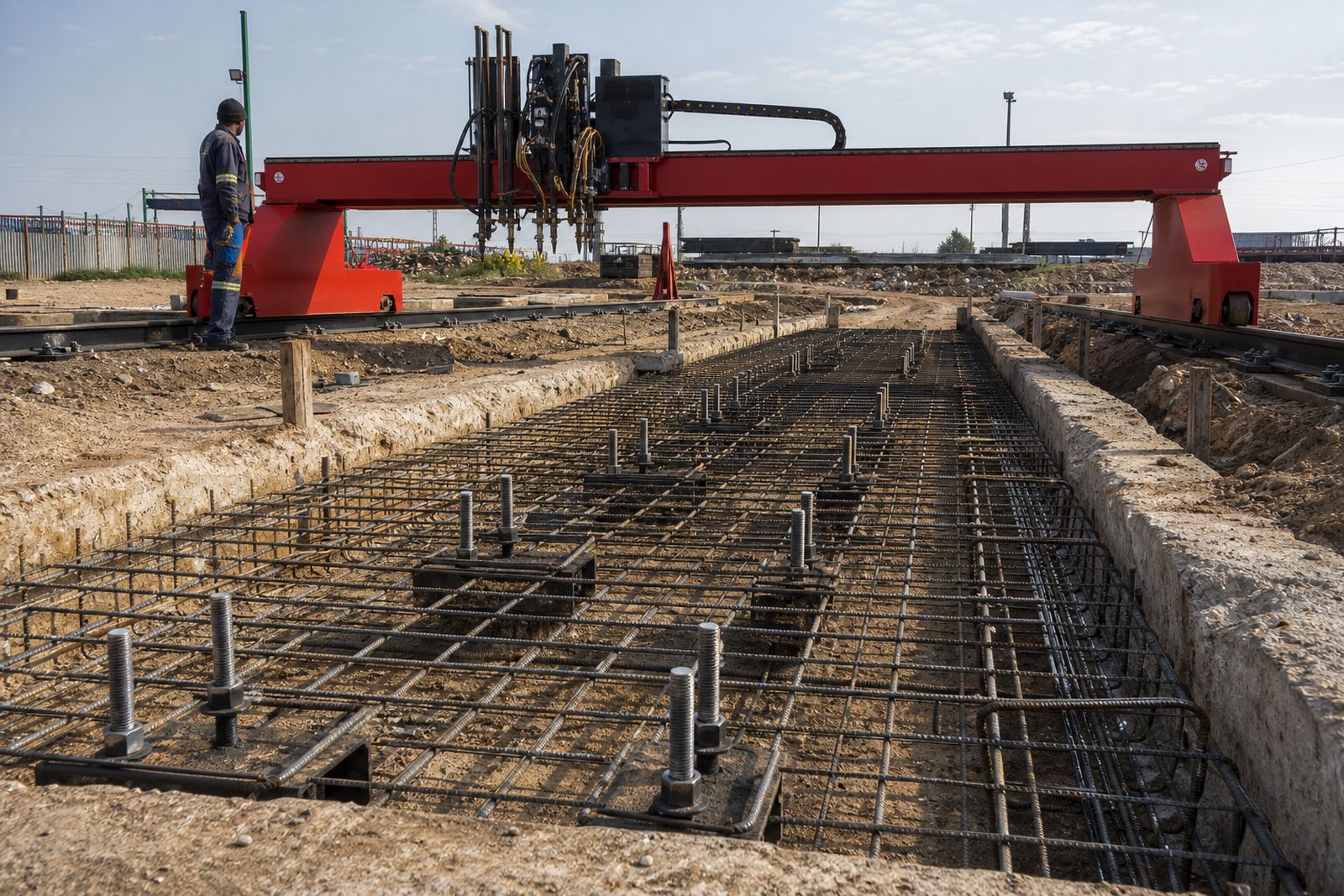
Foundation design and installation
Rail foundations, levelling and site assembly for heavy plasma gantries from 1.5 m to 7 m wide.
Read more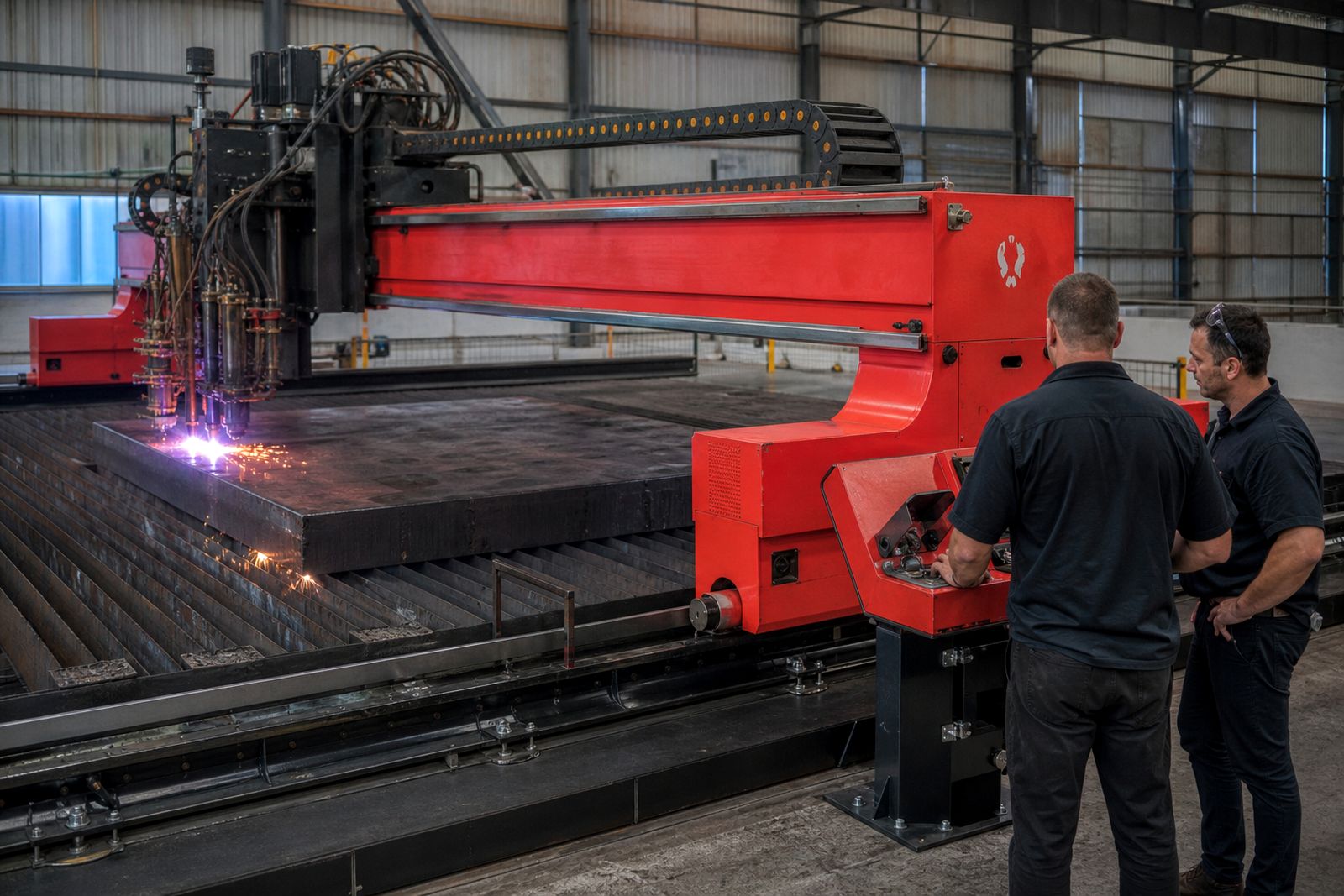
Operator training on site
Three to five days on site, using your own gantry, your own plate and your normal production mix.
Read more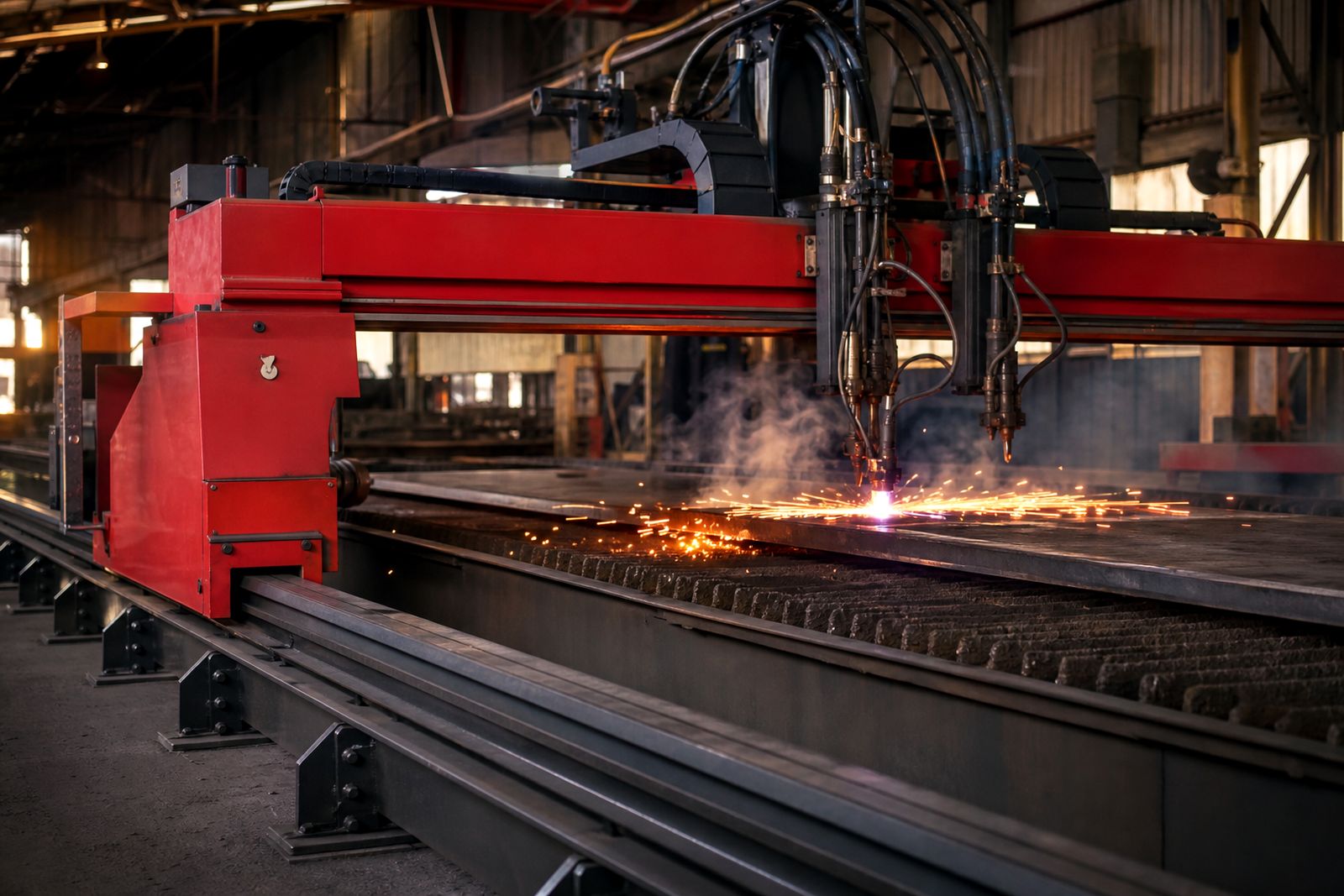
Where these gantries fit best
A heavy gantry makes sense when your material is too wide, too long or too awkward for compact equipment, or when cutting volume justifies a rail-based installation. Service centres use them to process plate in repeatable widths across long runs. Structural shops need them for base plates, gussets, stiffeners and beam connections. Mines and mine contractors often need a machine that can handle thick sections and larger repair batches without turning every job into manual marking and cutting.
The right machine depends on more than cutting width. Plate flow, crane access, loading direction, fume handling, foundation quality and operator space all need to be considered before the rails are fixed. That planning saves expensive floor alterations later and keeps the travel smooth once production starts, which is where many shops get caught.
- Steel service centres with regular plate processing
- Structural fabricators cutting repeated profiles
- Mine workshops handling wear parts and repair work
- Heavy engineering shops with long bed requirements
- Sites that need bevel preparation on plate edges
These gantries suit operations where bed width and rail length form part of the production plan from the start.
How a gantry job usually moves from floor to first cut
Most projects start with the cutting requirement and the floor condition. We look at the width needed, expected rail length, torch configuration and whether the machine should run as a single-drive or dual-drive unit. From there the foundation design is set out to suit the rails, anchor positions and machine loading. On long machines especially, floor accuracy decides whether the bridge travels cleanly or starts fighting the rails.
Once the installation layout is agreed, the rail line, gantry position and service clearances are planned around the building and handling path. That includes access for loading plate, cleaning scrap and maintaining the drive components. For many service centres and larger fabrication shops, a well-planned rail line keeps the machine useful over the full bed instead of only on the easiest centre section.
Installation covers the gantry, rails, racks and running gear, followed by setup and operator training on site. Operators need a proper briefing on travel references, torch movement, basic checks and how to spot wear before alignment goes off. A wide machine rewards disciplined operation.
- Cutting width and rail length planning
- Foundation and anchor layout
- Rail and rack installation
- Gantry assembly and setup
- Operator training on site
Rail straightness over long travel
On heavy gantries, rail straightness is one of the biggest reasons a machine either tracks properly or starts showing uneven motion, poor positional repeatability and harder wear on the drive. A short machine can hide floor faults for a while. A long gantry usually shows them clearly. When the width grows and the bridge gets heavier, small errors in level and parallelism become more expensive.
That is why foundation design and rail installation are part of the engineering scope here. The rack, rail and end truck arrangement must suit the gantry width and expected working loads. On dual-drive systems the relationship between both sides becomes even more important, because the machine has to stay square across the full bridge while moving the length of the bed.
In the Vaal Triangle and inland industrial areas, heavy floors vary a lot from one building to the next. Some sites have solid concrete with good access for surveying and anchors. Others have wear, patching or movement from years of handling plate and section. We deal with that reality before the rails are fixed and before the first tracking problem shows up.
From Vanderbijlpark into the main fabrication regions
Our base is in Vanderbijlpark, close to the steel and fabrication activity of the Vaal Triangle. From there we install for industrial users across Gauteng, Mpumalanga, the North West, KwaZulu-Natal and the Northern Cape. That spread matters because machine choice often changes by region. A mine workshop and a structural plant use a gantry differently, even if the cutting width looks similar on paper.
In Gauteng and the Vaal Triangle we often deal with busy industrial floors, older buildings and crane-linked plate handling. In Mpumalanga and North West mine support work can push a machine toward heavier duty layouts and practical service access. KwaZulu-Natal adds coastal humidity concerns for exposed components and storage areas, so protective planning around rails and running parts becomes more important. Northern Cape sites can mean long material runs and larger open work areas where rail layout must be thought through carefully.
- Vanderbijlpark and the Vaal Triangle
- Gauteng fabrication and service centre sites
- Mpumalanga mining and engineering work
- North West heavy industrial installations
- KwaZulu-Natal coastal and inland plants
- Northern Cape plate and mining support yards
Machine widths linked to real production needs
The width range is broad because plate processing is broad. A 1.5 metre gantry can suit a dedicated line where floor space is controlled and the product range is narrow. At 2 to 4 metres, many structural and general plate shops find a useful balance between capacity and building footprint. The larger 5 to 7 metre machines are meant for wide plate, long rails and sites where handling equipment, clearances and foundations are planned around serious throughput.
Choosing width should reflect the material you handle most, the torch setup required and the way scrap, offcuts and finished parts leave the bed. Width also relates to the largest plate you expect to cut. Too narrow and production becomes awkward. Too wide and you create a machine the building does not support properly. A good layout keeps the machine working through ordinary days as well as the big jobs.
Widths in the range run from P-1500 through to P-7000, with options covering multi-torch heads, bevel work, wireless pendants, foundations and operator training. For project discussions, use our contact form.
Questions we get asked
Do you supply portable or bench plasma cutters?
CNC Plasma System handles heavy industrial gantry plasma systems only, from 1.5 m to 7 m wide, with rail-based installation.
Can a machine be supplied with more than one torch or with bevel cutting?
Multi-torch configurations and bevel heads are part of the range where the production work and gantry size justify them.
Do you cover foundations and operator training as part of the project?
Foundation design, installation and operator training on site form part of the scope for gantry projects.
Tell us about the job
Send sizes, materials and where you are through our contact form, and we will come back with the practical options.
Open the contact form