Single drive or dual drive?
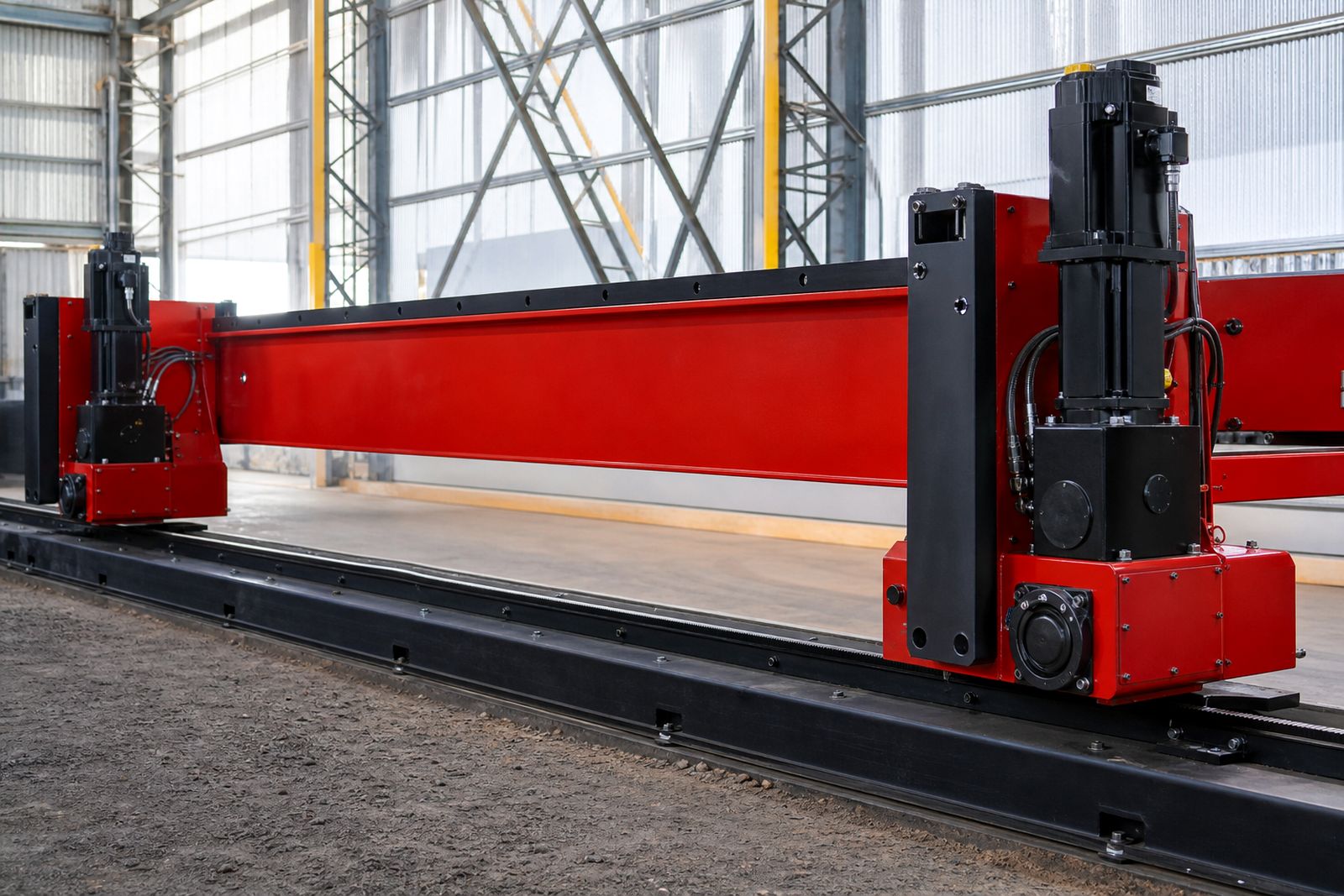
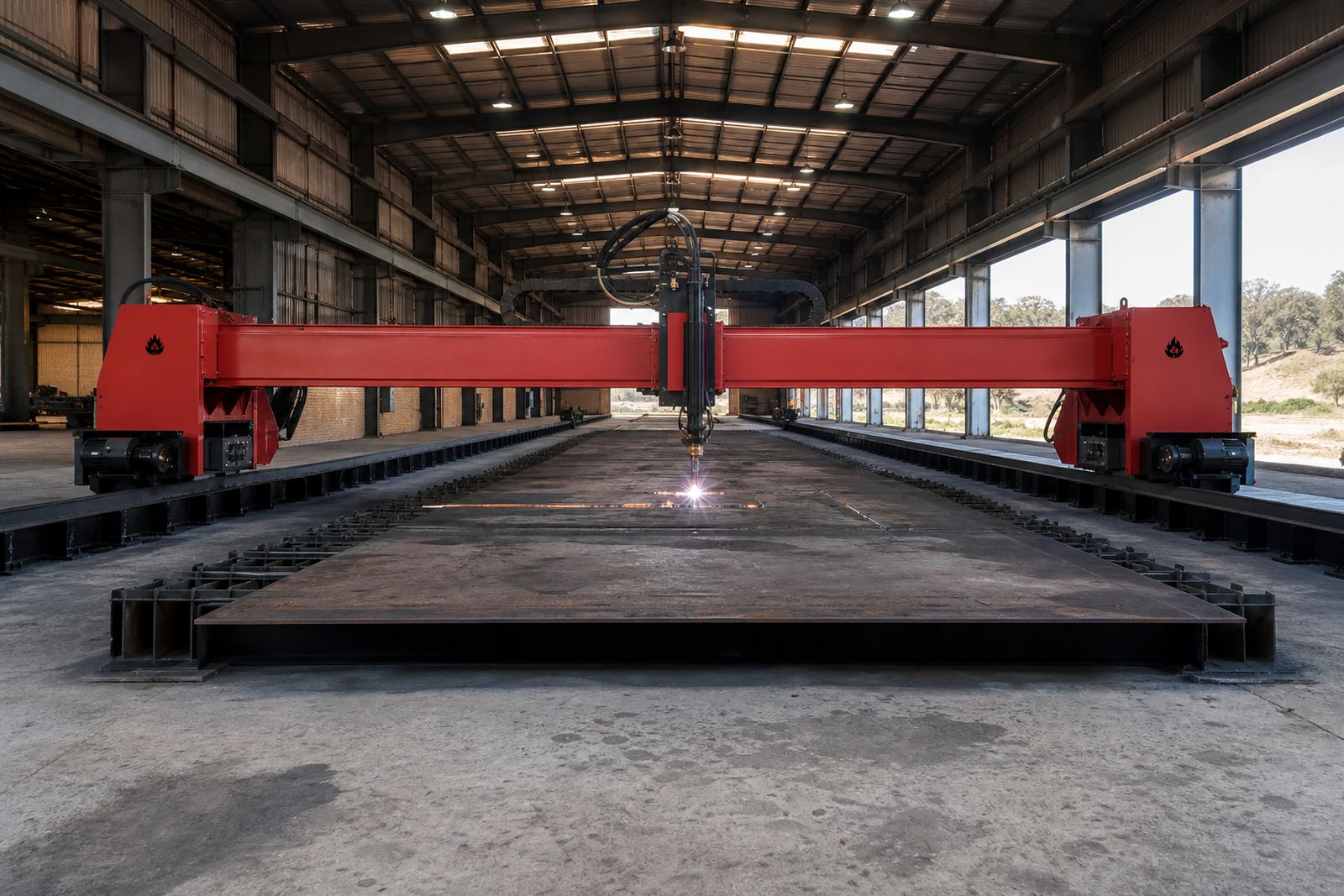
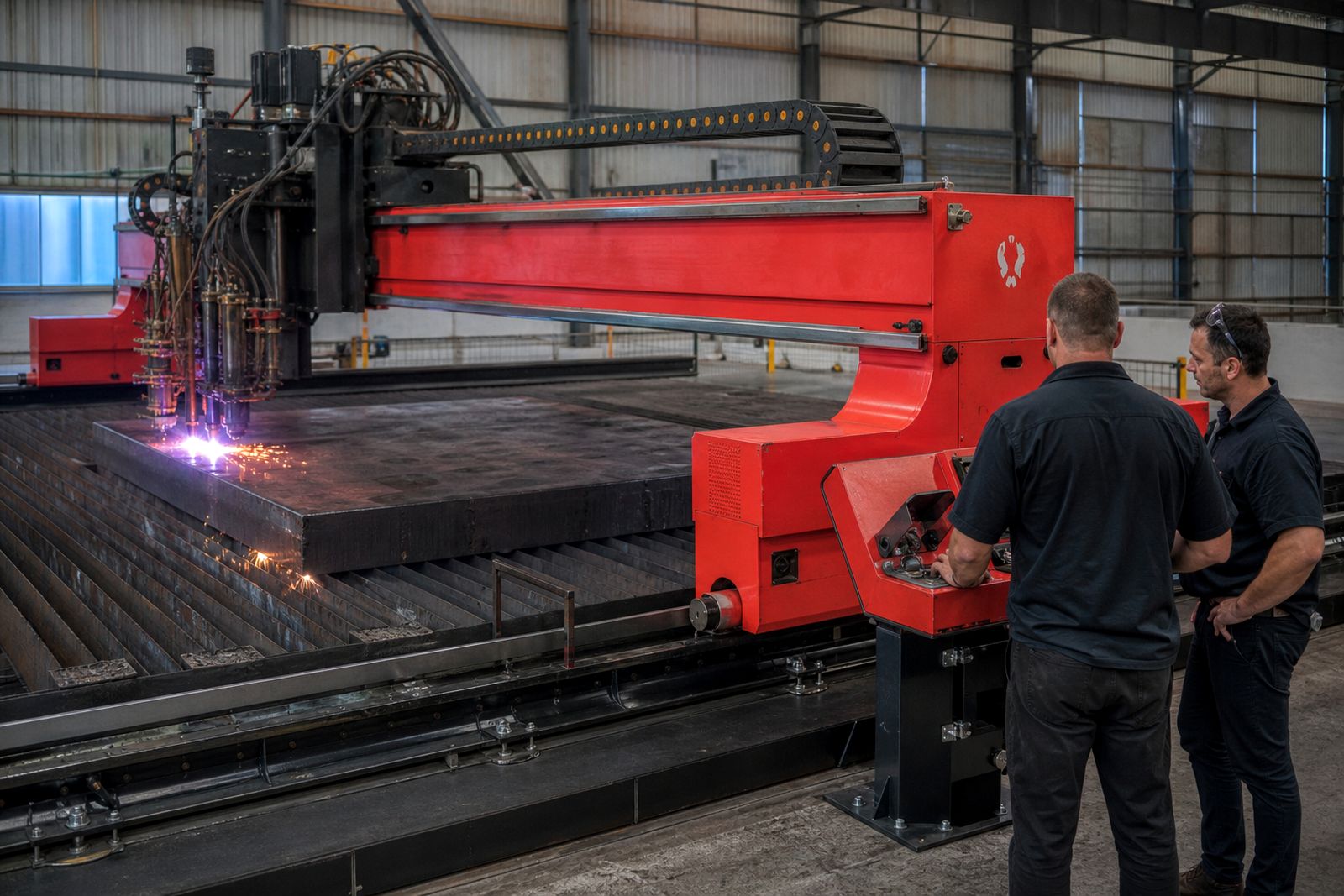
A second drive motor keeps a large gantry square on the rails so the machine tracks cleanly over long travel.
The point of a second drive
On a narrow gantry, one driven side and one idler side can work well if the bridge is stiff enough and the rail installation is right. As width grows, the bridge has more leverage to twist when it accelerates, slows down, or changes direction over a full sheet and beyond. That twist is what operators describe as racking.
Racking shows up when one side wants to lead and the opposite side lags slightly. You may not notice it on light duty work, but on heavier plate and longer rails it starts to affect cut accuracy, torch position and wear on the running gear. A dual-drive arrangement puts controlled drive on both sides of the gantry, keeping the bridge square while it moves.
- Single drive is often suitable on narrower gantries with moderate travel.
- Dual drive becomes more important as gantry width and rail length increase.
- Heavier cross members, bevel heads and multi-torch layouts add to the case for dual drive.
- Foundation quality still matters, even with drive on both sides.
Where single drive still makes sense
Single-drive machines can be the right choice where the cutting width is modest, the table is straight, and the machine is handling ordinary production all day. A well-built single-drive gantry suits that kind of work. It keeps the drive train simpler and can reduce setup complexity.
In local workshops we usually look at the whole machine rather than width alone. A 2 m or 2.5 m gantry on a sound base with one torch and normal duty is a very different job from a 4 m or 5 m gantry carrying extra mass out on the beam. Once attachments, cable handling and long rail runs enter the picture, the forces change quickly.
- Narrower cutting widths generally place less twisting load on the bridge.
- Shorter travel distances reduce the chance of small alignment errors growing into larger tracking problems.
- Lower moving mass means less torsional shock during acceleration and deceleration.
- Single drive can still perform properly when rail alignment and machine stiffness are treated seriously.
The signs that a wide gantry needs drive on both sides
There is a point where a second motor stops being an optional extra and becomes part of keeping the machine honest. We see this on wider industrial gantries used by steel service centres, mines and structural fabricators, especially where the machine carries more than one process head or has a long unsupported feel across the table.
Early warning signs are often subtle. The bridge may skew slightly during a rapid traverse, or the torch position on one side may not agree perfectly with the other after a long run. Operators sometimes notice uneven pinion wear, wheel marks that do not match side to side, or a rail that seems to need constant attention. That usually points to a geometry or drive issue.
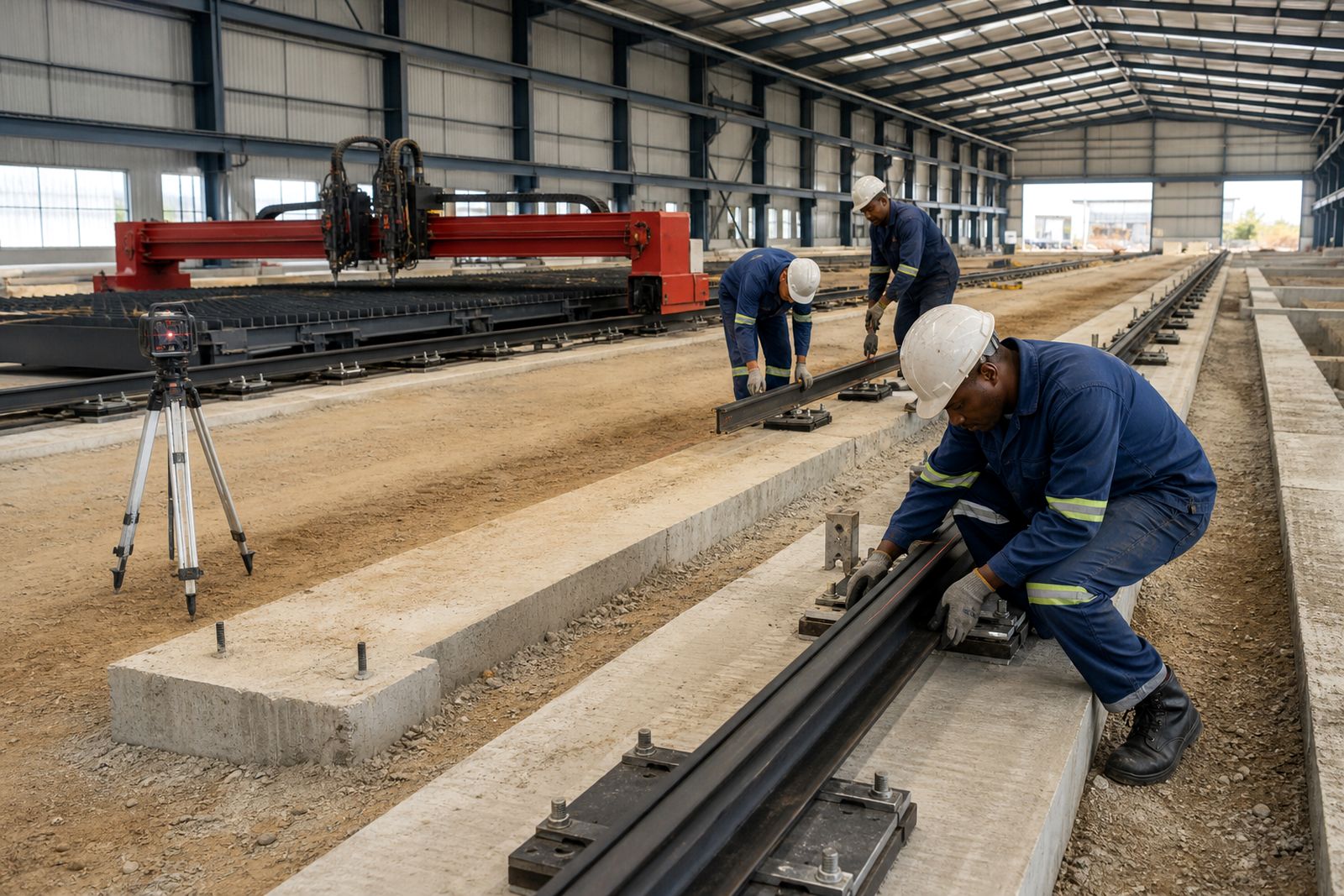
Dual drive helps hold the gantry square under load, but only if the controls keep both sides synchronised and the mechanical installation is done properly. A sound rail installation remains essential. A second motor added to poor rails simply gives another component the same bad geometry to work through.
A workshop example from the Vaal
One Vaal Triangle fabrication shop was cutting long structural parts on a wide gantry over a busy production week. The machine had enough power. The torch process was stable and the nesting was fine, but the bridge would show a slight diagonal drift after repeated traverses to one end of the bed. The error was small at first and easy to dismiss, then the operator started seeing nozzle alignment drift on bevel work.
When the rails were checked, the installation was serviceable but not generous enough for the width and duty the shop had moved into. The gantry was carrying more moving mass than the original work pattern, and the single driven side was doing too much of the correction. Under sharp changes in direction the idler side was effectively being dragged into alignment rather than held there.
The cure included a second drive. The rail line was corrected. The gear mesh was set properly across the full travel, and the control setup was matched side to side. Once both sides were driven and tuned as a pair, the bridge stopped fighting itself. Cut position settled down and the running gear wear evened out over time.
What we look at before calling for dual drive
Choosing between single and dual drive is best done from the floor up. Width matters, but it is only one line in the decision. The foundation, rail support, machine duty and head arrangement all count. In South African conditions, where some shops deal with dust, scale, heavy plate handling and long production hours, those details matter more than a brochure claim.
- Overall gantry width, from 1.5 m upward into heavy industrial spans.
- Rail length and how often the machine runs full travel.
- Mass of the bridge, cable handling and fitted heads.
- Whether the machine carries one torch, multiple torches or bevel equipment.
- Floor and foundation condition, including settlement risk over long rails.
- Required cut accuracy across repeated production runs.
If a machine is expected to work hard across a broad table, dual drive is usually the cleaner engineering answer. It reduces the tendency to twist the bridge and helps preserve rail, wheel and gear life. But the benefit only arrives when the gantry structure, the racks and rails, and the installation tolerances are treated as one system.
Getting the decision right before the rails are fixed
The most expensive time to discover you needed dual drive is after foundations are cast and rail centres are locked in. A proper review before manufacture can save a lot of rework later. That review should include the real parts you cut, the real plate sizes that move through the shop and the actual attachments planned for the bridge, not an optimistic first sketch.
For wider systems in the 3 m to 7 m range, dual drive often controls bridge shape across the travel. The bridge must stay square while it travels, because every process riding on that bridge depends on it. If the machine will be doing structural, mining or service centre duty, it pays to match the drive layout to the job from the start instead of trying to tune around a basic mismatch later on.
If you are comparing gantry widths or planning a new rail installation, use our contact form and include the cutting width, rail length and intended head setup.
Questions we get asked
Does dual drive automatically improve cut quality?
Dual drive helps keep a wide gantry square on the rails. Cut quality still depends on the rail installation, machine stiffness, torch setup and process settings.
At what width should a gantry move to dual drive?
The change point depends on the machine. Width, rail length, moving mass, head arrangement and duty cycle all matter. On heavier industrial gantries, the case for dual drive becomes stronger as those factors increase together.
Can a single-drive machine be upgraded later?
An upgrade is possible in some cases, but it depends on the original gantry structure, controls, racks, rail layout and foundation allowances. It is usually better to assess the drive arrangement before the machine and rail system are fixed in place.
Also worth a look
Tell us about the job
Send sizes, materials and where you are through our contact form, and we will come back with the practical options.
Open the contact form