

Foundation design and installation
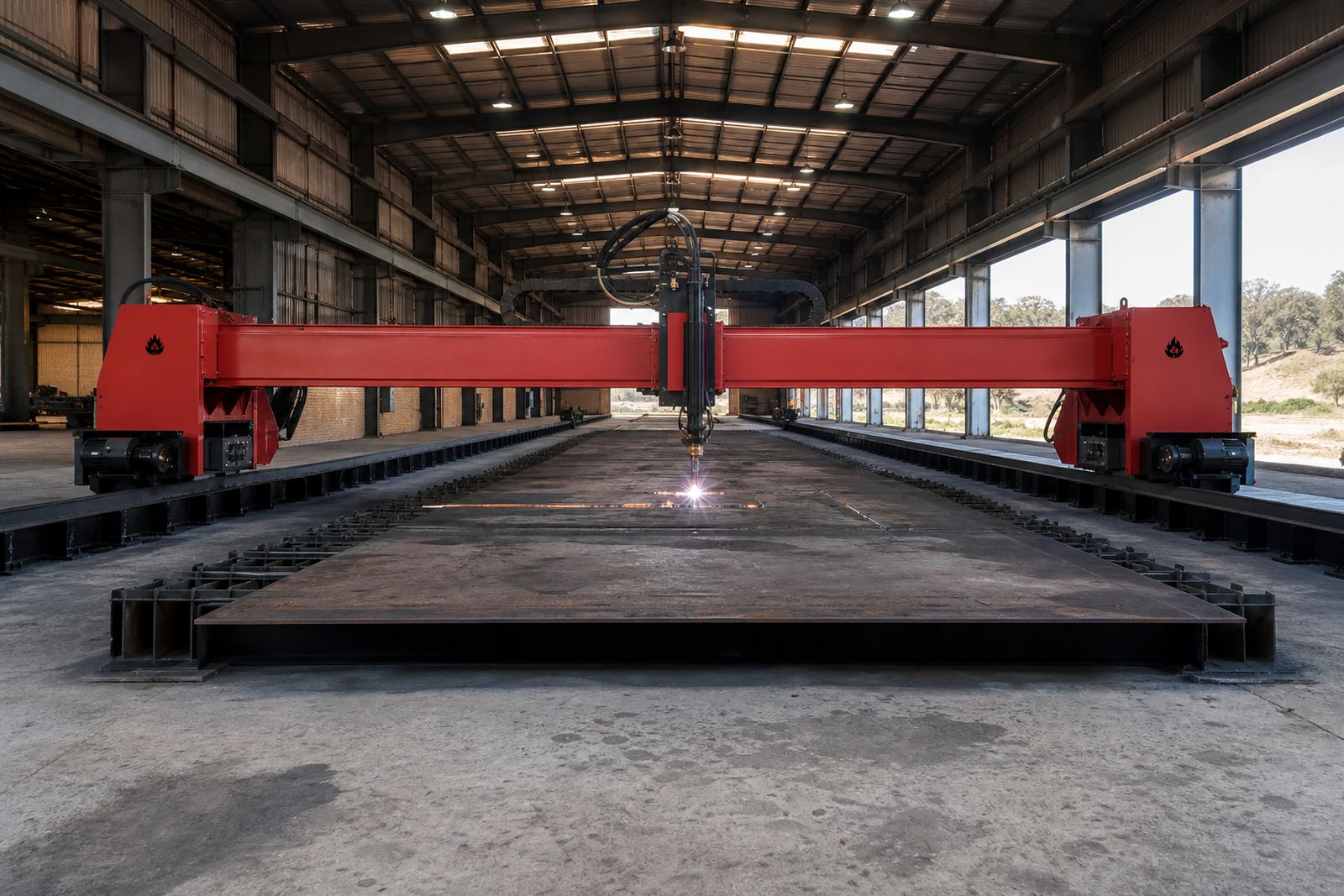
A heavy gantry only cuts properly when the rails sit on a foundation that stays straight under load. We handle the rail foundation layout, levelling and on-site assembly so the machine starts on a sound base.
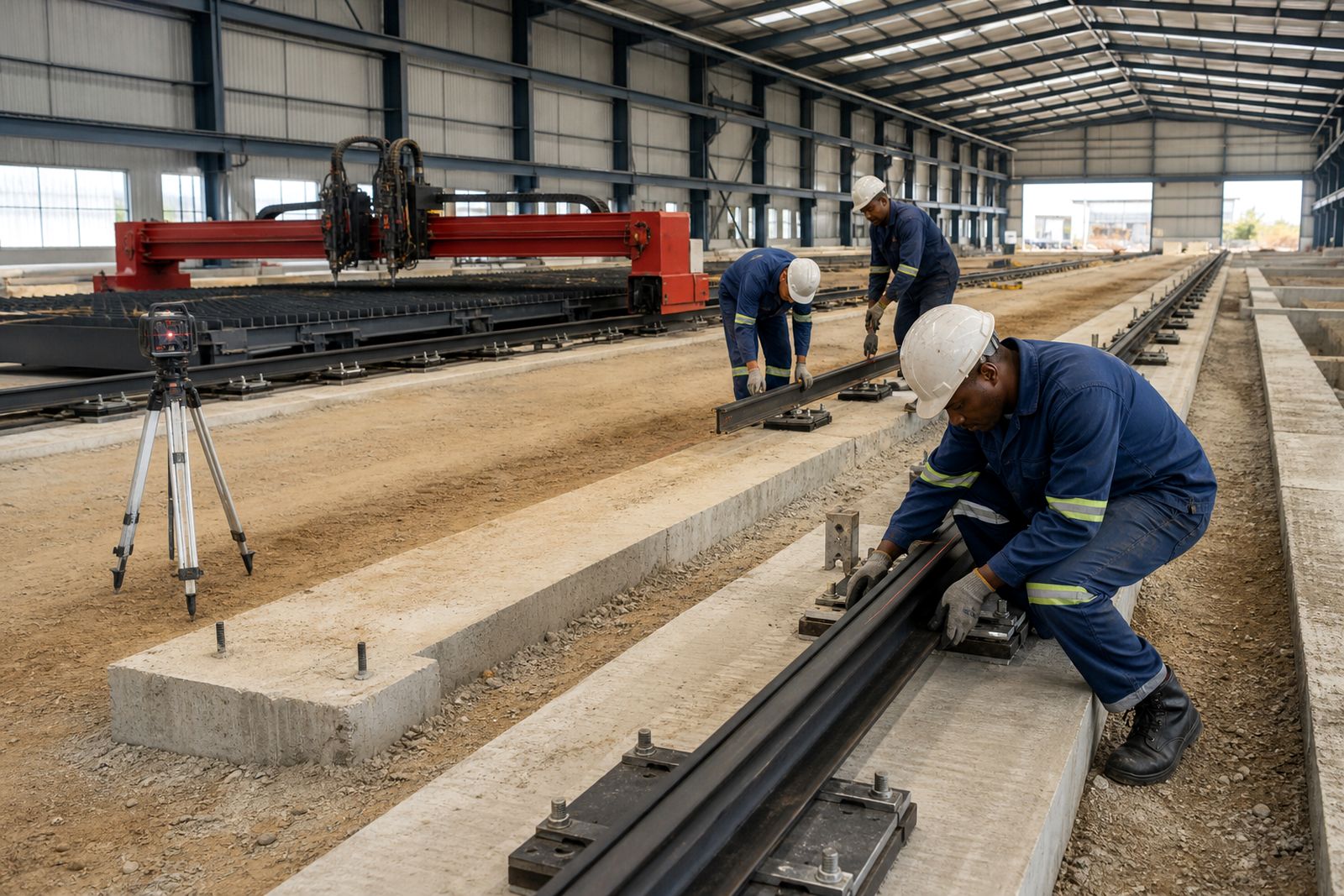
The ground work that makes the gantry hold line
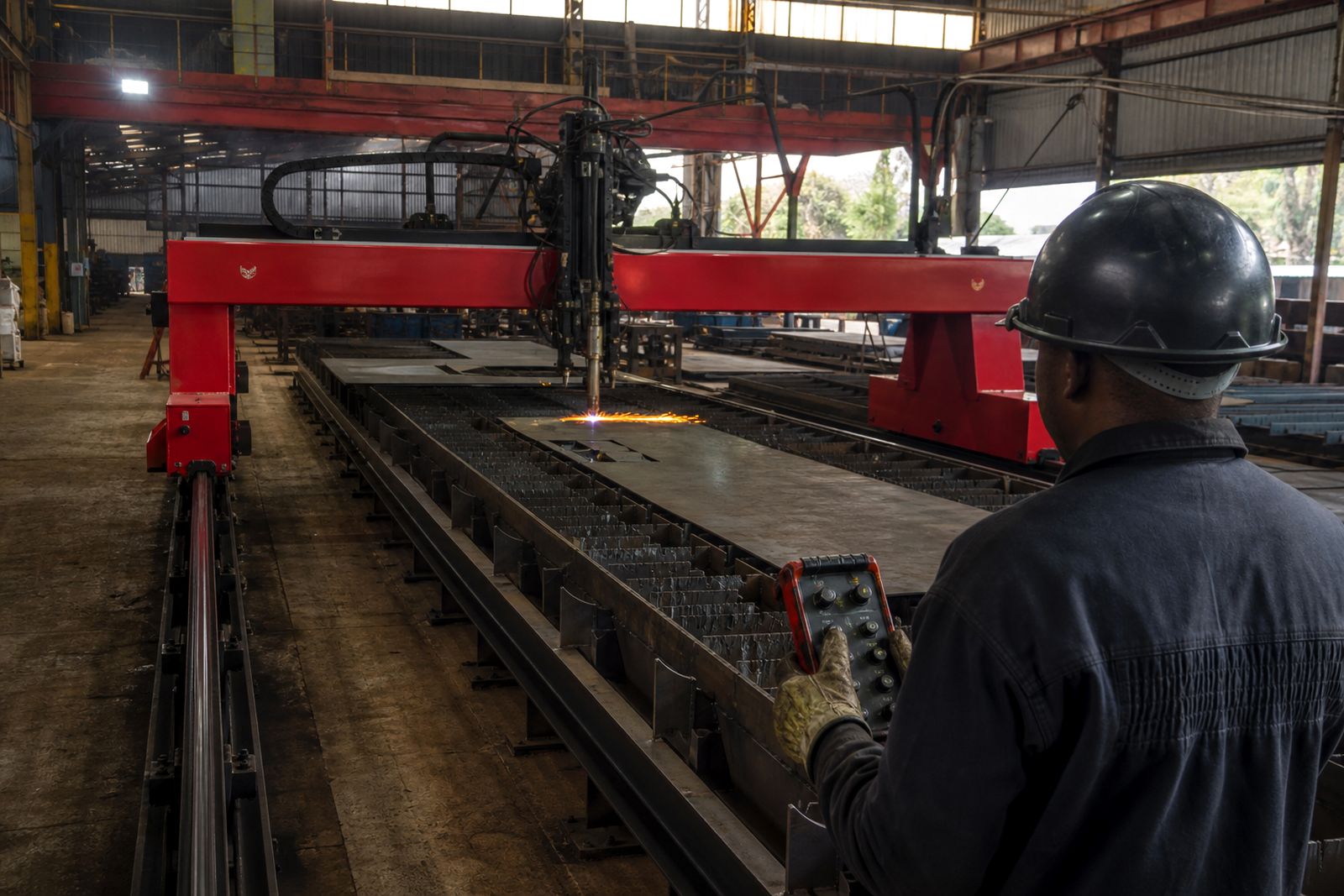
On a heavy plasma installation, the machine frame is one part of the job. Rail centres, anchor positions, floor level and the stiffness of the concrete all affect cut accuracy, gantry travel and long-term wear on wheels, racks and rails. Our team plans the foundation around the gantry width, rail span, process loads and the way plate is moved in your shop.
This service is for industrial gantry systems from 1.5 metres to 7 metres wide, built for steel service centres, mines and structural fabricators. We do not handle small bench beds or portable cutters. Work is coordinated from Vanderbijlpark, with installation carried out on sites across Gauteng, Mpumalanga, the North West, KwaZulu-Natal and the Northern Cape.
- Rail foundation layout for the specified gantry width
- Levelling points and anchor setting plan
- On-site rail installation and alignment
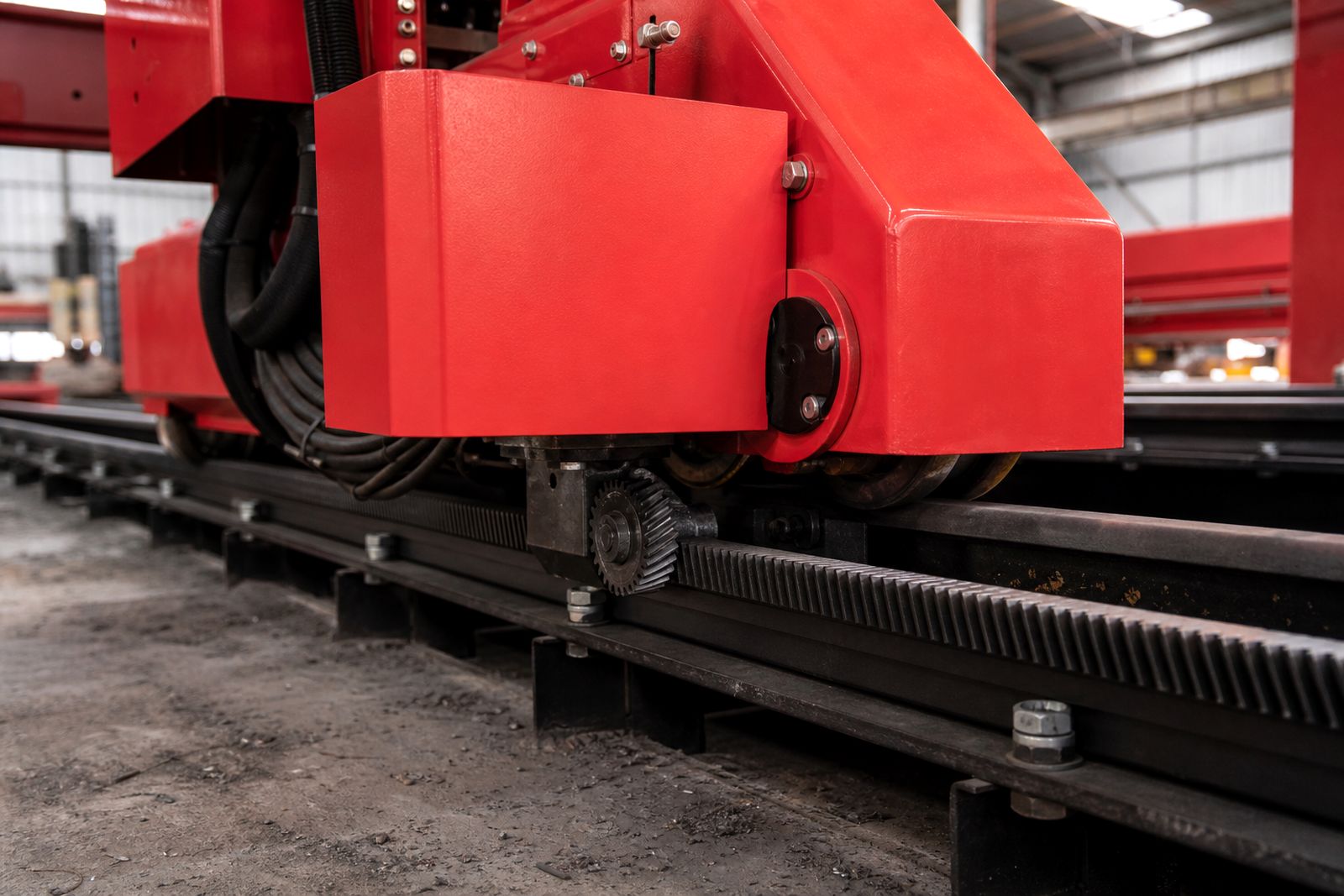
- Gantry assembly, rack fitment and travel checks
- Installation linked to operator training on site where required
What is included in the foundation and install scope
We start with the actual machine requirements and the slab requirements for the site. The foundation design covers rail position, straightness tolerance, fixing method, grout or packing arrangement where needed, and clearances for loading and maintenance. If the gantry will run with dual drive, long rail lengths or multiple heads, that is taken into account early because it changes how tightly the two rail lines must be held over distance.
On installation days our own crew handles the mechanical set-out and assembly. That includes positioning the rails, checking level across both sides, setting the gantry onto the running gear, fitting racks and confirming that the machine tracks evenly from one end to the other. On larger sites there is often other traffic around the bay, so we also work around crane lanes, plate stacks and access for forklifts.
- Site measure-up against the approved machine layout
- Checking slab condition or new foundation readiness
- Rail placement, alignment and level verification
- End truck and gantry bridge assembly
- Gear rack positioning and mesh checks
- Basic motion testing before cutting setup starts
How the work moves from drawing to commissioned machine
The process usually starts with a site review and a discussion about material flow. We need to know how plate reaches the table area, where scrap will be removed, and whether the bay has enough straight length for rail overrun, service access and safe loading. From there the foundation layout is issued to suit the selected gantry width and head arrangement.
Once the client has prepared the civil work, we inspect the foundation or slab area before the rails are fixed. Any level correction that falls outside the planned method must be dealt with before the machine goes down, because a rail line that is forced into shape will not stay there for long. After approval, our crew installs the rails, assembles the structure, sets travel references and completes mechanical checks. The cutting system and operator handover follow after the machine is physically true. On some sites the civil team is ready but the bay is still congested. That can slow lifting and assembly more than the machine itself.
- Site review and layout discussion
- Foundation design issued for the selected model
- Client completes concrete and embedded work
- Pre-install inspection of levels and anchor readiness
- Rail fitment, levelling and alignment
- Gantry assembly, travel tests and handover support
What the client must have ready before our crew arrives
A clean, accessible installation area saves a lot of lost time on a heavy gantry job. The concrete must be cured, the bay must be clear along the full rail run, and lifting access must be planned for the bridge and rail sections. If the machine is going into an active fabrication shop, it helps to isolate a working zone so our crew is not stopping every hour for material movement.
Power, compressed air and extraction arrangements for the cutting process should also be coordinated with the broader machine installation, even though the rail foundation work is the first physical stage. On older floors we may also need confirmation of reinforcement details or proof that the slab edge will not break away under anchor load.
- Finished concrete or approved slab area at the required dimensions
- Clear access along the full rail length plus working space at both ends
- Lifting equipment or site lifting support where specified
- Safe storage area for delivered rails and gantry components
- Site induction and permits where mine or plant rules apply
- Confirmed services and access routes for the machine commissioning stage
How pricing is worked out
Foundation and installation pricing is based on the actual machine size and site conditions. Gantry width is one part of the scope. A 3 metre system going into a new, straight bay is a different job from a 6 metre dual-drive machine on an uneven floor in a live production plant. Rail length, travel length, head configuration, anchor method and the amount of level correction all affect labour and materials.
Travel from Vanderbijlpark, accommodation for out-of-town work, lifting requirements and plant access restrictions are also part of the cost picture. Mines and remote Northern Cape sites often need more planning around site induction, vehicle access and freight handling. Where civil work is done by others, our pricing will make clear what is included on our side and what remains the client's responsibility. If you need a machine and foundation package tied together, send the site details through our contact form so the scope can be matched properly.
Aftercare once the machine is in place
After installation, the most useful aftercare keeps the machine working properly on site. We check that the rail line remains true after initial running, confirm rack mesh and wheel contact, and deal with normal settling issues where the foundation and machine bed have just taken load for the first time. Operator training can be scheduled as part of the handover so the team knows what to watch on a long-travel gantry.
We also give guidance on keeping the rail path clean, checking anchors during early production and spotting signs of misalignment before they become wear problems. In coastal or high-moisture areas, corrosion control on exposed steelwork and rails matters more than many shops expect. A heavy machine can tolerate hard production, but it still needs straight rails and a floor that does not move under it.
For linked reading, the engineering notes on single or dual drive and rail foundation basics explain the layout choices behind larger systems.
What our Gantry Plasma System customers say
Verified Google reviews
Questions we get asked
Do you install on an existing slab?
Installation on an existing slab is possible where the slab is suitable for the rail loads and can hold the required straightness and anchor positions. We assess level, condition and access before confirming the installation method.
Can you handle long gantries with dual drive rails?
Dual-drive layouts are part of our normal scope on larger industrial systems, with rail alignment and side-to-side level checked carefully over the full travel length.
Is civil work included in every project?
Civil work is included on some projects and excluded on others. Some clients use their own civil contractor and we provide the foundation design and installation requirements. Other projects are packaged so the groundwork and machine install are coordinated together.
Also worth a look
Tell us about the job
Send sizes, materials and where you are through our contact form, and we will come back with the practical options.
Open the contact form