

Gantry widths from 1.5 to 7 metres
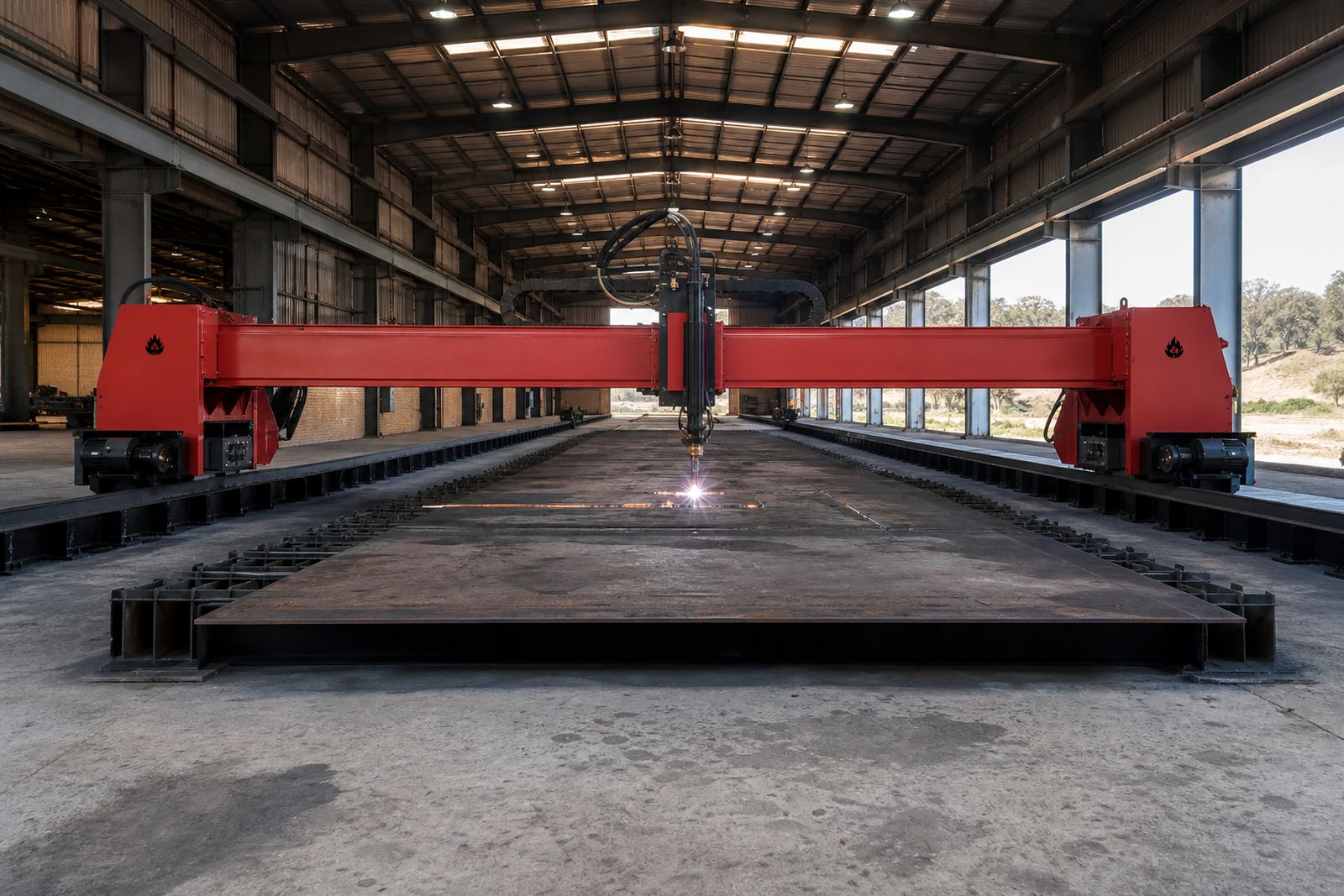
Our gantry range covers heavy industrial plasma systems from 1.5 metres to 7 metres wide. Width, rail length and drive layout need to fit the work done in steel service centres, mines and structural fabrication shops.
Start with plate width, not catalogue size
Choosing a gantry starts with the widest plate you need to process on a normal week, not the occasional once-off sheet. A machine that looks generous on paper can become tight in use if you need edge clearance for clamping, torch approach, or a bevel head moving near the rail side.
Across our range, widths run from 1.5 metres to 7 metres. Smaller gantries suit narrower plate programs and shorter runs, while the wider end of the range is aimed at steel service centres, mine maintenance plants and structural workshops handling broad plate with repeat nesting. The right size is usually the one that clears daily work properly without forcing awkward loading routines.
- 1.5 m to 2.5 m widths suit narrower plate and compact production lanes.
- 3 m to 4 m widths are common where mixed jobs move through one cutting area.
- 5 m to 7 m widths are generally specified for broad plate, multi-torch work and long rail runs.
Where single drive makes sense
Single-drive gantries are usually considered on the narrower widths where mass, traverse load and rail span remain within a practical range for one side drive system. They are often chosen for lines where the cutting pattern is straightforward and where the machine is not carrying a heavier multi-head arrangement.
A properly engineered single-drive gantry can still form part of a serious production line. The width and rail length need to match the job. Once the structure gets broader and the working length stretches out, drive balance becomes a much bigger part of accuracy and long-term running.
- Best suited to narrower gantries and shorter rail lengths.
- Useful where head load is moderate and the cut program is uncomplicated.
- Often easier to place in existing shops with limited floor width.
When dual drive earns its place
Dual-drive gantries are generally the better fit as width increases, especially where the machine must carry more than a basic torch arrangement or where the rail run is long. Driving both sides of the gantry helps keep motion square across the span, which matters on heavy industrial systems cutting day after day.
For wider beds, heavier bridge sections and production work that includes bevel cutting or multiple torches, dual drive is usually part of building a stable platform that can hold alignment over distance and over time. In a shop with long plates and frequent indexing the difference is obvious.
You can read more detail in our engineering notes on single drive or dual drive, but the short version is simple: wider gantries and longer rails usually point toward dual drive.
A practical width comparison
Width on its own never tells the full story, but it gives a solid starting point when you are narrowing the options.
- P-1500 and P-2000 are often considered where floor space is tighter and plate width stays modest.
- P-2500 and P-3000 sit in the middle where many fabrication shops need flexibility without moving into very large foundations.
- P-3500 and P-4000 work well for broader plate programs and more frequent nesting across the sheet.
- P-5000 to P-7000 are aimed at heavy industrial lines where loading method, rail straightness and drive layout must be planned as one system.
If your operation changes plate width through the month, select for the real production mix with sensible allowance for working clearance. It is cheaper to allow sensible working clearance now than to find the bridge is always running close to the limit later.
Rail length, foundations and shop layout
A gantry width decision should always be made alongside rail length and the civil side of the installation. In Vanderbijlpark and across the Vaal Triangle we often see shops with enough open floor for a wider bridge, but the foundation line, plate feed path or crane access ends up controlling the final machine size.
Long rails need careful foundation work, level control and straight installation. On wide heavy gantries, this forms part of the cutting result. A machine can only perform as well as the path it runs on, and even a strong bridge will show problems if the rail base is not prepared correctly.
That is why our scope covers foundation design, installation and operator training on site. The gantry, rails and the floor below them have to be treated as one working system, not separate items bought in isolation.
How to narrow the range before you enquire
You do not need a finished plant layout to start the discussion, but a few real measurements make the choice much easier. The more practical the information, the better the match between machine width and the way your team loads and cuts plate.
- Maximum plate width used in normal production.
- Expected rail length and available floor run.
- Whether the machine will carry a single torch, multi-torch setup or bevel head.
- Crane access, loading direction and plate staging space.
- Whether the machine will work in a steel service centre, mine plant or structural fabrication shop.
The P-1500 through P-7000 range breaks into individual sizes. If you already know the approximate cutting width, move to the relevant model page. If not, send the operating details through our contact form and we will assess the width, rail and drive arrangement around the work you actually do.
Explore the range
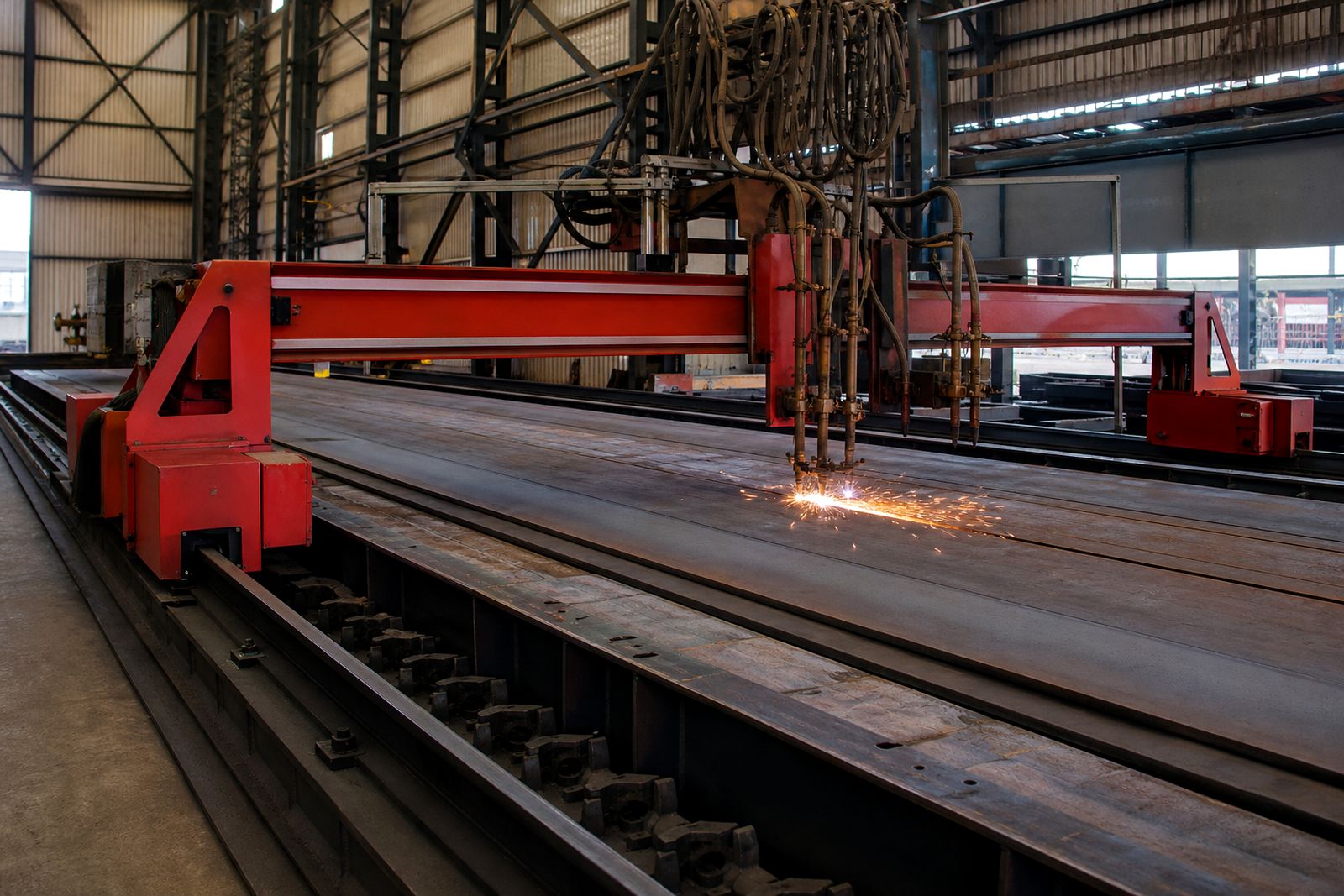
P-1500 gantry, 1.5 m cutting width
A narrow heavy gantry for production cutting on strip, flat bar and smaller plate widths.
Read more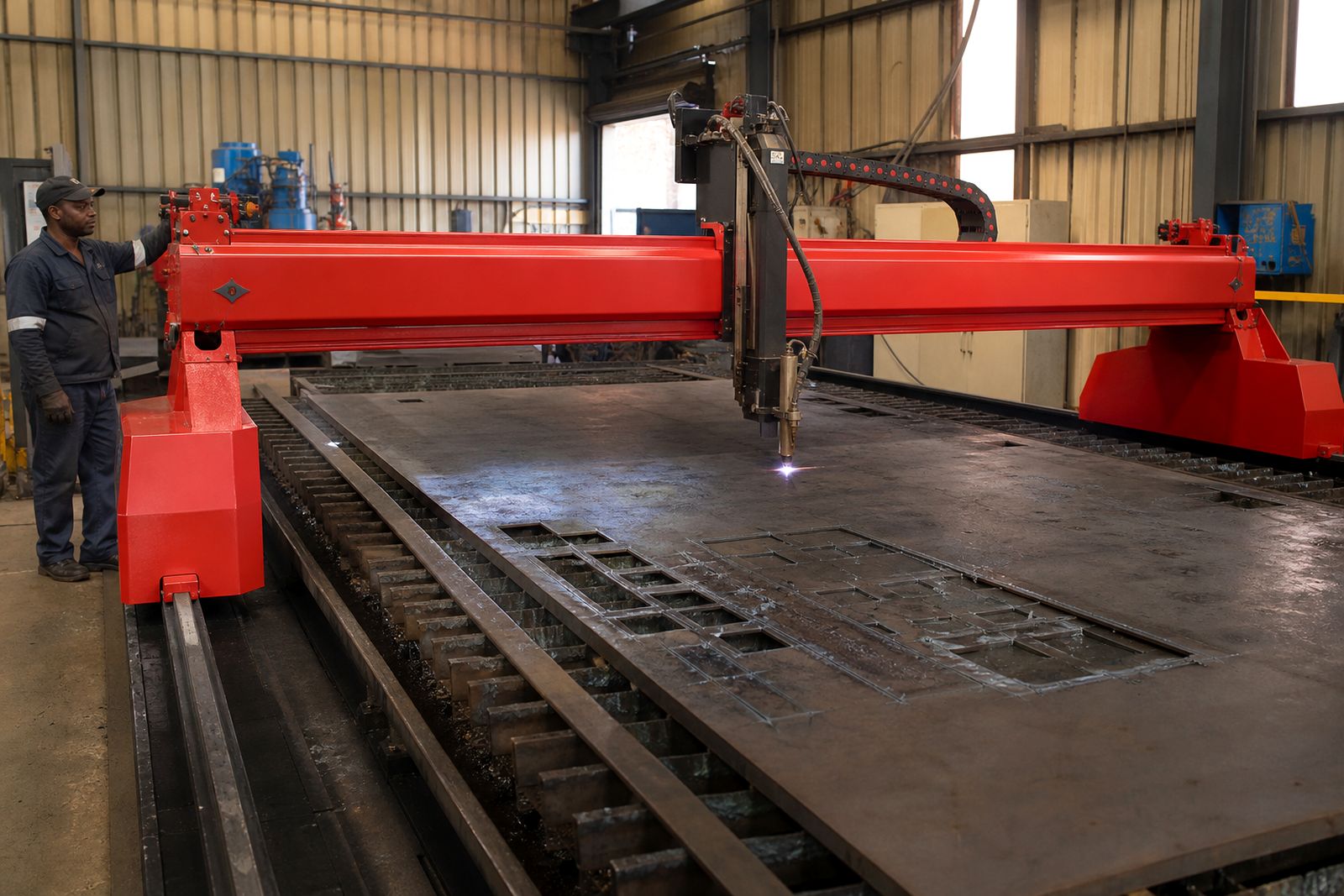
P-2000 gantry, 2 m cutting width
Heavy 2 m gantry plasma for full-width plate, proper rails and industrial duty on real fabrication floors.
Read more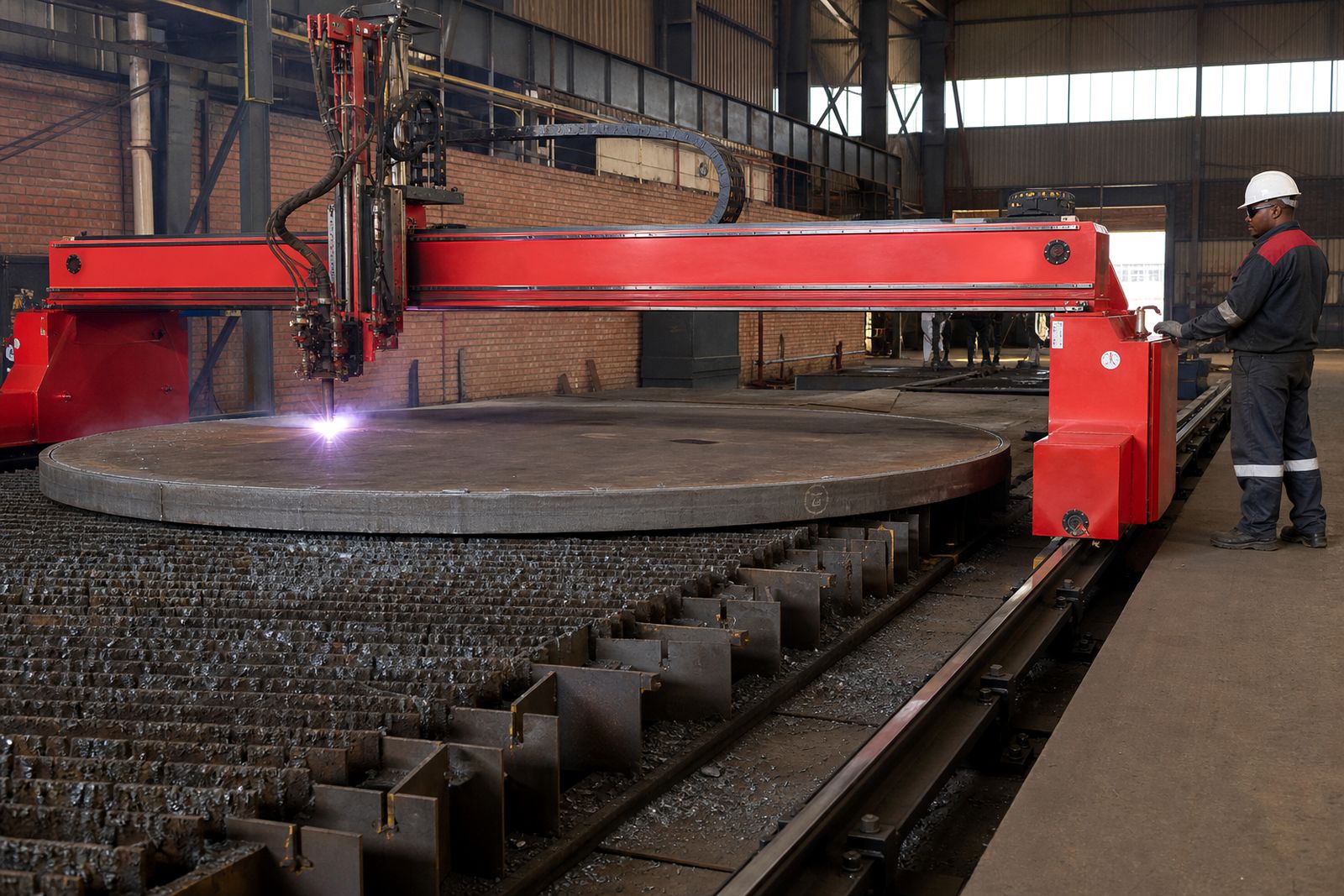
P-2500 gantry, 2.5 m cutting width
A 2.5 metre rail gantry for structural plate and tank work where a compact heavy-duty layout matters.
Read more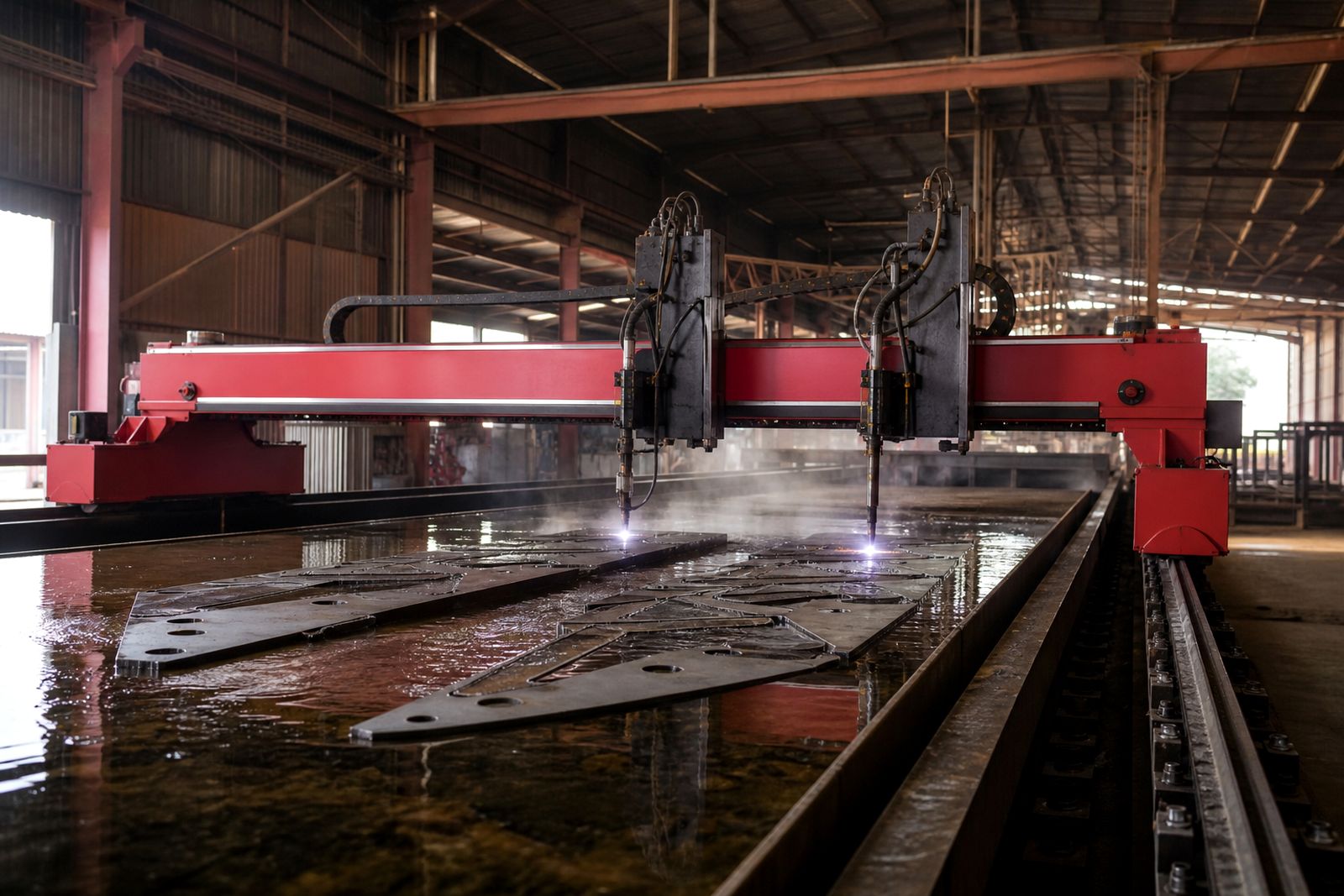
P-3000 gantry, 3 m cutting width
A 3 metre gantry that suits busy plate shops, structural steel lines and service-centre production.
Read more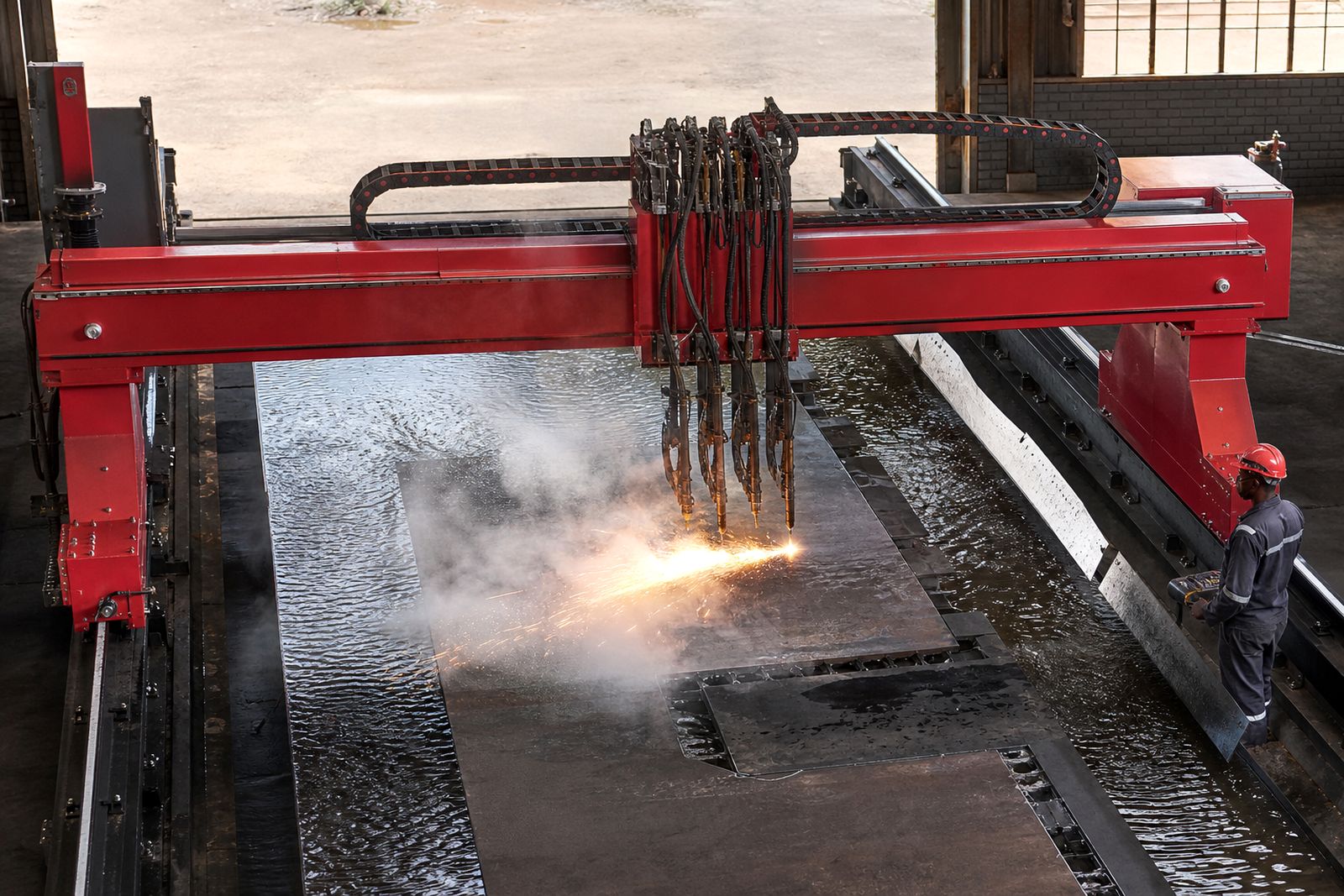
P-3500 gantry, 3.5 m cutting width
A 3.5 metre heavy gantry for wide plate, liner sets and structural parts that need proper rail and foundation work.
Read more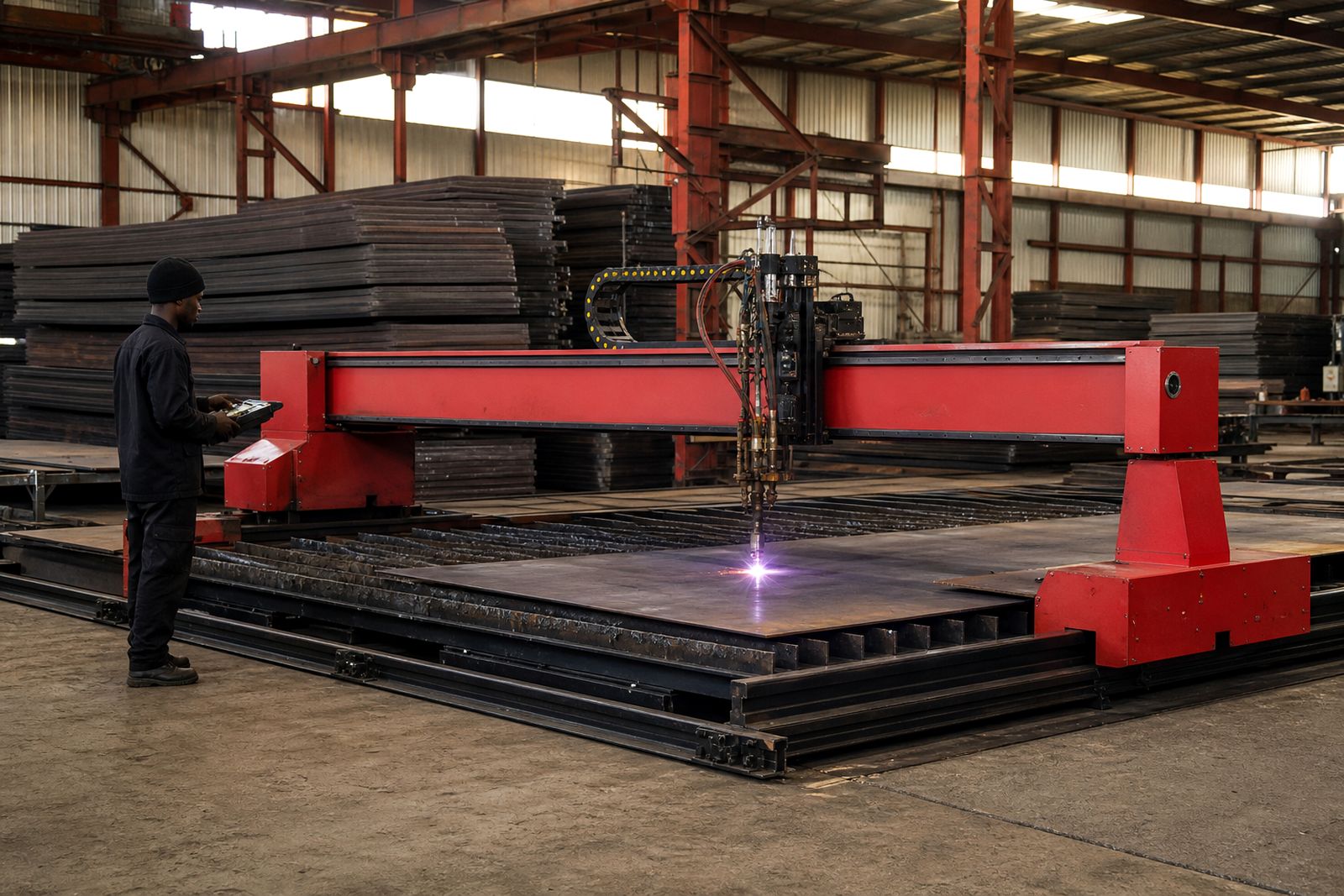
P-4000 gantry, 4 m cutting width
A 4 metre dual-drive gantry for high-throughput plate cutting in service centres and larger fabrication plants.
Read more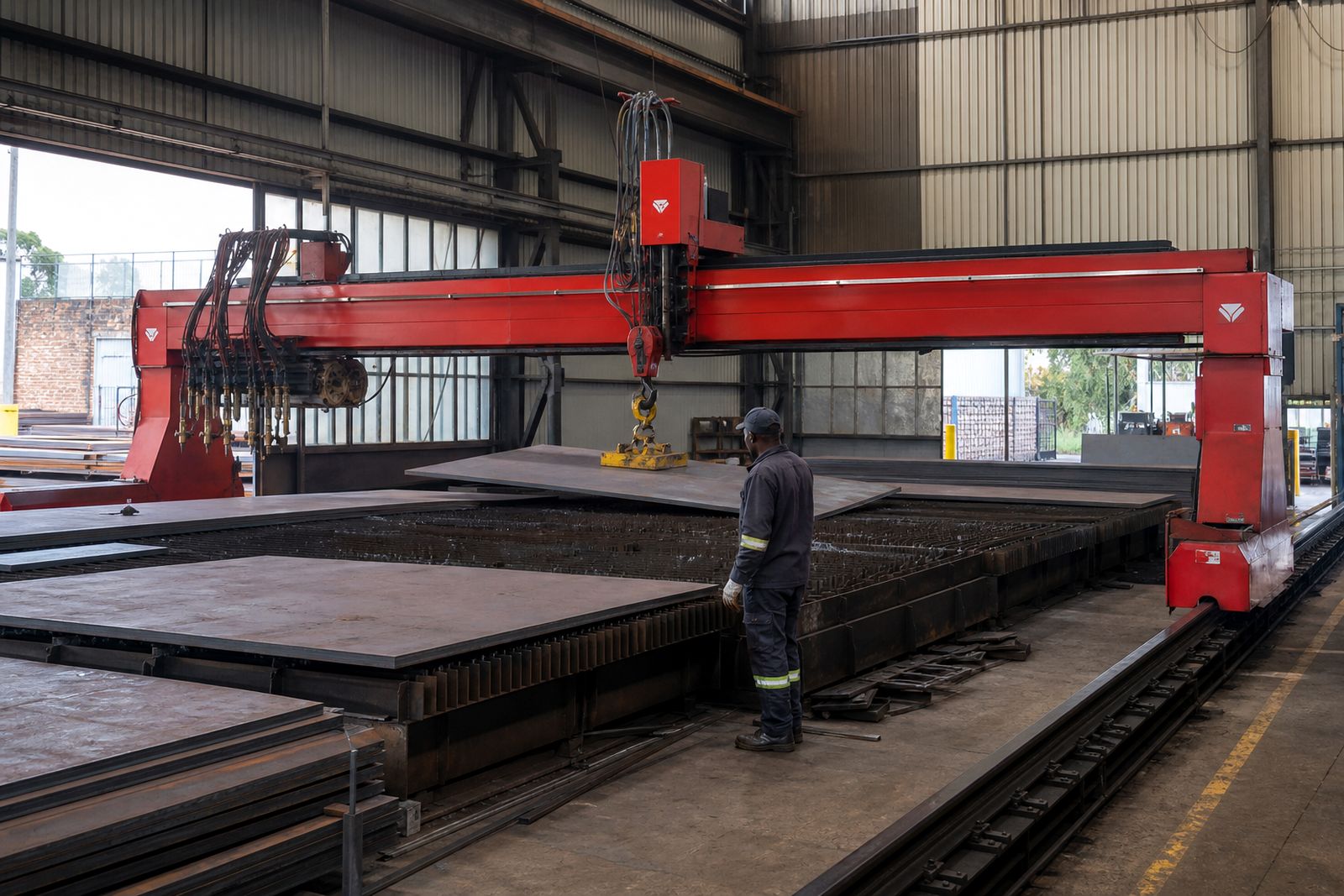
P-5000 gantry, 5 m cutting width
A 5 metre heavy gantry suited to two-table layouts and long production shifts on structural steel.
Read more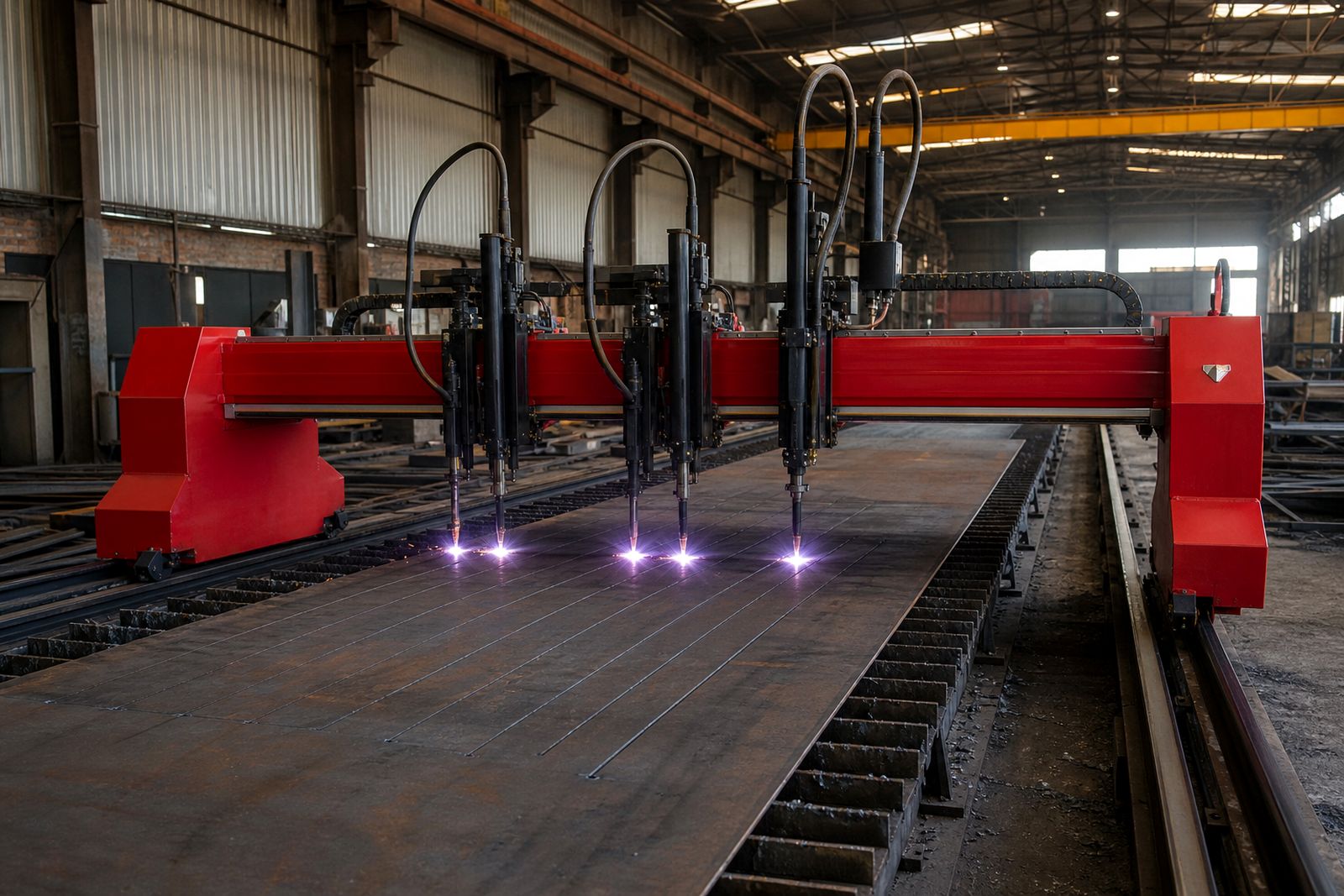
P-6000 gantry, 6 m cutting width
A 6 metre gantry for wide plate, strip cutting and production work in heavy fabrication plants.
Read more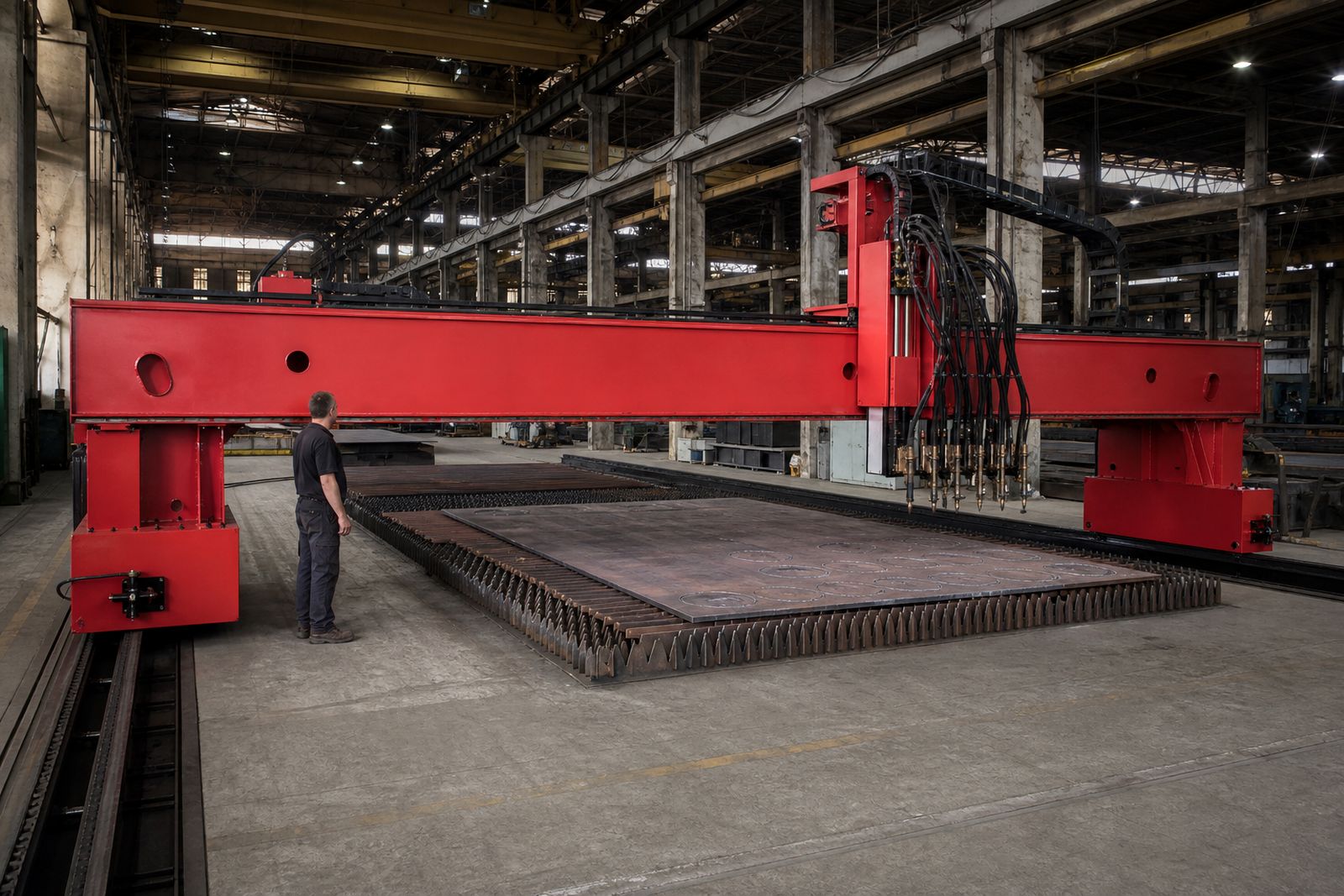
P-7000 gantry, 7 m cutting width
Our 7 metre gantry is built for heavy plate lines that need stable travel over a very wide cutting span.
Read moreQuestions we get asked
Do you supply portable or bench plasma cutters?
We supply heavy industrial gantry plasma systems from 1.5 metres to 7 metres wide, engineered for fixed installation work.
Is a wider gantry always better?
Not always. The right width is based on plate size, clearance needs, head arrangement, floor space and the rail system that can be installed correctly in the shop.
Can a long machine still use single drive?
That depends on width, bridge mass, head load and rail length. As systems get wider and longer, dual drive is often the more suitable arrangement for keeping the gantry square in service.
Tell us about the job
Send sizes, materials and where you are through our contact form, and we will come back with the practical options.
Open the contact form