P-6000 gantry, 6 m cutting width
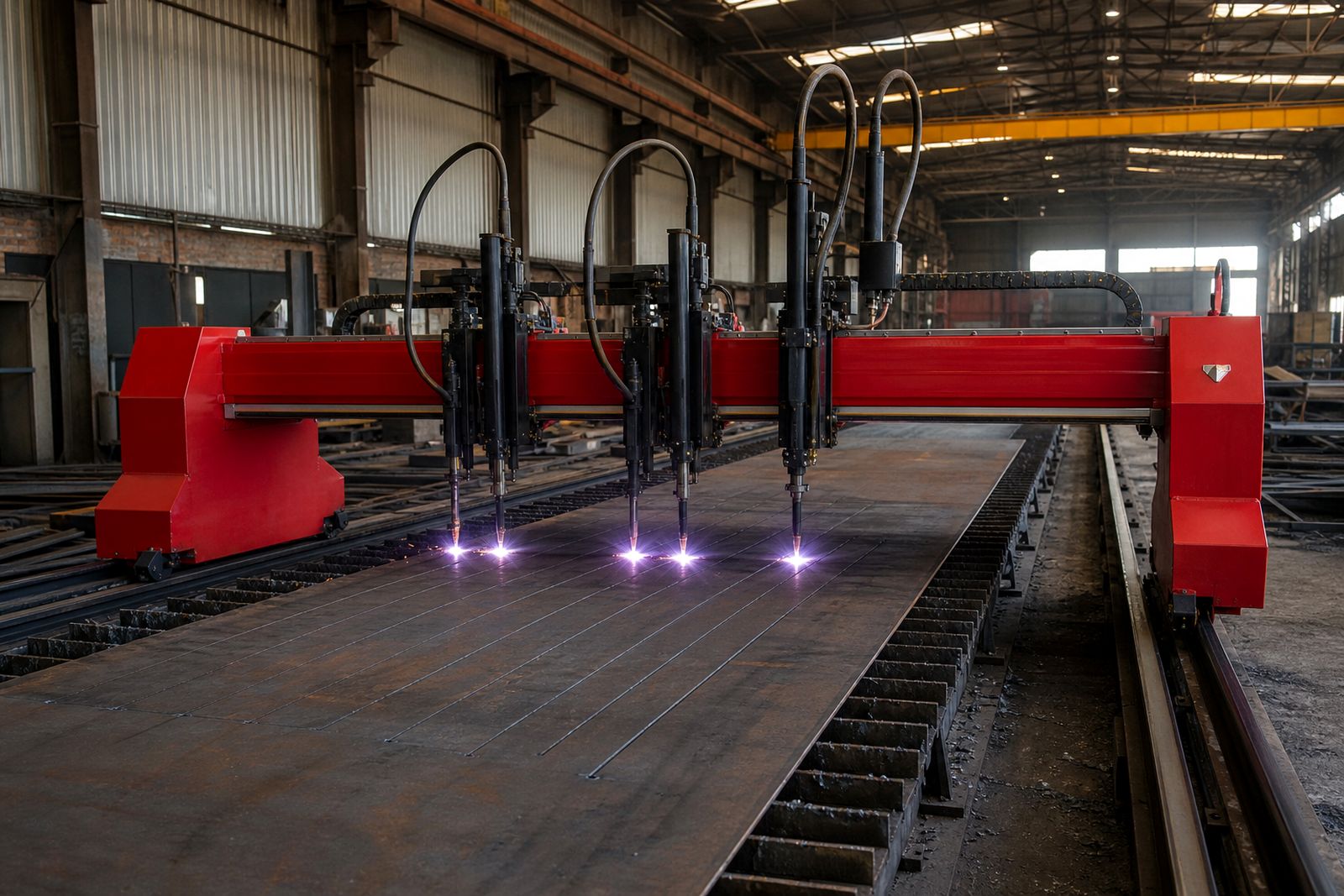
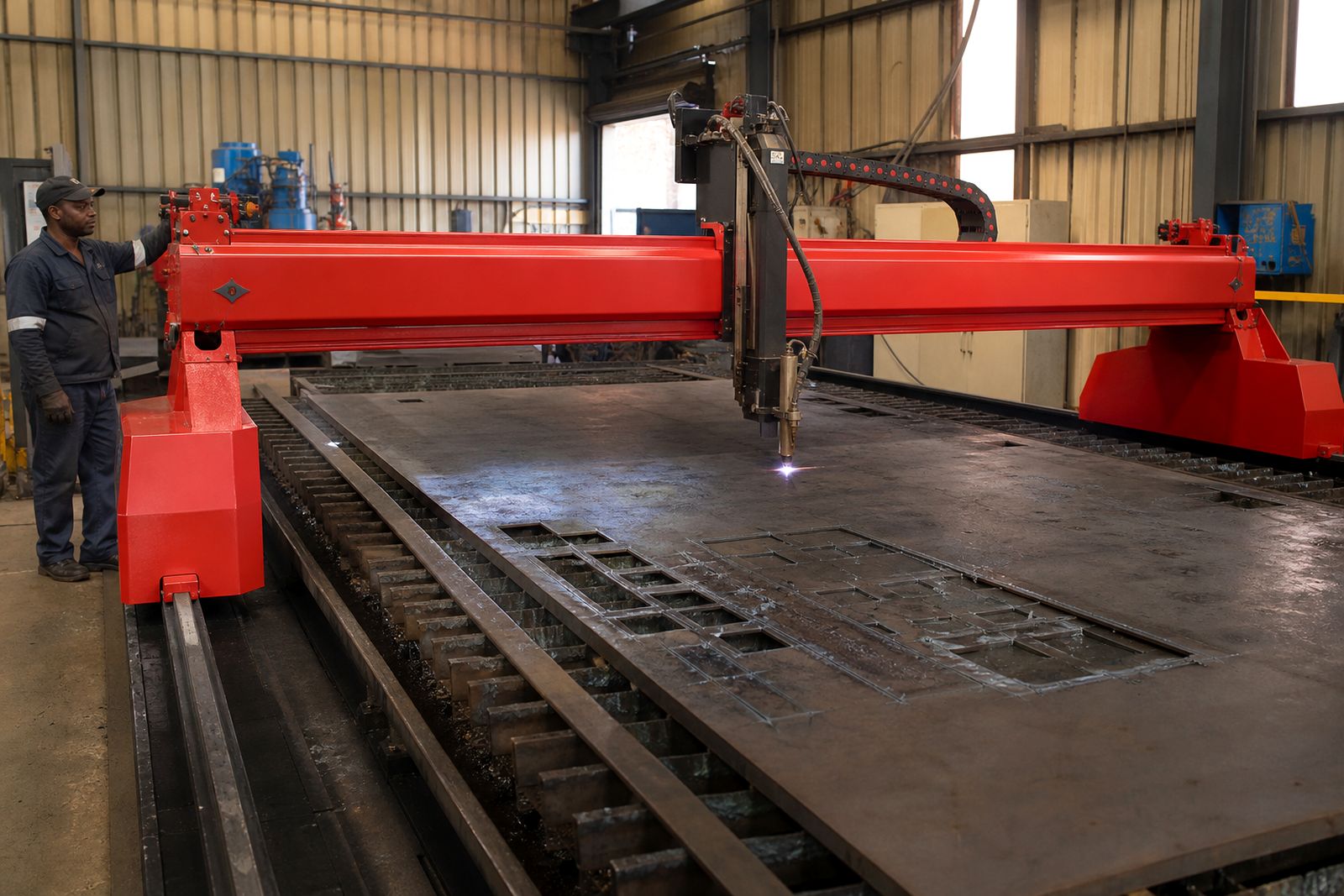
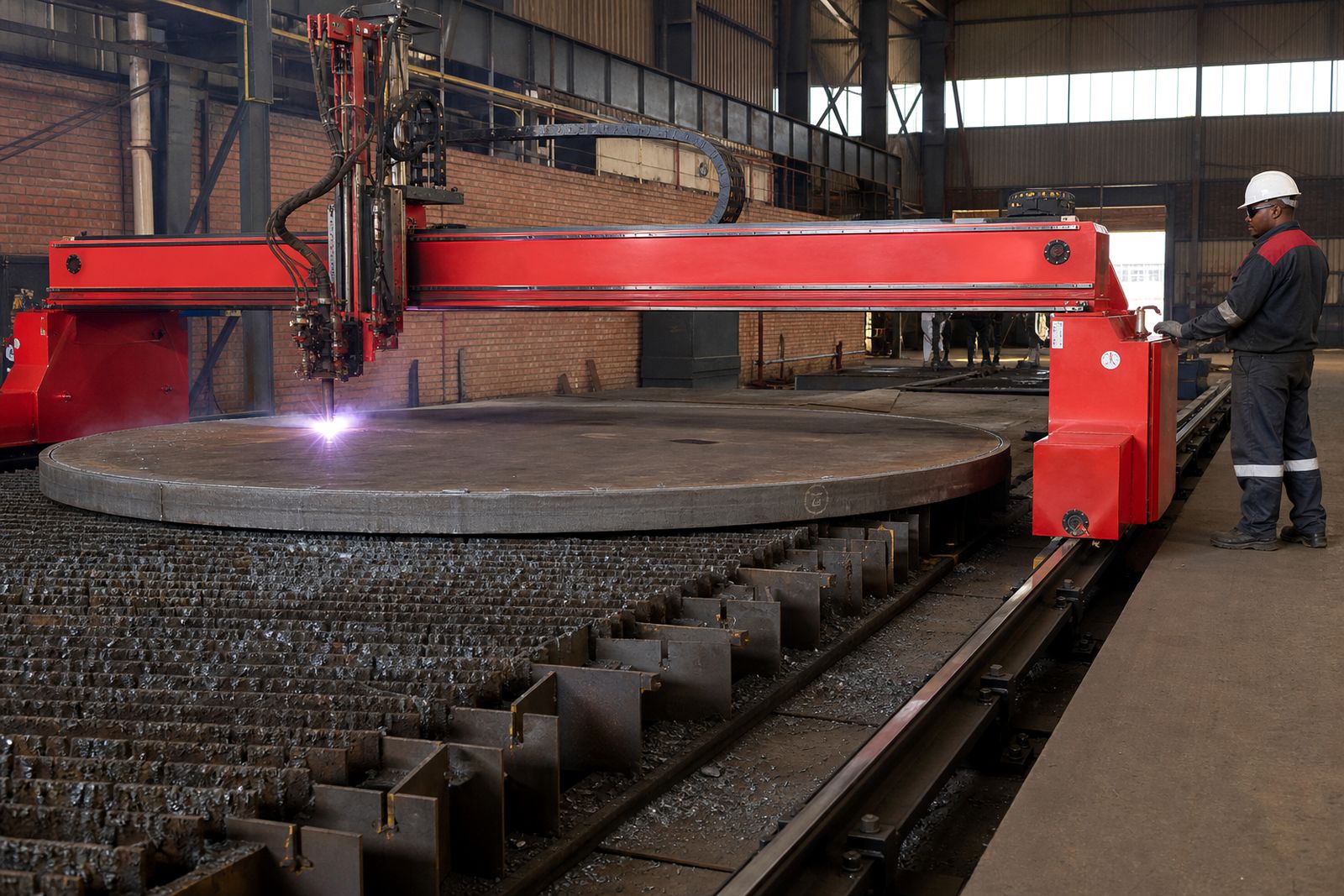
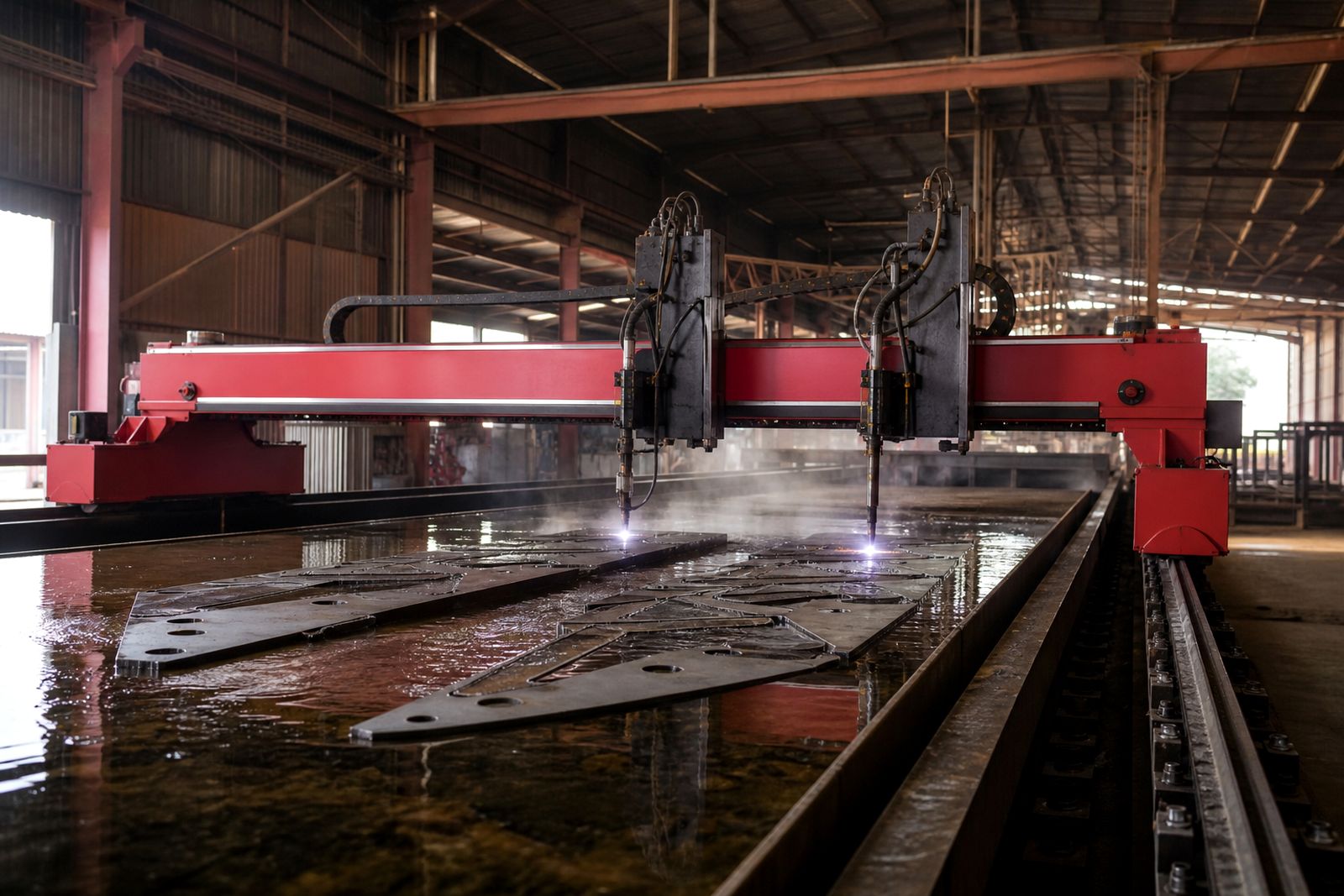
The P-6000 is a heavy industrial gantry plasma system with a 6 metre cutting width for wide plate and multi-torch strip work. It is built for plants that handle large sections, steady throughput and long rail runs with regular production cutting.
Where the P-6000 fits on the floor
The P-6000 sits in the range where plate width, part nesting and output start to justify a full heavy gantry rather than a smaller machine. A 6 metre cutting width gives room for broad plate, parallel strip cutting and layouts that reduce waste on structural and mining work. In steel service centres it suits repeat cutting on larger sheets. In fabrication shops it suits base plates, gussets, stiffeners, liners and long components that are awkward on narrower beds.
This model suits heavy industrial plate work in a planned bay with proper rails, clear loading space and an operator who works on plate every week.
- Best suited to steel service centres, mines and structural fabricators.
- Useful where long cuts and broad plate are part of normal production.
- Good for multi-torch strip work where output matters more than compact footprint.
- Not intended for portable cutting, bench machines or small standard beds.
Working width, torch choices and gantry layout
The cutting width on the P-6000 is 6 metres. That width can be paired with a gantry length and rail length to match the available building bay and the plate lengths you process. Single-drive and dual-drive arrangements are both available, but on a machine of this size the final drive layout depends on gantry mass, rail length, torch count and the duty expected on the floor.
For shops cutting repeated strip widths, multi-torch heads can be arranged to raise output on the same pass. For fabricators producing weld prep directly on the machine, bevel head options can be specified where the job mix warrants it. The right combination depends on whether the plant cuts mostly strips, nested profiles or a mix of both. A very wide table with too many heads for the actual workload can become hard to manage, so we match the carriage and head count to the plant rather than force a standard package.
- Cutting width: 6 metres.
- Drive options: single drive or dual drive, subject to gantry mass and rail length.
- Head options: standard plasma carriage, multi-torch strip setup, bevel head arrangements.
- Rail and rack selection is matched to the gantry span and site duty.
Material flow and jobs it handles well
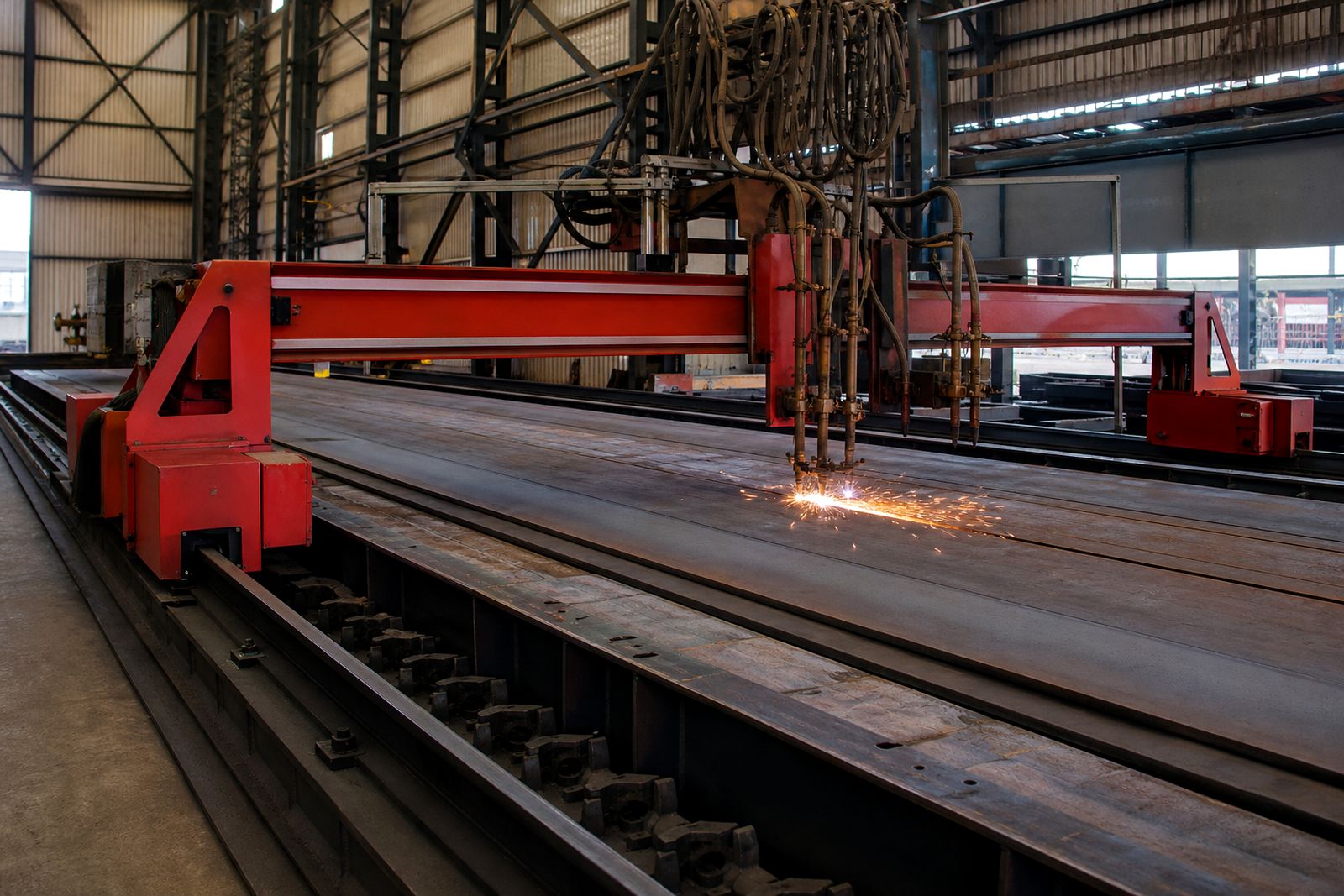
A 6 metre machine earns its place when loading and offloading are already organised. Forklift lanes, plate stacking position and skeleton removal all matter. With enough side clearance, operators can load wide plate without clipping rail guards or stopping production to shuffle stock around. On service-centre work the width helps with better nesting on broad sheets. On heavy fabrication it gives room for larger profiles and lets the shop cut multiple narrower items across one plate.
This machine suits sites with good access, steady plate volume and a stable base for long rails. It suits teams that are ready for proper civil planning and installation. This size needs a proper installation and the workshop must be ready for it.
Rail foundations, bay space and installation needs
The P-6000 needs a straight, stable foundation for the rails and enough floor width for loading, operator movement and maintenance access. Rail alignment is a core part of installation on large gantries. Floor condition, grout line, anchor positions and bay drainage all affect long-term travel quality. In coastal areas humidity and corrosion control deserve attention on exposed steelwork and rail surfaces, while inland dust often becomes the bigger housekeeping issue.
Before installation we need the actual bay dimensions, overhead obstructions and the direction that material enters and leaves the cutting area. If a crane works above the bay, hook height and travel path should be noted early. Plants with heavy forklift traffic near the rails should plan protection so rail edges are not struck during loading.
- Allow clear loading space along the cutting side and at plate entry points.
- Confirm slab condition and whether a dedicated rail foundation is required.
- Note crane height, door openings and any columns inside the bay.
- Plan cable routing and control position to avoid traffic damage.
Care on a machine of this width
Wide gantries stay accurate when basic care is done steadily. Rail tops must be kept clean, rack areas should not collect scale, and the carriage should not be left to push through scrap or plate offcuts. On long shifts small bits of slag and dust build up faster than many teams expect, and that can show up first as uneven travel or rough starts.
Operator training on site covers routine checks, normal wear points and the signs that the machine needs attention before cut quality drifts. Plants that keep a tidy cutting bay usually get more stable running from the rails and drive train. It sounds obvious but on a big machine housekeeping often is the difference between smooth weeks and nuisance faults.
Details to send when you enquire
Useful planning starts with the real job mix and the real bay. When you send details through our contact form, include the widest plate you handle, the plate lengths, approximate thickness range and whether output is driven by nesting work, strip cutting or both. If you already know the intended rail length, say so. If not, bay dimensions and photos help more than a rough guess.
Please also tell us whether the plant wants a single torch, multi-torch arrangement or bevel capability, and whether the machine will sit in a new area or replace an existing line. For sites in Vanderbijlpark and across the Vaal Triangle that often means checking civil work early, because a long rail run can affect how the rest of the bay is used.
- Required cutting width and expected rail length.
- Typical plate sizes, material thickness range and daily volume.
- Single torch, strip cutting, bevel work or a mixed production brief.
- Photos or drawings of the bay, including columns and crane path.
- Whether civil work, foundation design and installation are needed.
What our Gantry Plasma System customers say
Verified Google reviews
Questions we get asked
Can the P-6000 be set up for strip cutting?
Multi-torch strip cutting can be arranged where the plant cuts repeated widths and needs higher output from broad plate.
Is the P-6000 suitable for a small fabrication shop?
Usually not. This model suits plants with enough floor space, proper rail foundations and regular heavy plate work.
What should we include with an enquiry?
Send the plate sizes, thickness range, expected rail length if known, torch requirements and photos or drawings of the bay through our contact form.
Also worth a look
Tell us about the job
Send sizes, materials and where you are through our contact form, and we will come back with the practical options.
Open the contact form