Multi-torch and bevel heads
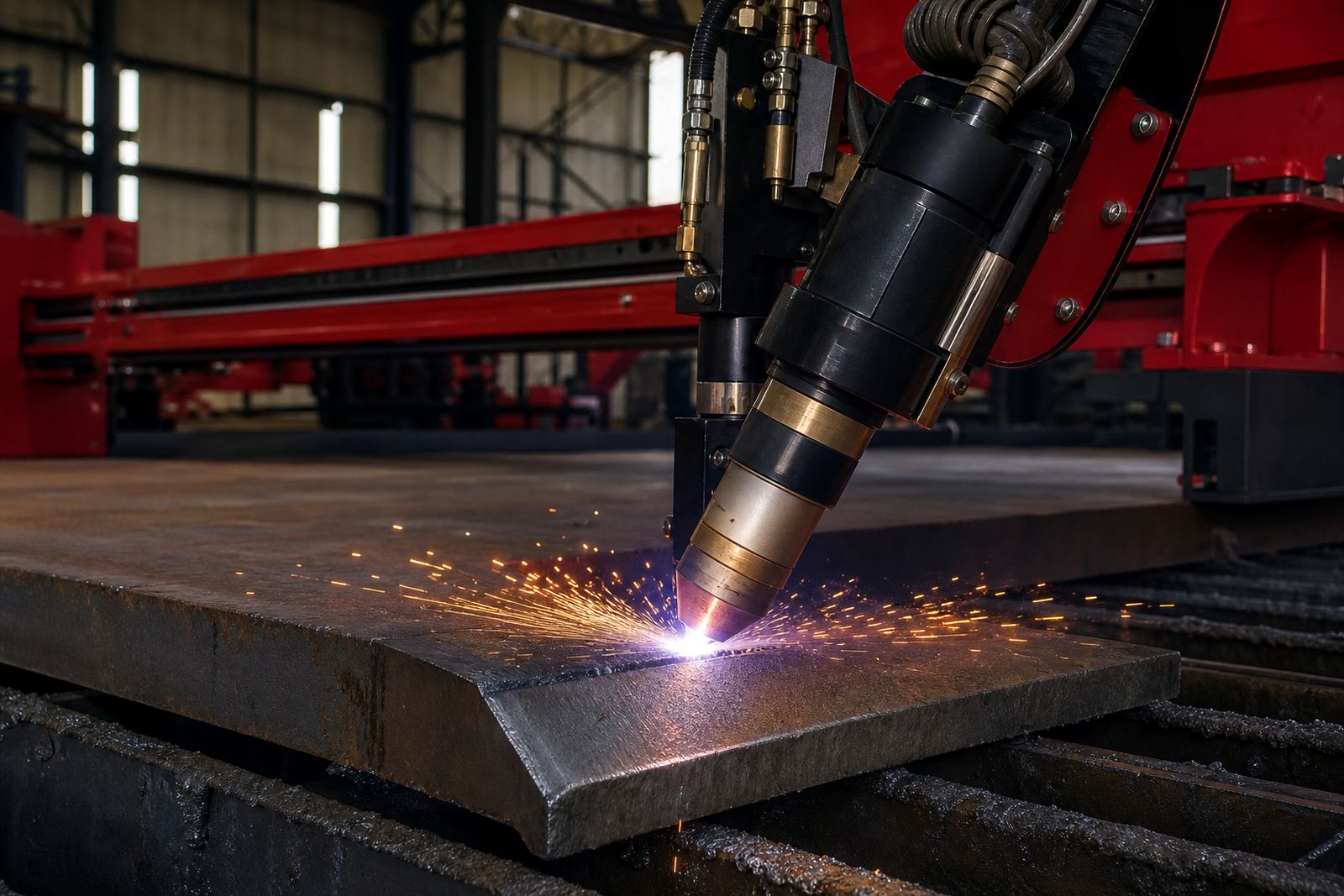
Rotary bevel heads and multi-station torch carriages turn a heavy gantry from a straight-cut machine into a production tool for weld prep and strip work. On wide industrial rails, that matters when plate movement is costly and repeat edge condition has to stay under control.
Where this option earns its place
Bevel and multi-torch options are paid for when edge prep or repeated parallel cuts form part of normal production, not the odd special plate. A rotary bevel head cuts V, Y and related weld-prep profiles so that downstream grinding is reduced and fit-up on thicker sections is cleaner. A multi-station carriage lets one gantry cut several strips in one pass, which helps service centres and structural shops where the same widths are cut all week.
On big tables, savings also come from plate handling, crane time and re-marking. More of the job is completed before the sheet leaves the gantry zone. In a mine workshop or a steel service centre that change can be worth more than the extra head itself, especially when thick plate is being bevelled for weld prep.
- Bevel heads suit weld preparation on structural members, heavy brackets and fabricated box sections.
- Multi-torch carriages suit strip cutting, repeated blanks and parallel production runs from wide plate.
- Both options make more sense on gantries from 2.5 metres upward where plate area and throughput justify the added setup.
What changes on the machine
A bevel setup adds a rotary axis assembly above or around the torch mount, with mechanical support strong enough for industrial travel over long rail lengths. The head is integrated into the gantry Z arrangement and motion package so angle, height and pierce sequence work together. A multi-torch arrangement adds extra torch stations across a carriage beam, each positioned to hold a set spacing from the next torch.
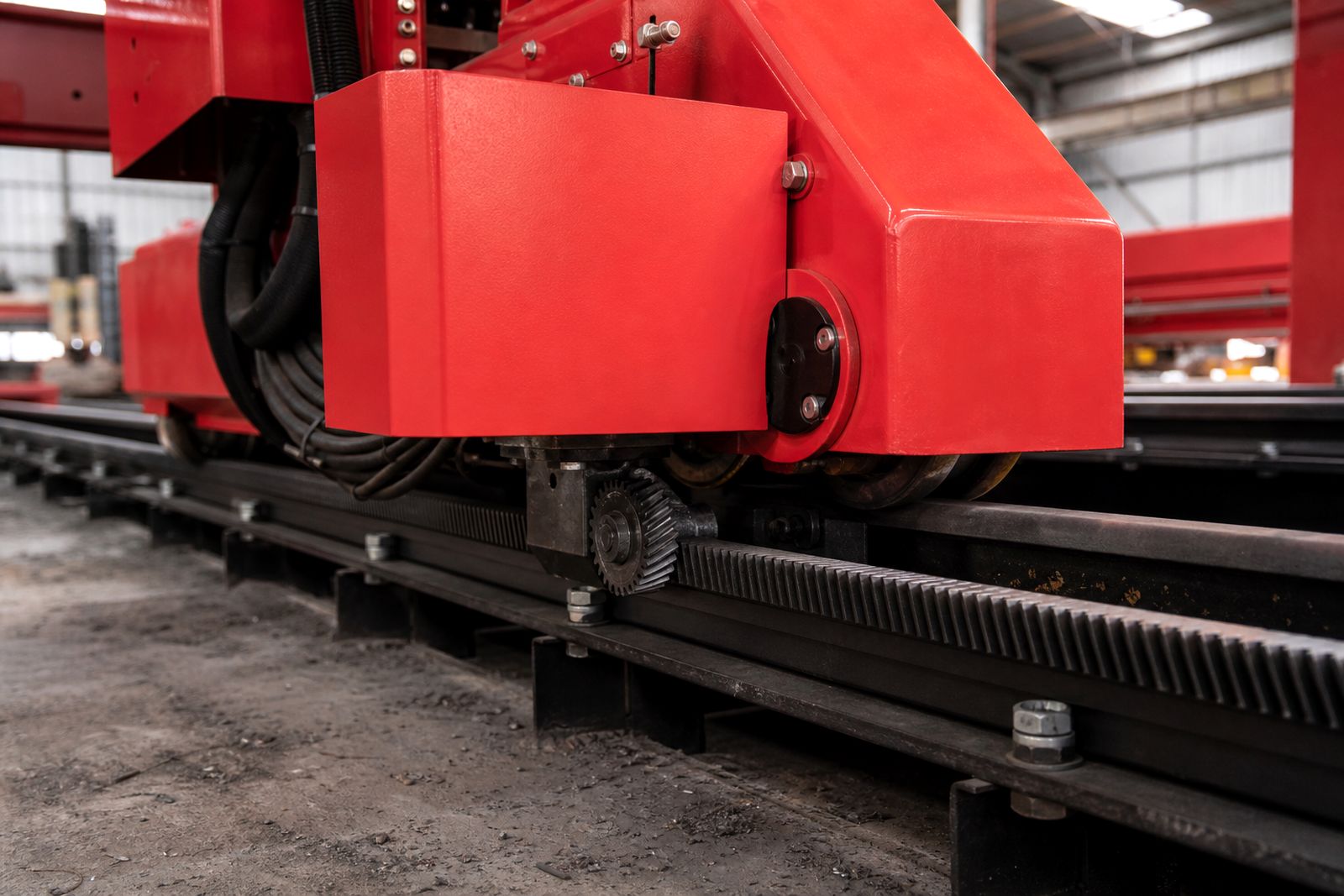
These options add real mechanical and control demands to the machine. Mass increases, cable routing changes and acceleration limits may need revision so that the gantry still tracks properly over the full span. On dual-drive machines the tuning between both sides becomes more important once a heavier process head is fitted. Torch collision protection and usable parking positions must also be planned, otherwise the added stations can become awkward in daily work.
How fitting and setup are handled
Fitting starts with a check on gantry width, rail condition, drive arrangement and available control channels. We look at the intended plate range, the usual bevel angle range and whether the carriage will carry one additional station or several. From there the head mount, service loops, homing logic and torch offsets are set out to suit the machine with a purpose-built bracket and layout.
- Mechanical fitment includes mounts, reinforcement where needed, service routing and clear travel limits.
- Control setup covers axis mapping, cut data tables, angle calibration and station offset entry.
- Commissioning includes dry travel checks, cut trials and operator training on alignment, consumable position and sequence changes.
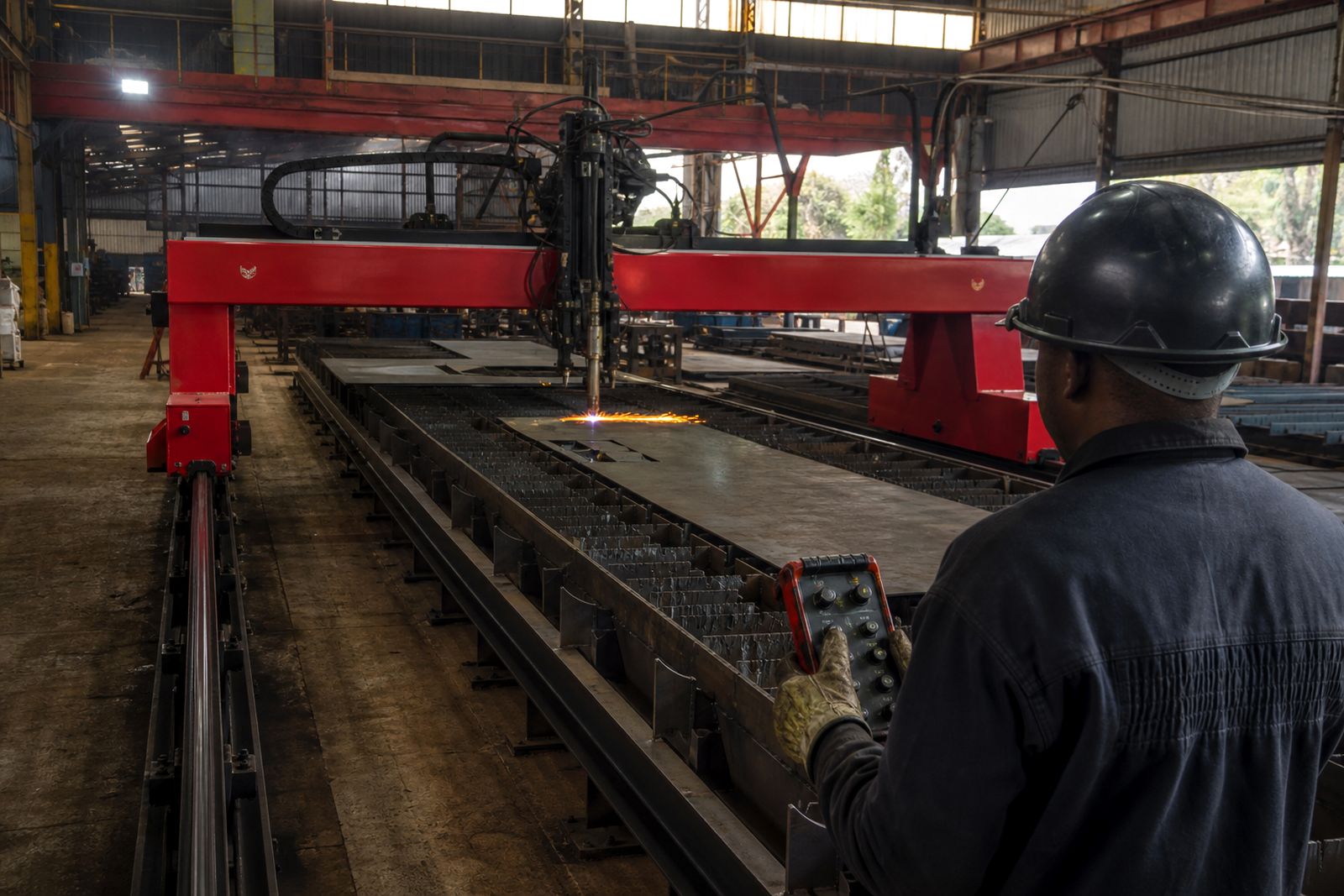
On long machines a wireless pendant can help during setup because the operator can stand close to the torch line while jogging and checking offset positions. Proper datum setting and station verification still form part of the setup. If the rail line or foundation has movement the head will show it very clearly, so basic machine condition still has to be right before any option is tuned.
Compatibility across the gantry range
These options are intended for heavy industrial gantries from 1.5 m to 7 m cutting width. A single bevel torch can be fitted on narrower machines where plate format and duty justify it. Multi-station strip cutting becomes more useful as width grows because torch spacing and usable edge margins need room.
Dual-drive gantries generally carry wide multi-station layouts better over longer spans, while single-drive arrangements can remain suitable on smaller widths and lighter option loads. Plate support layout matters too. If slat zones, fume extraction sections or rail clearance points clash with the torch pattern, the cutting plan becomes messy and output suffers.
- P-2500 to P-4000 sizes are often a practical starting point for regular bevel work.
- P-4000 to P-7000 widths give better room for multi-station strip layouts and wider torch spacing.
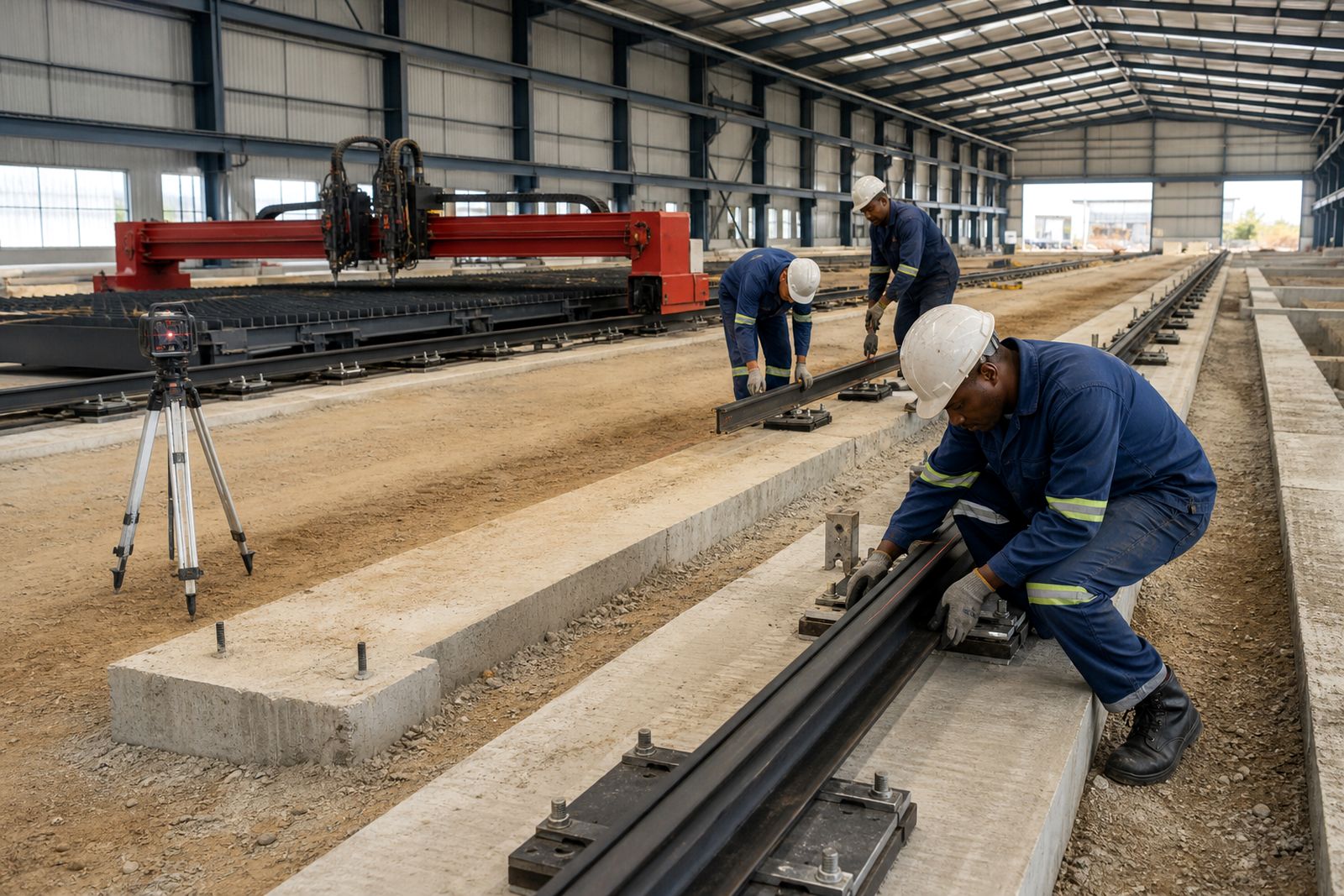
- Foundation accuracy and rail straightness matter more once bevel angle repeatability is required.
Mistakes that cause poor results
The most common error is buying a bevel head for work that only needs occasional edge dressing. If bevel cutting is rare, the extra complexity can sit idle while operators return to straight cutting most of the time. Another mistake is expecting a multi-torch carriage to solve planning problems. If strip widths change every day and nesting is irregular, several torches can slow the setup rather than help.
There are also technical mistakes that show up on the plate. Poor offset entry leads to strips that drift out of width. Weak rail foundations can show as angle variation from one end of the bed to the other. Operators sometimes pierce too close to the finished edge on bevel work, which leaves more clean-up than expected. A heavy carriage also needs sensible acceleration settings, otherwise vibration and lost alignment creep in over time.
Good results come from matching the option to the production pattern, then setting it once with care and checking it as part of normal machine upkeep. On a gantry this size small alignment errors do not stay small for long.
Useful working figures
The exact build depends on gantry width, torch count and plate range, but a few working figures help when scoping the option. Rotary bevel heads usually cover a broad angle band for common weld-prep work, and multi-station spacing is set around the narrowest strip width that still leaves stable cut margins. Extra mass on the carriage affects acceleration and may influence the preferred drive arrangement on wider spans.
If your plant handles repeat strip sizes or thick welded assemblies, include that production detail when you send an enquiry through our contact form. It helps us match the head layout to the real job and the production requirement.
What our Gantry Plasma System customers say
Verified Google reviews
Questions we get asked
Is a bevel head worth it for occasional prep cuts?
Usually only if bevel work forms a regular part of production or the edge quality requirement is strict. For rare prep jobs, the added setup and calibration can outweigh the saving on the machine.
Can several torches cut different shapes at the same time?
Multi-station carriages are most useful for repeated parallel strips or matched parts with consistent spacing. Mixed shapes with changing offsets often reduce the gain because setup becomes fiddly.
Do these options fit every gantry width in the range?
They can be engineered across the range, but the practical choice depends on rail condition, drive arrangement, plate support layout and the number of stations required. Wider machines usually give more freedom for torch spacing and parking positions.
Also worth a look
Tell us about the job
Send sizes, materials and where you are through our contact form, and we will come back with the practical options.
Open the contact form