

Engineering notes
Heavy industrial gantry plasma systems are shaped by decisions around machine width, drive layout, rails, foundations and operator handover. The focus is on fixed industrial systems used in steel service centres, mines and structural fabrication shops, with site work and mechanical load handling suited to larger installations.
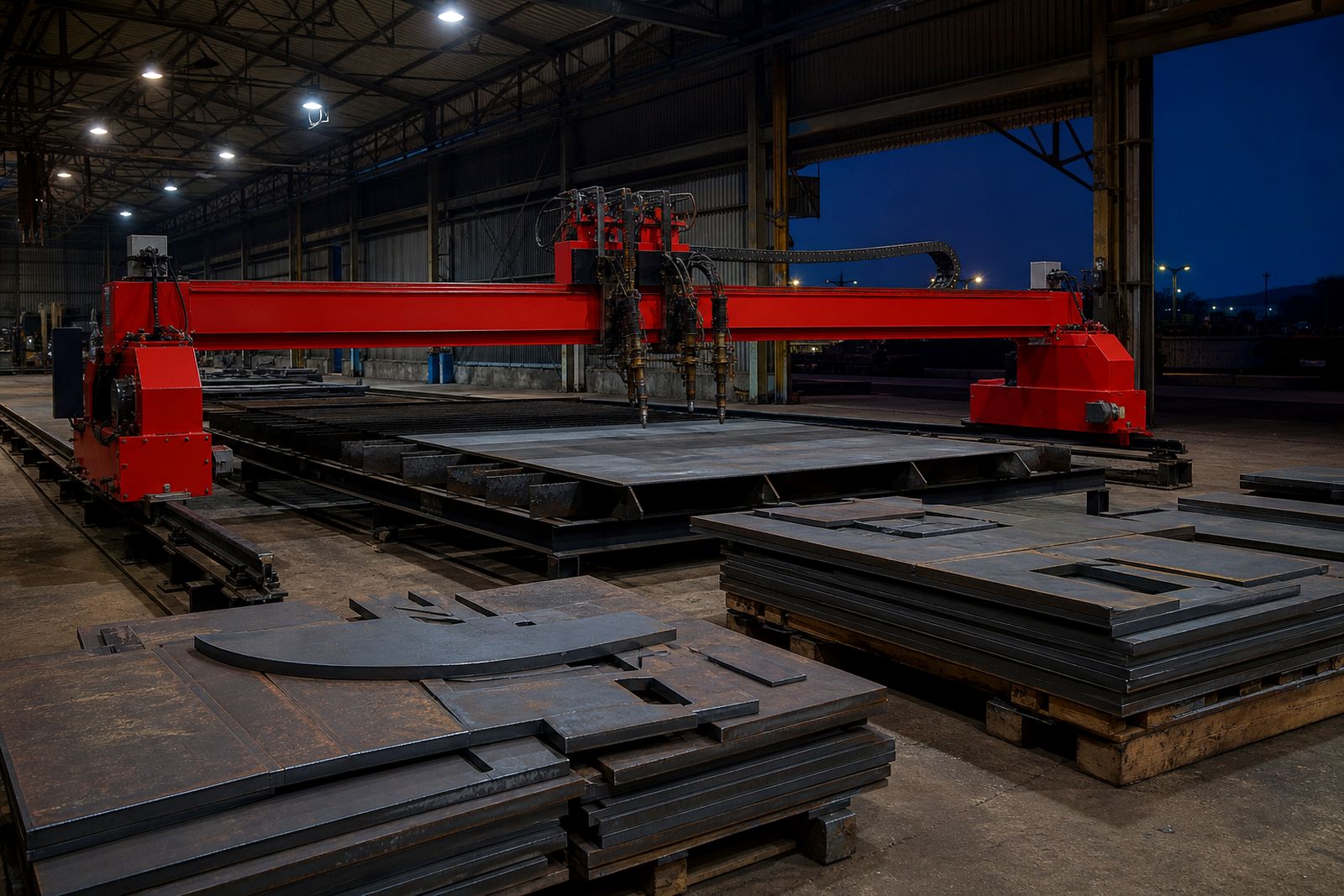
Project factors that shape gantry performance
The parts of a heavy gantry installation that affect performance start long before the first plate is cut. Machine width matters alongside rail alignment, floor condition, drive choice, torch arrangement and operator access, all of which shape how the system runs over a full shift.
Our range covers gantries from 1.5 metres to 7 metres wide, engineered in Vanderbijlpark for larger cutting duties. Fixed industrial systems used in steel service centres, mines and structural fabrication shops call for a different level of site work and mechanical load handling suited to larger cutting duties.
Choosing a width that suits the plate flow
Width is usually chosen from the plate sizes already moving through the shop, the clearances available around the cutting line and the crane or forklift handling pattern. A gantry that is too narrow forces awkward loading and trimming. One that is too wide for the building can complicate rail placement and maintenance access.
- 1.5 m to 2.5 m widths often fit specialised lines or narrower plate handling layouts.
- 3 m to 4 m widths are common where a shop needs broader cutting capacity without pushing building limits.
- 5 m to 7 m widths suit heavier plate programmes, multi-torch work and larger structural parts.
- Longer, wider gantries need more attention on rail straightness, end truck loading and cable management.
If a shop is still deciding between two widths, the better route is to look at actual plate movement and aisle clearance instead of nominal cutting size on paper. That usually settles the question clearly.
Single drive or dual drive on a heavy gantry
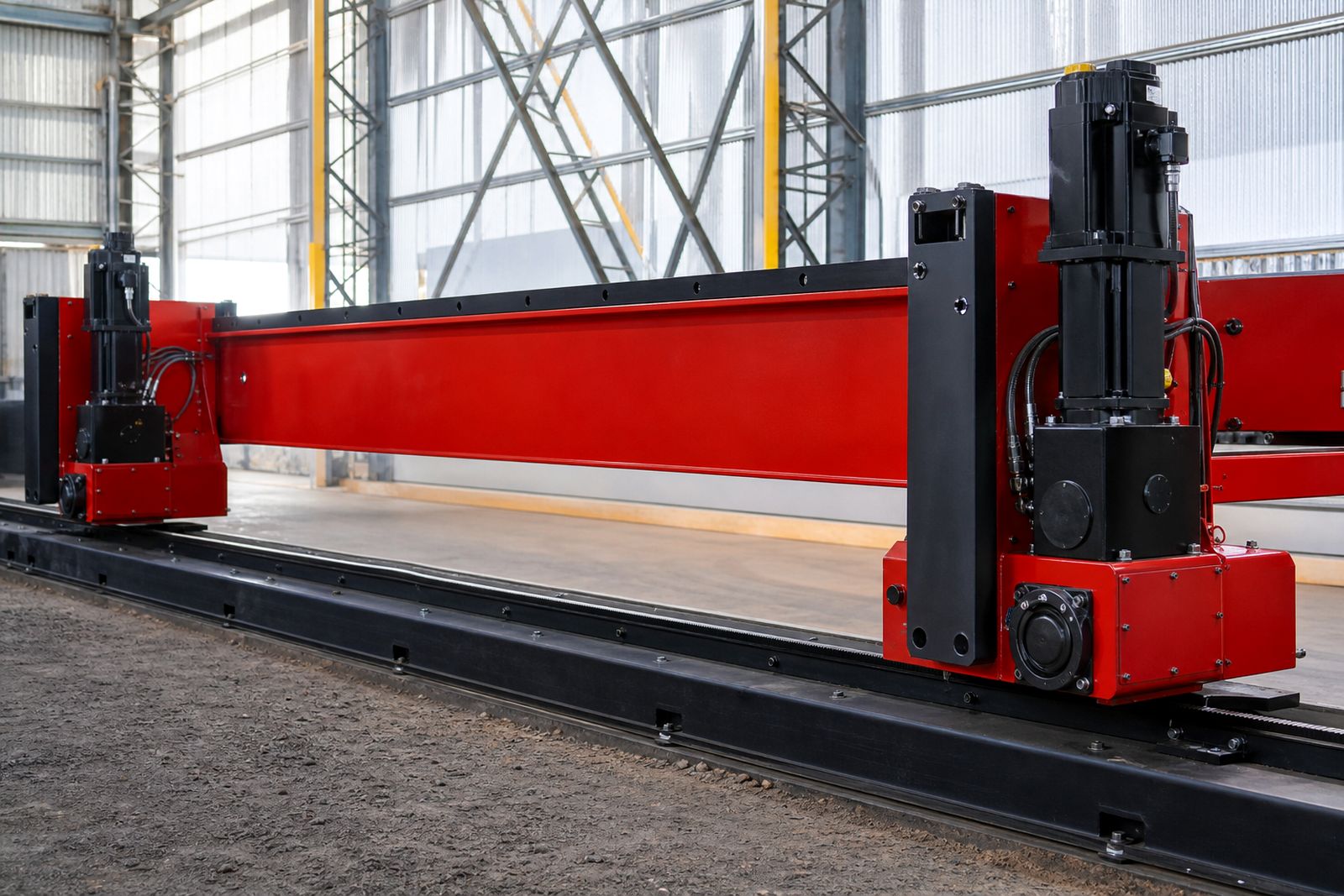
Drive arrangement matters more as span and duty increase. A smaller gantry on a straightforward layout may run well with a single drive arrangement. Once widths grow and the bridge mass increases, dual drive becomes more relevant for tracking accuracy and stable movement across the rails.
- Single drive layouts can suit narrower gantries and less complex cutting duty.
- Dual drive layouts are typically considered where the bridge is wider, heavier or carrying added process equipment.
- Multi-torch and bevel head work raises the need for good gantry stability during travel and position changes.
- Rail condition and foundation accuracy still matter, even with the correct drive choice.
Wider machines place higher demands on the mechanical structure, and the drive layout must suit those loads and travel conditions. Purchase price forms part of the specification.
Torch options change the mechanical brief
A straight cutting head, a multi-torch arrangement and a bevel head do not place the same demands on a gantry. As soon as more process hardware is added, the bridge loading, cable routing and operator setup all become more involved. This is one reason heavy industrial gantries are engineered as complete systems with a dedicated support structure.
For a structural fabricator cutting repetitive parts, multi-torch output can justify the extra complexity. For operations preparing weld-ready edges, bevel capability may be the stronger priority alongside parallel torch capacity. The intended production mix needs to be clear from the start or the gantry gets specified in the wrong direction, which is expensive to fix later.
Rails and foundations decide how well the machine behaves
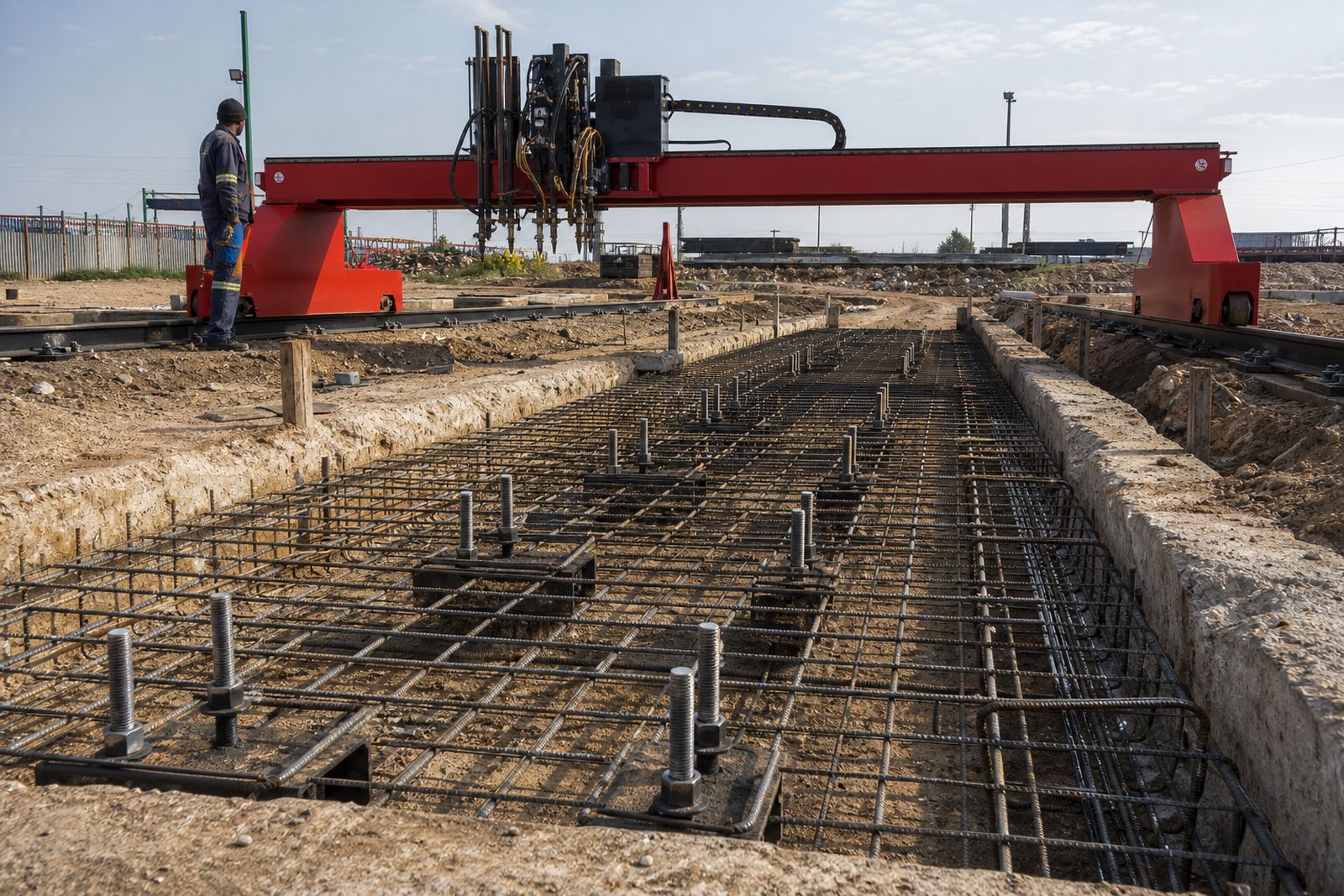
Many gantry issues blamed on controls or cutting equipment start lower down, at the rails and their support. A heavy gantry depends on straight, stable running surfaces and a foundation that holds alignment under working conditions. On a large span machine, small errors over distance become visible in travel quality and cut consistency.
Foundation design is therefore not an afterthought. It must account for the shop floor, anchoring method, level tolerances and the practicalities of installation. In coastal areas, surface protection and maintenance intervals may also need a closer look because humidity and airborne salts are hard on exposed steel components.
- Rail centres must match the selected gantry width and end truck arrangement.
- Base flatness and anchoring quality affect long travel accuracy.
- Access for cleaning, inspection and adjustment should be planned before installation starts.
- Longer tracks need careful allowance for site layout, loading zones and operator movement.
Installation and handover on site
On-site work is where paper decisions are tested. The rails need to be set out correctly. The gantry has to travel cleanly across the full length, and the controls and motion components must be checked under actual site conditions. In a busy fabrication shop this often has to happen around crane movement, plate deliveries and production pressure, so practical planning matters a lot.
Operator training forms part of that handover. A team needs clear guidance on normal travel behaviour, routine inspection points, rail cleanliness and the signs that alignment should be checked. A machine that is looked after properly tends to stay predictable, even in demanding duty.
Comparing widths or choosing between drive arrangements starts with a clear brief before details are sent through the contact form.
Questions we get asked
Do these notes apply to smaller portable cutters?
These notes apply to heavy industrial gantry plasma systems from 1.5 metres to 7 metres wide, with fixed rails and site installation.
Can a wider gantry always carry more torches?
Torch count depends on the bridge design, drive arrangement, rail accuracy and the production task, not width alone.
Is foundation work part of a gantry project?
Rail support and foundation accuracy are central to how a heavy gantry runs, especially on longer travel lengths.
Tell us about the job
Send sizes, materials and where you are through our contact form, and we will come back with the practical options.
Open the contact form