P-2000 gantry, 2 m cutting width
The P-2000 is the smallest machine in our heavy gantry range, built for full-width plate cutting at 2 metres with a fixed industrial gantry layout. It suits workshops that need proper rails, a rigid bridge and room to add production features later.
A 2 metre gantry built as an industrial machine
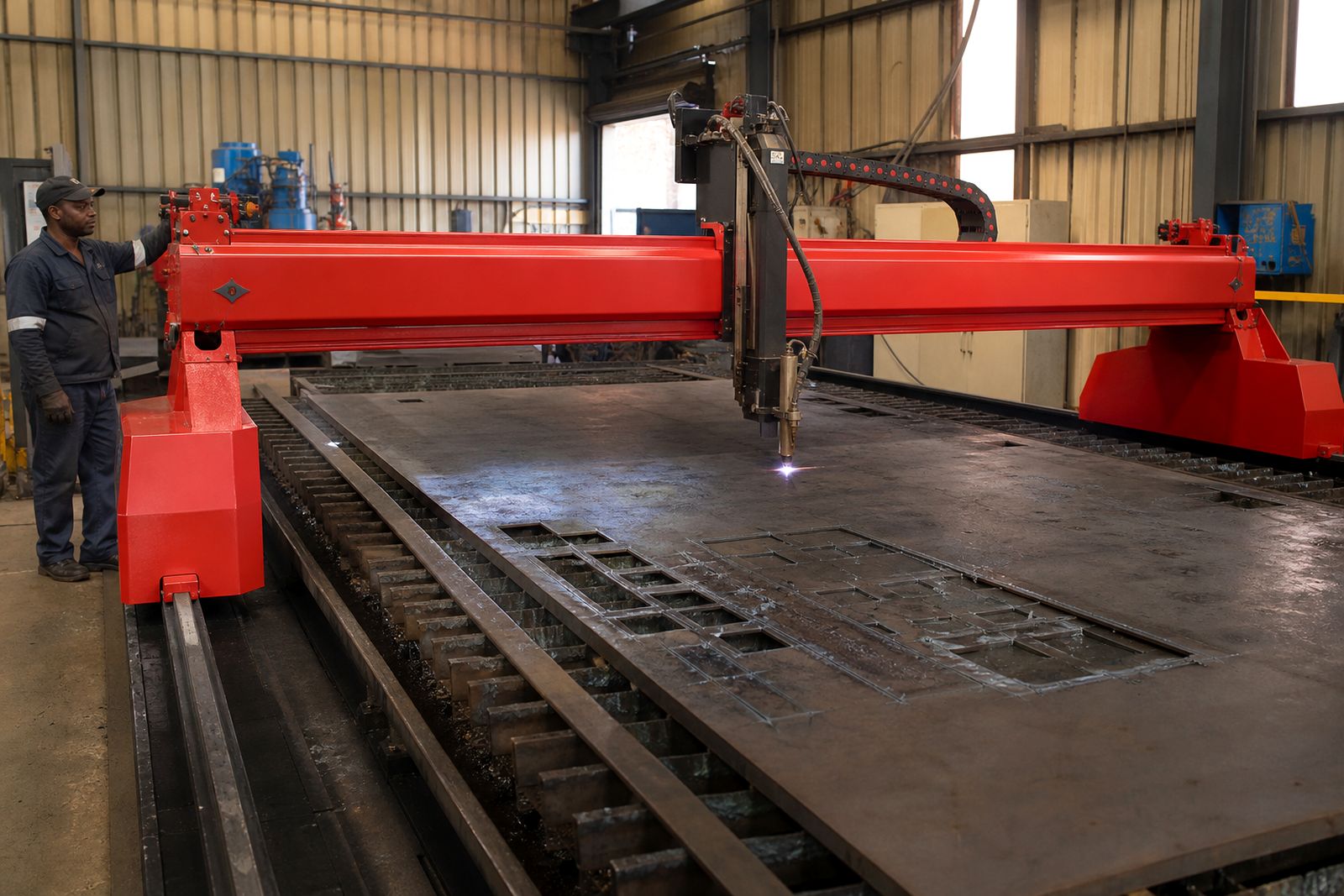
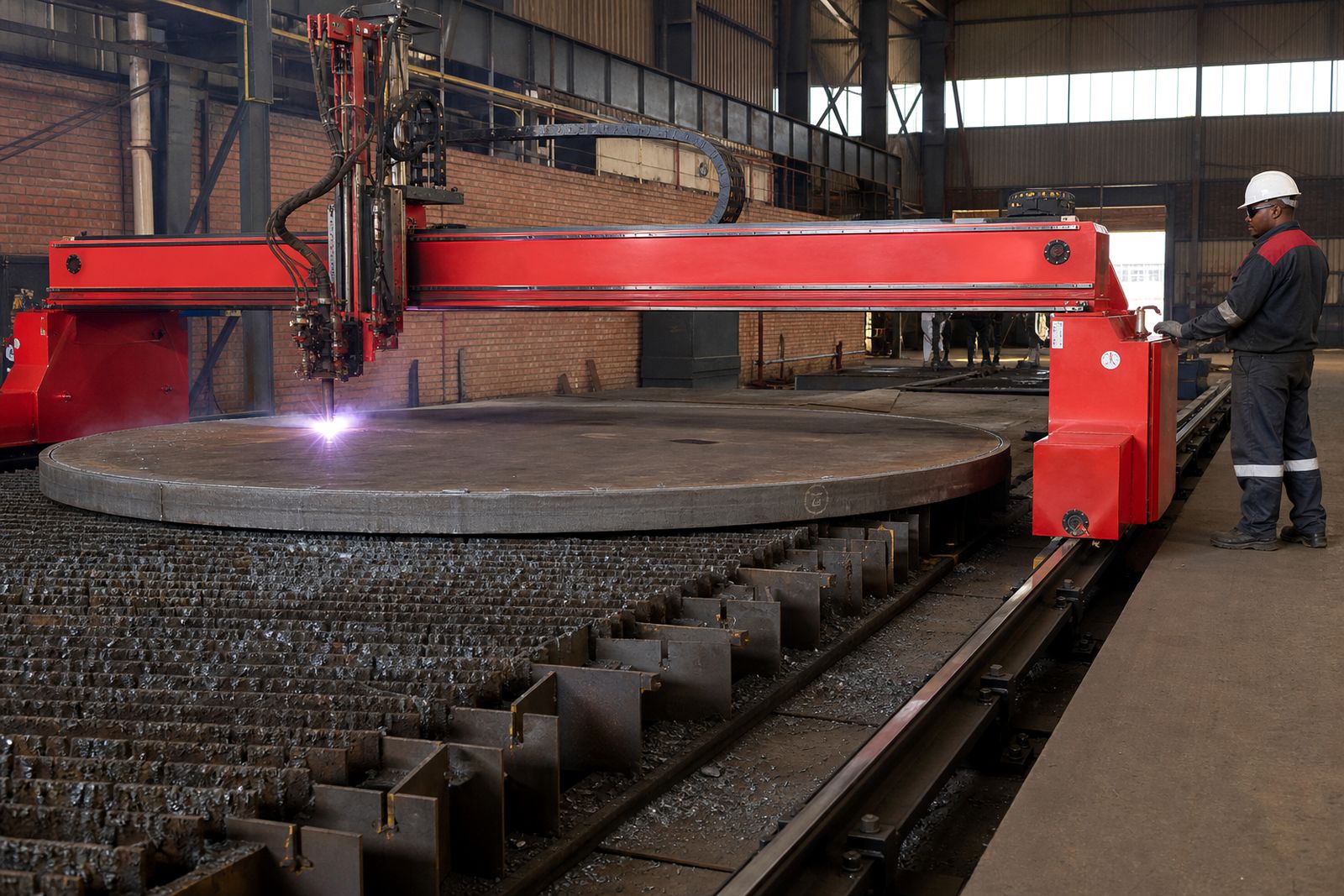
The P-2000 is a heavy industrial gantry plasma system with a 2 m cutting width, engineered for plate work that needs more stability than small table machines can give. It runs on ground-mounted rails with a proper bridge structure, so the machine is aimed at steel service centres, mines and structural fabricators with regular workshop cutting duty.
For many plants this model is the practical entry point into the gantry range. It handles full-width plate up to 2 m across and provides the stability needed for consistent tracking, repeatable positioning and future production upgrades where the site allows it. That matters when plate sizes vary through the month and jobs cannot be nursed by hand.
- Full-width plate capacity up to 2 m
- Single-drive or dual-drive gantry layouts depending on duty and gantry length
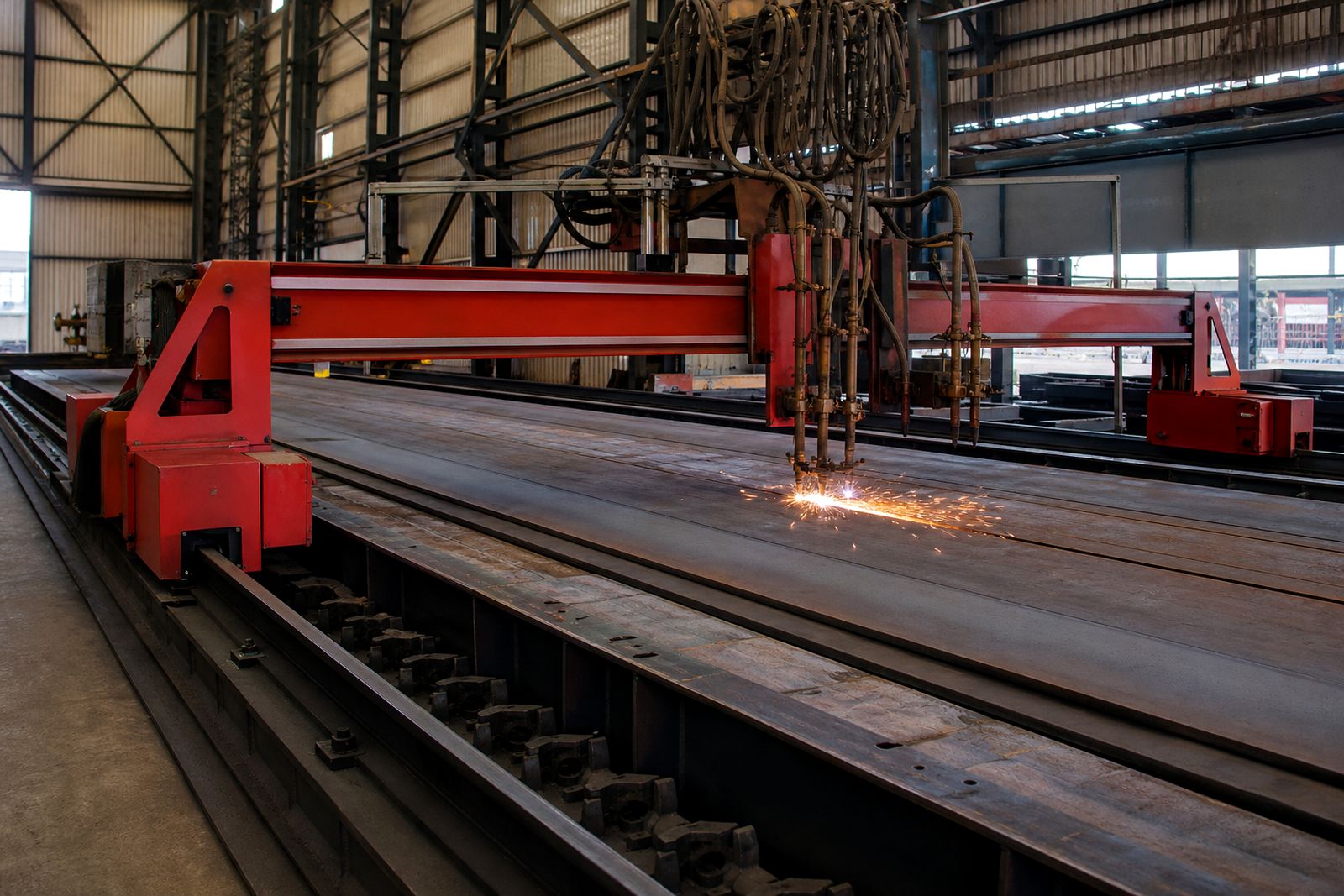
- Optional multi-torch and bevel head arrangements
- Rail, rack and end-truck assemblies matched to heavy floor use
Where the P-2000 earns its keep
This model fits workshops that process plate steadily but do not need the wider spans of a 2.5 m, 3 m or larger gantry. It is a good match for fabrication floors where aisle space is limited, crane movement must stay clear, or the cutting line sits beside drilling, rolling or beam work. In the Vaal Triangle and wider Gauteng region we often see this size used where full industrial construction is required, but the width can stay modest.
The P-2000 suits production briefs that call for full-width plate cutting at 2 m with heavy rail guidance and a rigid bridge. Heavier or more complex applications can call for a wider gantry, especially when the site needs widths above 2 m, multiple side-by-side torches over long plate runs, or long-term planning for very large structural members. In those cases one of the wider gantries normally makes more sense.
- Suited to service centres cutting regular plate widths up to 2 m
- Suited to mine and plant workshops needing rigid rail guidance
- Suited to structural fabricators with repeat production work
- Built for fixed workshop production, floor-mounted rail installation and regular industrial duty
- Built as a heavy gantry installation with a dedicated rail layout
Widths, heads and drive choices
The 2 m cutting width stays fixed, while the machine can still be configured around production style, plate thickness range and floor layout. A single-drive arrangement may suit shorter builds and straightforward cutting duty. Dual drive is considered where gantry length, head arrangement or production load calls for more balanced travel across the bridge.
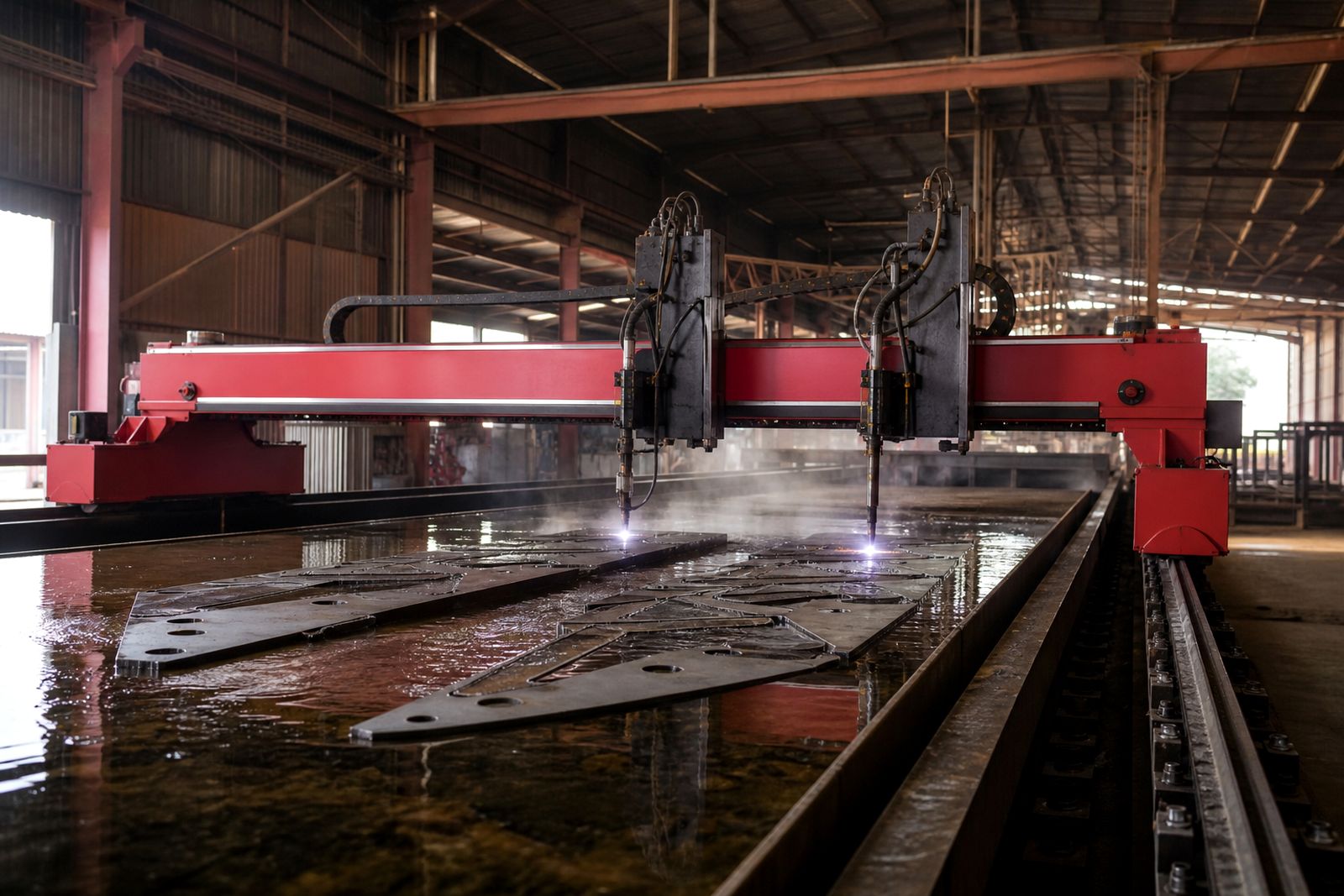
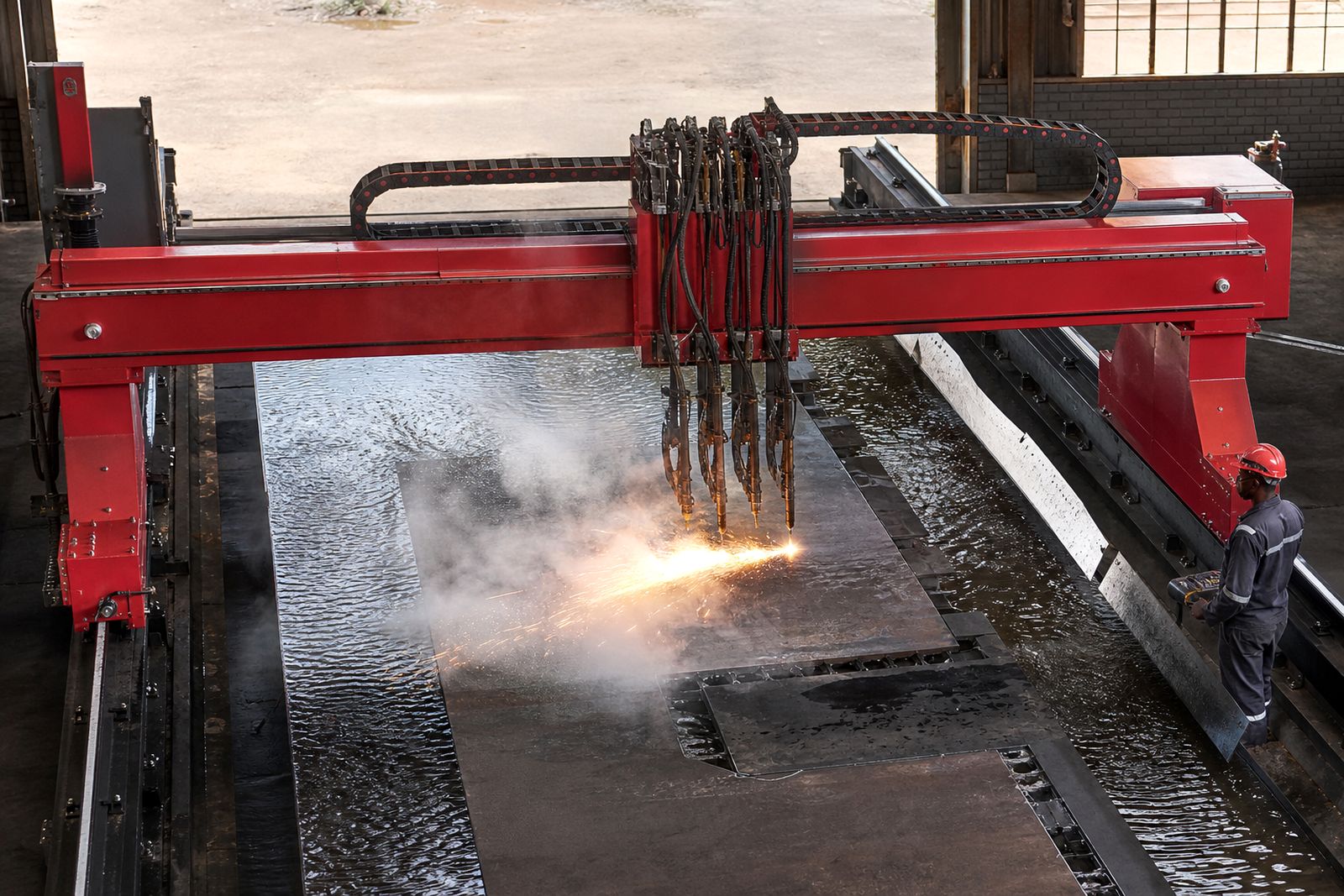
Head options depend on the kind of work leaving your bay. A standard cutting head is common for general plate profiling. Multi-torch layouts help where the same components repeat through shifts and material nesting supports parallel cutting. Bevel heads are used when weld prep must happen on the machine rather than as a second operation, but they need the right material plan and operator discipline to pay off.
- Single drive for simpler duty and shorter travel requirements
- Dual drive for higher gantry stability on longer or heavier configurations
- Multi-torch options for repeated part sets and production cutting
- Bevel head options where edge prep is part of the plate workflow
- Wireless pendant option where gantry length and site movement justify it
What the floor must provide
A prepared site supports the P-2000 properly. Rail alignment, foundation condition, plate loading access and cable routing all affect how the machine behaves in service. We handle foundation design and installation planning as part of the project, with dimensions and fixing details matched to the machine layout and the floor it will sit on.
You will need clear allowance for raw plate infeed, finished part removal and maintenance access along both rail lines. Overhead lifting must be considered early, especially where plates arrive by crane and the cutting lane shares space with beam stock or heavy assemblies. On some sites the machine sits inside a busy bay, and the traffic pattern sets the main site constraint ahead of the footprint on paper.
- Stable foundation and rail support along the full machine length
- Access for plate loading, offloading and scrap handling
- Space for service access at rail ends and along the bridge travel
- Power and control routing planned with the machine position
- Dry, managed floor conditions around rails and running gear
Care that keeps the gantry tracking properly
The P-2000 is built for hard industrial use, but its accuracy depends on ordinary housekeeping done consistently. Dust, slag, plate scale and general shop grit collect around rails and racks faster than many operators expect. If that build-up is ignored, tracking quality starts to drift and the machine ends up fighting the floor more than cutting plate.
Routine checks should cover rail cleanliness, rack condition, cable wear points and head movement through its full travel. The operator should also keep an eye on cut quality changes that point to alignment or consumable issues rather than assuming the plate is at fault. In coastal regions, moisture control around exposed steelwork matters more, while inland shops usually battle scale and dry abrasive dirt.
Operator training on site forms part of the installation, so the handover is grounded in the actual floor and material mix. It reflects the way the machine will be used in your workshop.
Details to send with your enquiry
When you contact us through our contact form, send the practical information that decides whether the P-2000 is enough machine for the job. The main points are plate width, material range, intended machine length and whether you want straight profiling only or additional torch arrangements. A few clear workshop notes save a lot of wasted drawing later.
It also helps to mention where the machine will be installed, whether the floor is existing or new, and how plates are loaded into the cutting area. If your plant is in Mpumalanga, the North West, KwaZulu-Natal or the Northern Cape, note the town and site type so transport and installation planning starts on the right footing.
- Required cutting width and expected plate sizes
- Material types and usual thickness range
- Preferred gantry length or available rail length
- Single head, multi-torch or bevel head requirement
- Whether the site is a steel service centre, mine or structural fabrication shop
- Foundation status, loading method and available floor space
What our Gantry Plasma System customers say
Verified Google reviews
Questions we get asked
Is the P-2000 a bench cutter?
The P-2000 is part of our heavy gantry range and runs on proper rails with an industrial bridge structure. It is built for workshop production floors with a fixed floor-mounted installation.
Can the P-2000 be fitted with more than one torch?
Multi-torch arrangements can be fitted where the cutting work and machine layout justify it. They are planned around material width, part repetition and the available gantry configuration.
What should I include when asking about a P-2000?
Send plate sizes, material thickness range, the town where the machine will be installed, available floor length, and whether you need straight cutting only or bevel and multi-torch capability.
Also worth a look
Tell us about the job
Send sizes, materials and where you are through our contact form, and we will come back with the practical options.
Open the contact form