P-3500 gantry, 3.5 m cutting width
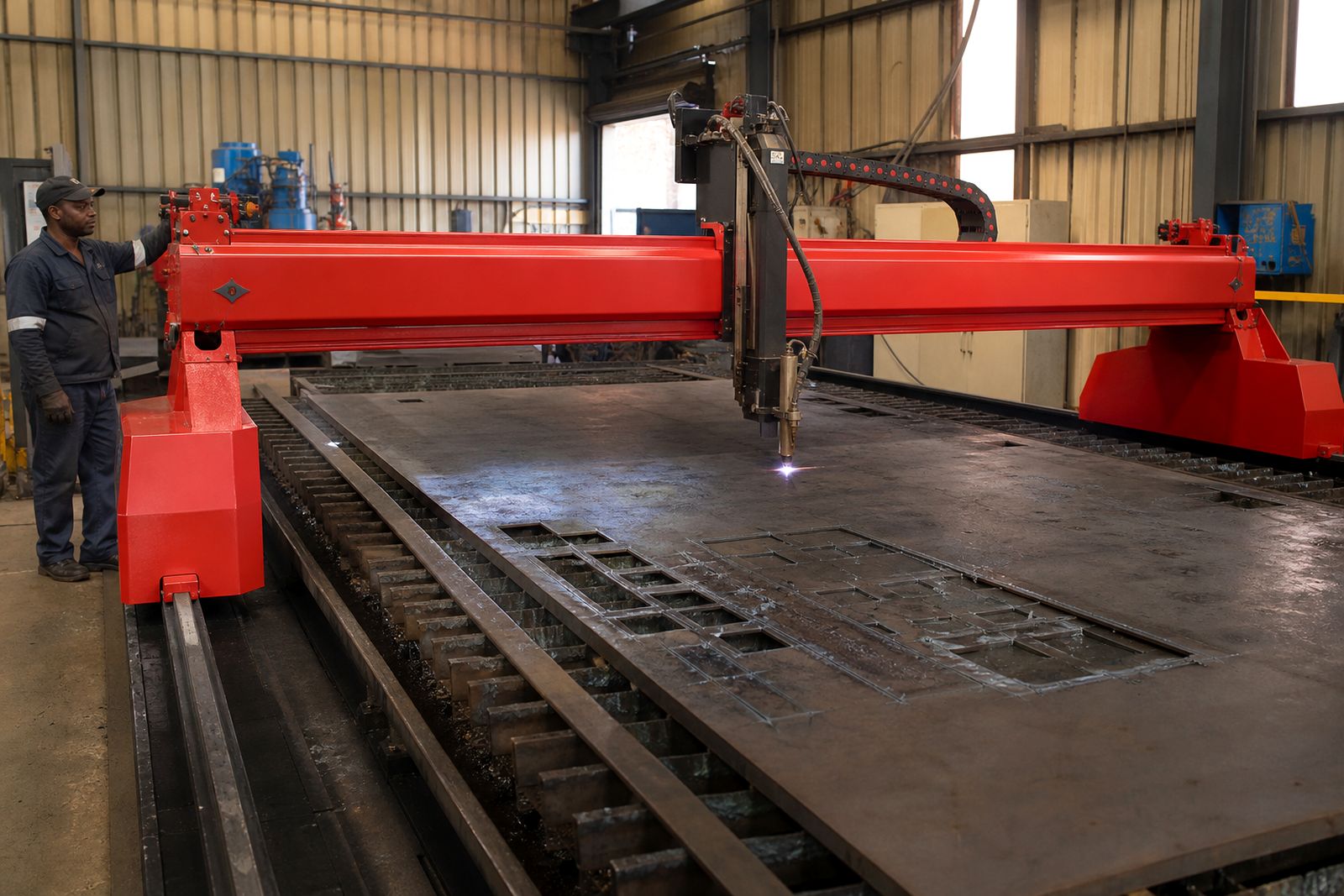
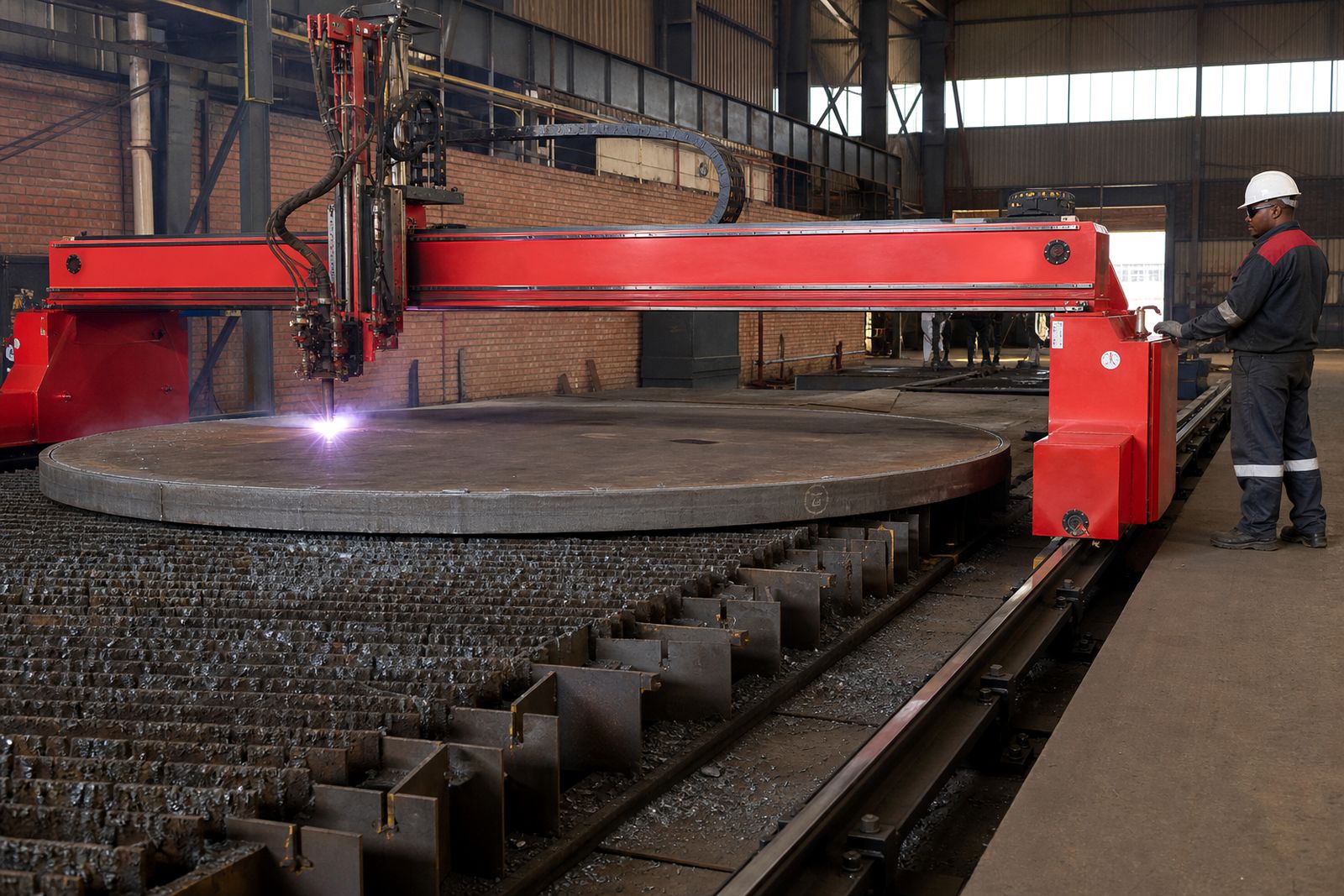
The P-3500 is a heavy industrial gantry plasma system with a 3.5 metre cutting width for wide plate work. It suits mines, steel service centres and structural fabricators that need room for larger liners, wear parts and formed assemblies without stepping into the extra footprint of a 4 metre class machine.
Built for wide plate without moving into the next class up
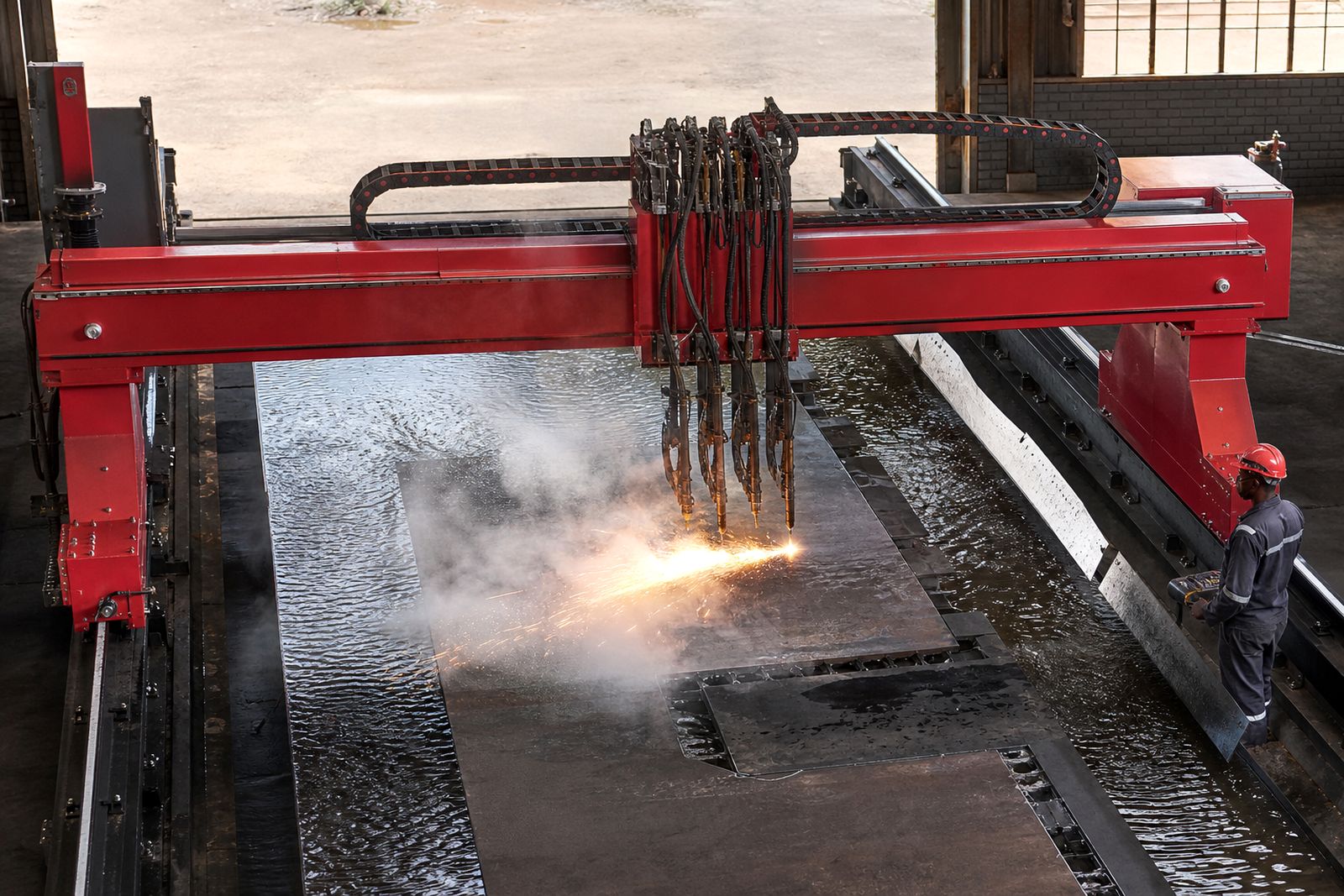
The P-3500 sits in a useful middle ground for workshops that regularly cut larger plate but do not need the floor area or handling space of a 4 metre gantry. A 3.5 metre cutting width gives enough reach for many chute liners, hopper sides, wear strips, gusset layouts and structural components cut from broad plate. In mining and plant maintenance work that extra half metre over a 3 metre machine often removes a second setup, which matters when plates are heavy and crane time is tight.
This is a full gantry system engineered for industrial duty and small batch work is outside its normal role. The machine is laid out around rails, gear racks and an end-truck arrangement suited to steady travel over long lengths. For workshops in Vanderbijlpark and the wider Vaal Triangle, the size works well where plate flow is constant and the cutting bay already handles forklifts, overhead lifting and scrap removal.
Cutting width, travel options and head arrangements
The standard cutting width on the P-3500 is 3.5 metres. Bed length and rail length are set to the job mix on site, so the machine can be matched to the plate lengths and throughput your shop actually handles. Single-drive and dual-drive arrangements are selected according to gantry mass, length, expected duty and the head package. A lighter single-head layout may suit one type of line, while a dual-drive machine is often the better call once length, speed stability and heavier head loads start increasing.
- Cutting width: 3.5 metres.
- Rail and bed length: specified to suit plate length, loading method and floor space.
- Drive layout: single drive or dual drive, depending on gantry size and duty.
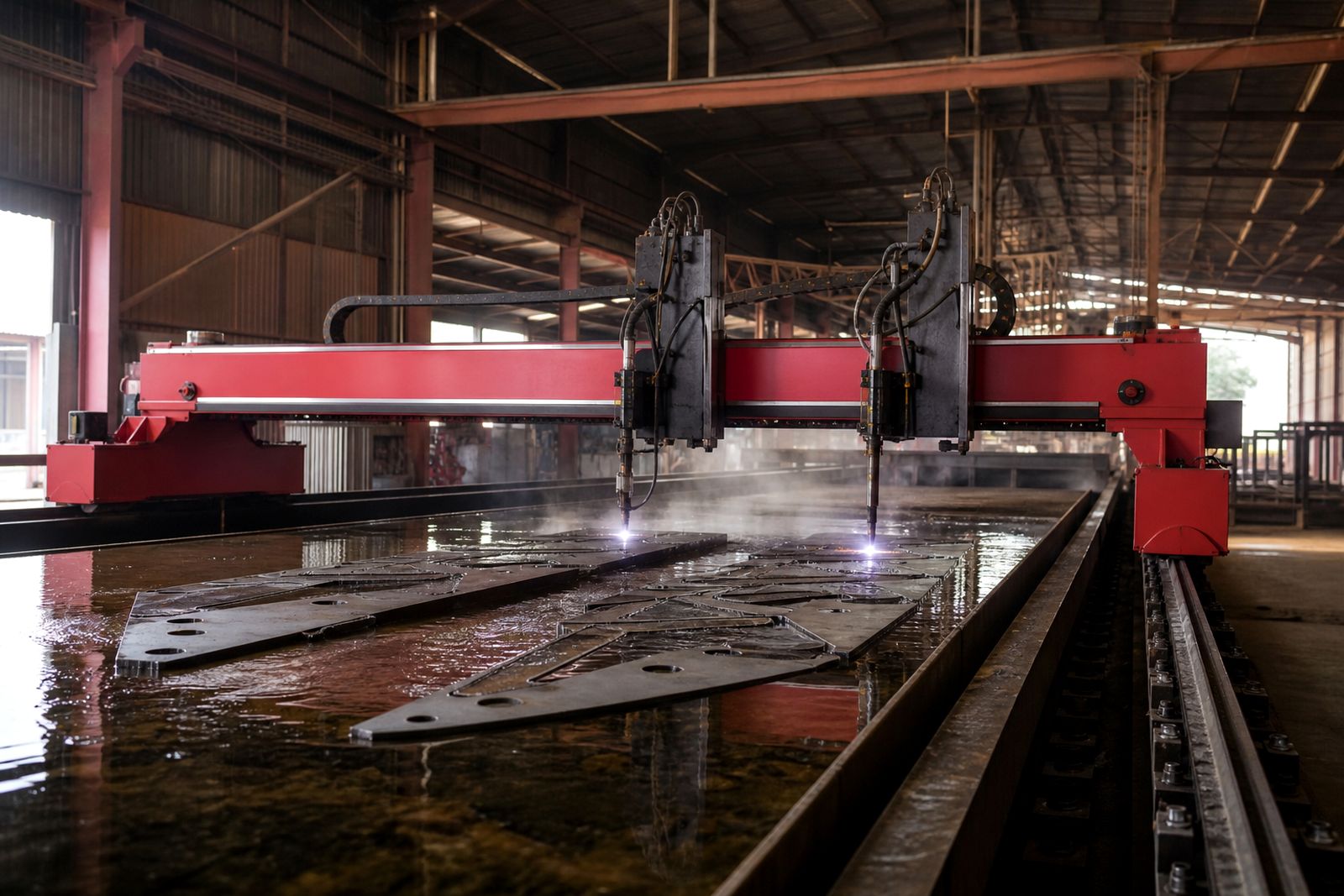
- Head options: single torch, multi-torch arrangement, bevel head where the cut list requires edge prep.
- Operator control: fixed station with pendant options for longer gantries.
If your work includes repetitive strip cutting or matched parts from the same nest, a multi-torch layout can be discussed. Bevel capability is more specialised and usually belongs where weld prep is being cut directly and then moving to the next production stage. It adds weight and planning to the bridge, so it should be chosen for a real production reason.
Where the P-3500 fits best on the floor
This machine suits operations cutting wide plate on a routine basis, especially where mining wear parts and chute liner packs form part of weekly output. Structural fabricators also use this width well for larger webs, brackets, splice plates and connection sets. The P-3500 works best where material handling is already organised and there is enough clear width for loading, unloading and side access to the rails.
- Mining maintenance shops cutting chute liners, wear plates and transfer point parts.
- Steel service centres processing customer plate with recurring wide nests.
- Structural fabricators cutting larger assemblies from standard stock sheet and plate.
- General heavy industry where broad components must be cut accurately before forming or welding.
The range is focused on heavy industrial gantries from 1.5 to 7 metres wide, for buyers planning rail-mounted production equipment with full workshop support around it. Portable cutters, bench machines, small standard beds and pre-owned units sit outside that scope. Sites with poor floor levels, mainly light sections or a production mix centred on small parts are usually better served by a narrower gantry, because the capital and floor area should match the work.
Foundations, rails and workshop conditions
A 3.5 metre gantry needs proper civil and mechanical preparation before installation. Rail straightness, anchor detail and floor condition affect cut quality and travel stability, so foundation design is part of the job rather than an afterthought. On sites with heavy plate movement, the surrounding slab condition and traffic route matter too because rails do not enjoy repeated impact from careless loading.
We look at available bay width, crane hook height where relevant, plate staging space, scrap flow and access for maintenance. In inland industrial areas such as Vanderbijlpark, dust from nearby processing can build up around racks and rails if housekeeping slips a bit. On coastal sites in KwaZulu-Natal, corrosion control and regular cleaning matter more because humidity gets into every exposed surface.
- Allow clear side access to the full rail run for cleaning and inspection.
- Provide stable foundations with levels suitable for rail alignment.
- Plan plate loading so forks or cranes do not strike the rail edges.
- Keep cable routes, fume extraction layout and scrap drop zones in the installation brief.
Care points that keep the machine cutting straight
Heavy gantries reward steady maintenance rather than occasional big repairs. The main items are rail cleanliness, rack condition, drive inspection and checking that fasteners stay tight after production vibration. Operators should also watch torch consumable condition and head alignment because poor cutting practice can be blamed on the machine when the actual issue sits at the business end of the process.
Daily cleaning around the travel path is worthwhile, especially where dross, grit and scale collect under the bridge. Lubrication intervals depend on site duty and environment, but they should be written into the workshop routine. If the machine has a bevel head or multiple torches, setup discipline matters even more, because small errors multiply over a wide sheet. A tidy floor and a disciplined operator save a lot of grief here.
What to send with your enquiry
When you ask about the P-3500, the useful starting point is your plate size range, the materials you cut and the largest nests you expect to run. Let us know whether the machine is for a new bay or a replacement line, and whether you need single torch cutting, multiple torches or bevel work. Travel length, loading method and the available building width all affect the final arrangement.
- Material type and typical thickness range.
- Maximum plate size and usual sheet size on your floor.
- Required rail length or target cutting length, if known.
- Single-drive or dual-drive preference, if your team already has a view.
- Need for multi-torch, bevel head or pendant control.
- Town and province, plus whether civil work is already planned.
If you have bay drawings, plate flow sketches or photos of the proposed area, include those through our contact form on the contact page. That makes it easier to judge whether the P-3500 is the right width or whether another gantry in the range would sit better in the space you have.
What our Gantry Plasma System customers say
Verified Google reviews
Questions we get asked
Is the P-3500 mainly for mining work?
Mining wear parts and chute liners are a strong fit, but the machine also suits steel service centres and structural fabricators cutting wide plate on a regular basis.
Can the P-3500 be supplied with more than one torch?
Multi-torch arrangements can be specified where the production mix justifies them, and bevel heads are available for applications that need edge preparation cut directly on the machine.
Do you sell smaller bench cutters or used machines?
The range is focused on heavy industrial gantries from 1.5 to 7 metres wide, and excludes portable cutters, bench units, pre-owned machines and small standard beds.
Also worth a look
Tell us about the job
Send sizes, materials and where you are through our contact form, and we will come back with the practical options.
Open the contact form