

Operator training on site
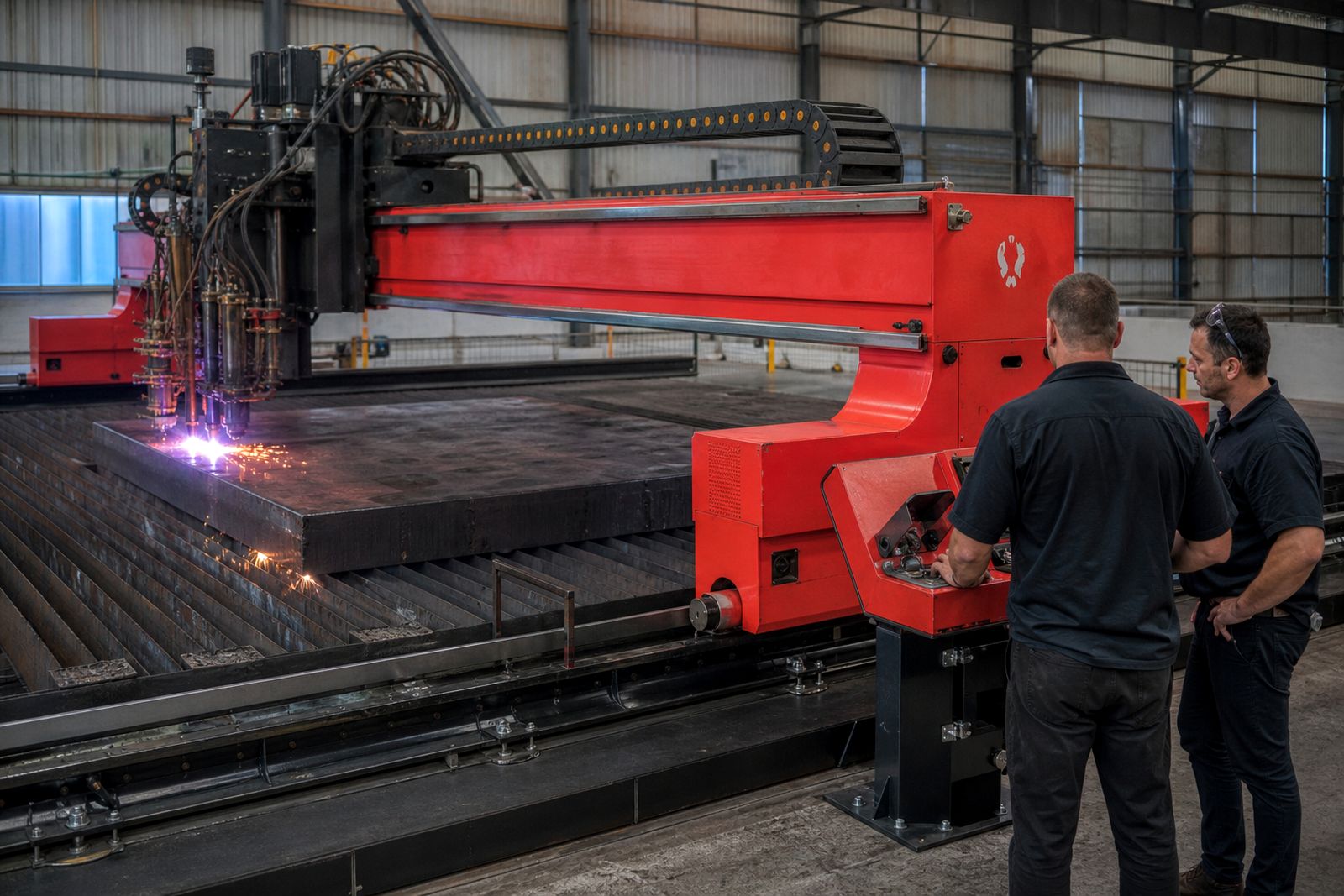
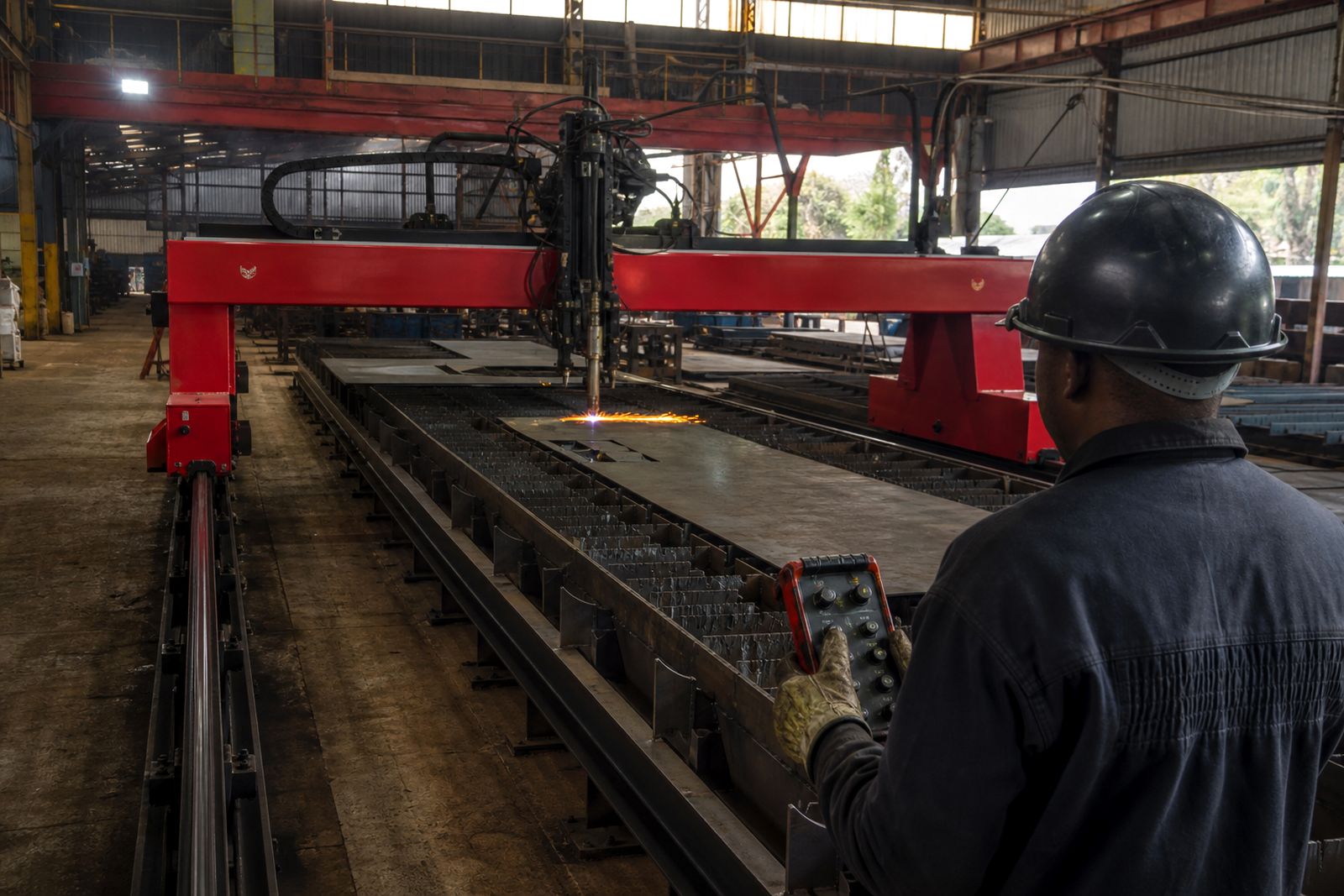
Operator training is done on your own gantry, on your own floor, with your own plate and production routines. The programme runs over three to five days and covers operation, cut quality, daily care and fault finding for heavy industrial plasma gantries.
Training that matches the machine on your floor
Classroom notes are useful, but they do not show how a wide gantry behaves on your rails, with your plate sizes, your material flow and your operators at the controls. Our on-site training is arranged around the exact gantry installed at your works, whether it is a single-drive or dual-drive machine, and whether it carries one torch or a multi-head setup with bevel capability.
The aim is to leave your team able to run production safely and sensibly, with a clear grip on normal machine operation. We work through loading routines, datum setting, cut path checks, consumable condition, plate variation and the small adjustments that matter on long travel lengths. Where a site cuts mixed thicknesses in one week, we train on that real spread and on the sample plate used on site.
- Training period of 3 to 5 days on site.
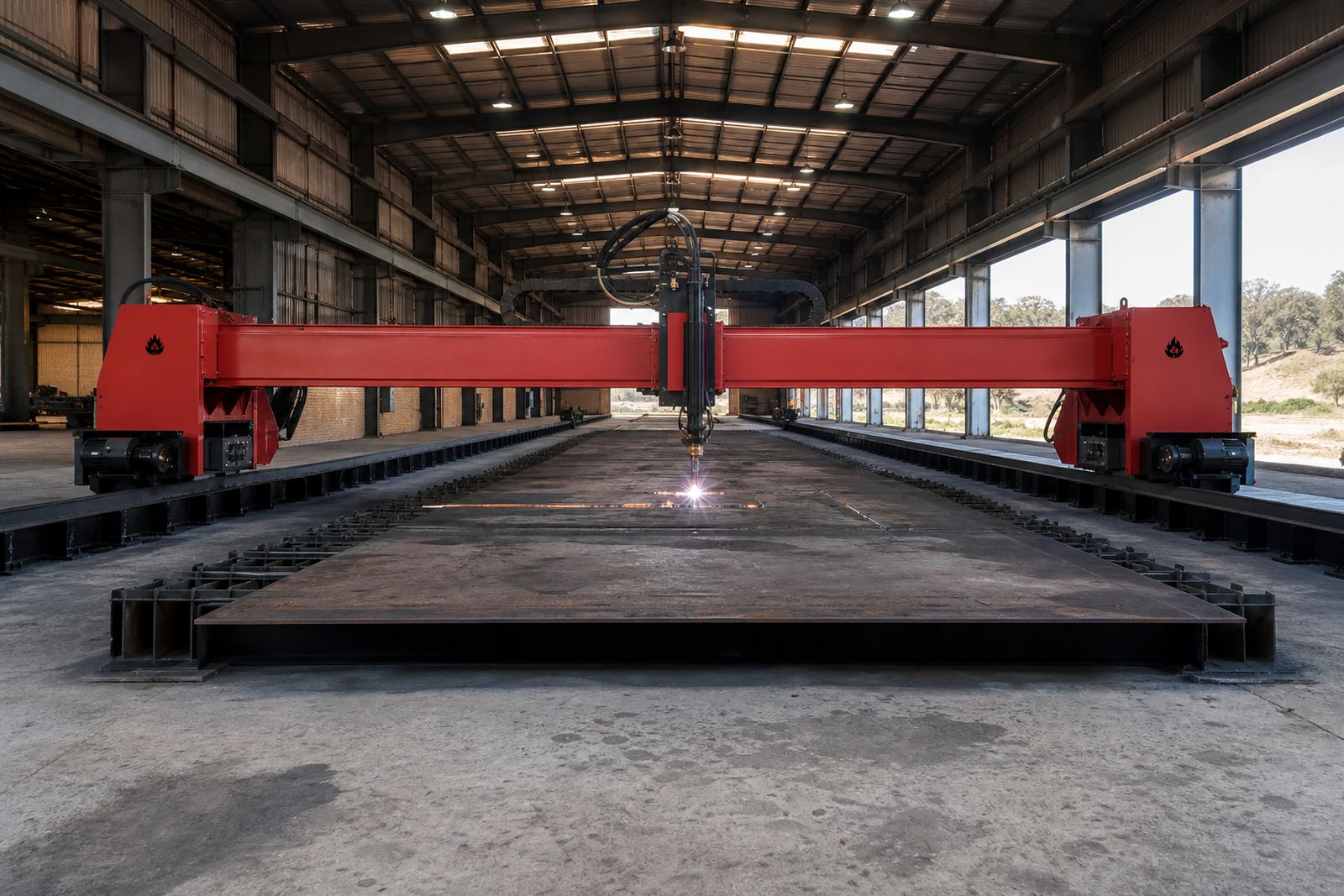
- Carried out on gantries from 1.5 metres to 7 metres wide.
- Built around your torch configuration, rail length and production layout.
- Suitable for steel service centres, mines and structural fabrication shops.
What is included during the visit
The training block covers machine operation, safe working practice and the daily checks that prevent poor cuts or lost production time. We also show operators how to read the machine's behaviour while cutting, because rail condition, torch height, plate flatness and worn components all show up in the cut if you know where to look.
Sessions are split between explanation and hands-on work at the gantry. Operators take turns at the controls, run live cuts and repeat core tasks until the routine is settled. Supervisors and maintenance staff are welcome during the practical sections so everyone sees the same process.
- Machine start-up and shutdown procedure.
- Homing, referencing and travel checks.
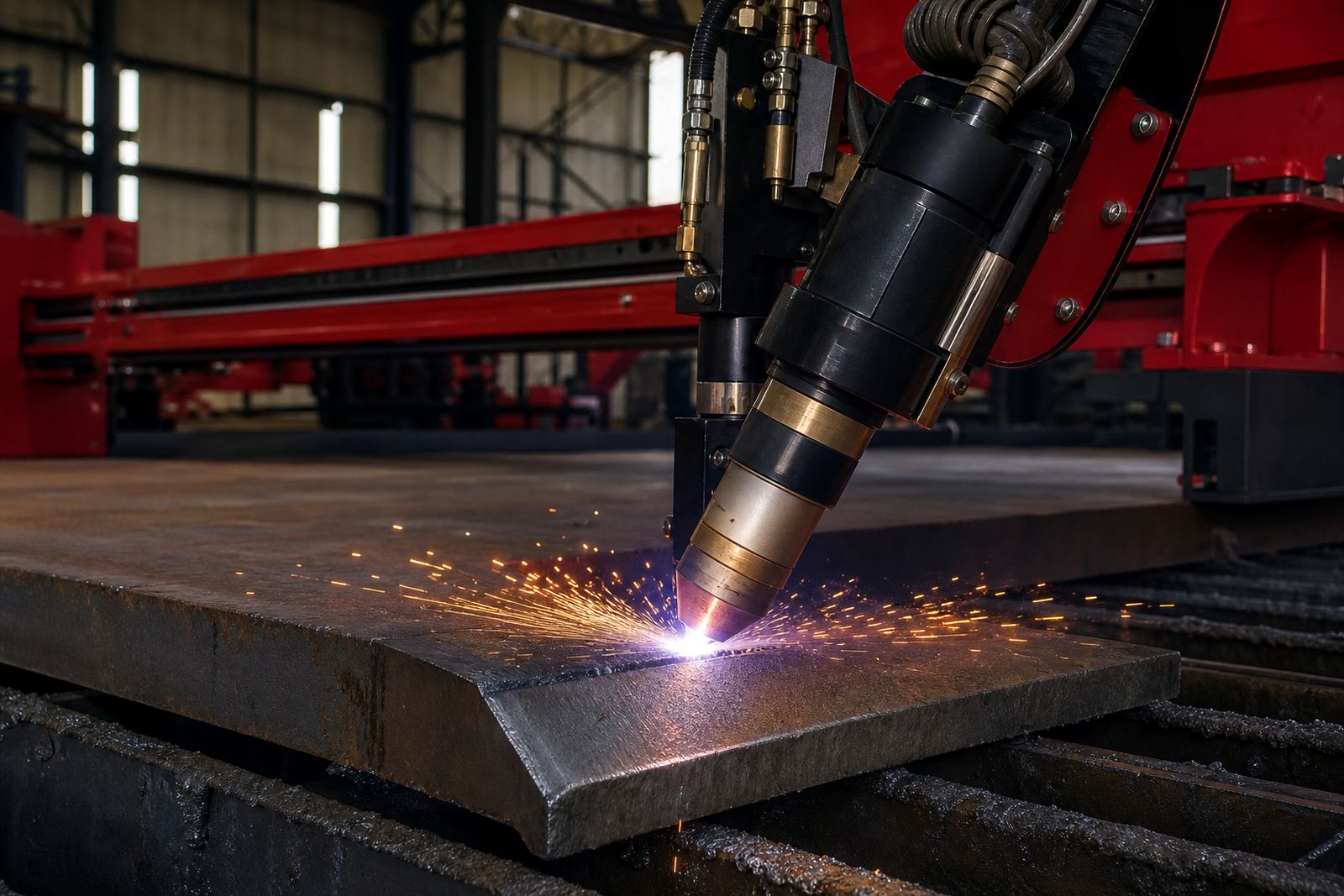
- Torch setup, height control checks and cut parameter verification.
- Nesting and job loading as used on your site.
- Edge starts, pierces, lead-ins and cut sequence basics.
- Consumable inspection and replacement.
- Daily cleaning, lubrication points and visual checks.
- Basic fault finding for cut quality, positioning and travel issues.
How the training runs day by day
Most sites need a practical sequence with hands-on instruction. On day one we usually cover safe access around the gantry, operator stations, machine status checks and a first set of cuts on sample plate. Once the operators are comfortable with movement and setup, the training shifts onto the jobs they actually run in production.
During the middle part of the programme we work through repeatability, plate positioning, consumables, common alarms and the causes of poor edge condition or dross. If your machine has more than one torch, or a bevel head, time is set aside for alignment and coordinated cutting routines. The final stage is aimed at normal independent running by your team with us observing and correcting where needed.
The exact order changes from site to site because a 1.5 metre gantry in a compact fabrication shop is not the same job as a 7 metre machine in a steel service centre. Mines often need more emphasis on handover to maintenance staff, while structural shops usually want more time on mixed plate jobs and production flow.
What your team should prepare before we arrive
Good training depends on a ready machine and a clear work area. The best results come when operators can learn on the material they normally process, with enough time booked away from other site demands. A rushed handover never sticks properly and people forget steps.
Please have the gantry installed, powered and mechanically complete before the first training day. Rails must be clear, the travel path must be free of obstructions and there must be safe access along the cutting area. It helps if the shift supervisor, operators and a maintenance contact are all available for the main practical sessions.
- Your own plate in the thickness range you actually cut.
- Operators assigned for the full training period where possible.
- Consumables on hand for normal setup and replacements.
- A clean cutting area with safe walkways beside the rails.
- Any site induction or permit requirements arranged in advance.
- Lifting access for plate loading if that forms part of your normal process.
How pricing is worked out
Training is priced according to the size and configuration of the gantry, the number of days on site and the travel involved from Vanderbijlpark to your works. A short programme on a single-torch machine near the Vaal Triangle is a different job from a five-day handover on a wide dual-drive gantry going to Mpumalanga, the North West, KwaZulu-Natal or the Northern Cape.
We also look at the complexity of the cutting setup. Multi-torch arrangements, bevel heads, long rail runs and larger operator groups usually need more time on the floor. Where training forms part of a new installation, it is aligned with the machine handover and the practical work is done on the live system.
For budgeting purposes we generally allow for the trainer's site days, travel, accommodation where required and the depth of the programme requested. If you need a focused refresher for a new shift after the original handover, that can be scoped separately through our contact form.
Aftercare once the trainers leave site
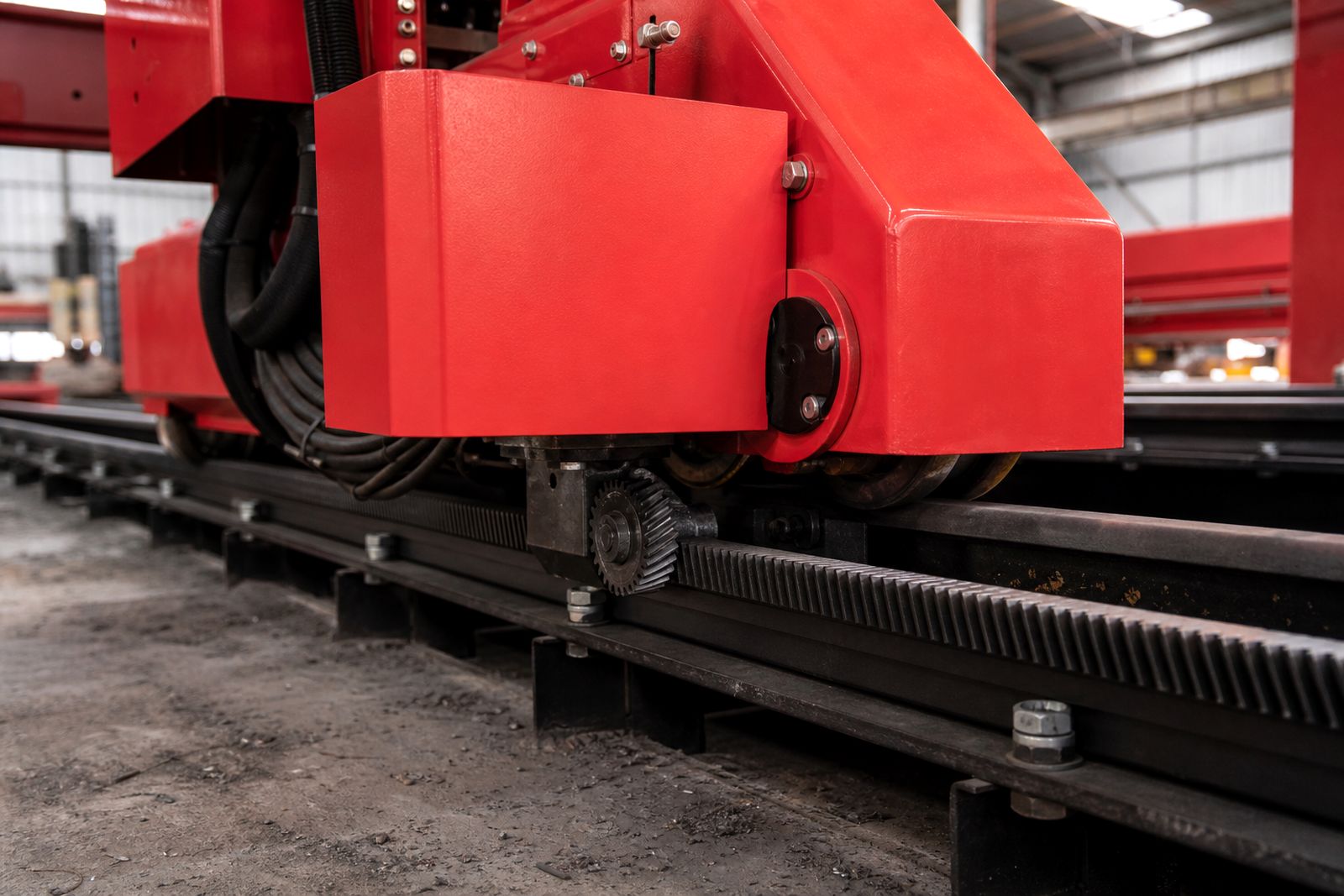
The point of training is independent running, but support does not stop the moment the visit ends. After handover your operators should have a clear routine for start-up, cutting checks, cleaning and the small mechanical inspections that keep a heavy gantry tracking properly. We also make sure the site understands which issues belong to normal wear and which ones should be investigated before they affect accuracy.
Where needed, we can return for additional operator sessions after production has settled and the team has built up real cutting hours. This is often useful when a site adds new staff, starts cutting heavier plate or moves from simple straight work into more involved profiles. On long gantries especially, early good habits save a lot of wasted plate and a lot of frustration later on.
Training notes are practical and tied to the machine on your floor, so operators have working notes that stay relevant on site. If you need this service for a newly installed gantry or for an existing machine that needs a proper operator reset, send the job details through our contact form.
What our Gantry Plasma System customers say
Verified Google reviews
Questions we get asked
Is the training done on sample material or our own plate?
Training is done on your own gantry using your own plate wherever possible. That gives operators practice on the thicknesses, sizes and production conditions they deal with on shift.
Who should attend the training?
Operators should attend throughout the programme, and it helps to include the shift supervisor and a maintenance contact during practical sessions. That way the running routine and the care routine are understood by the whole team.
Can you train on a wide gantry with more than one torch or a bevel head?
The training is structured around the installed machine configuration, including single or dual drive layouts, multi-torch arrangements and bevel cutting heads where fitted.
Also worth a look
Tell us about the job
Send sizes, materials and where you are through our contact form, and we will come back with the practical options.
Open the contact form